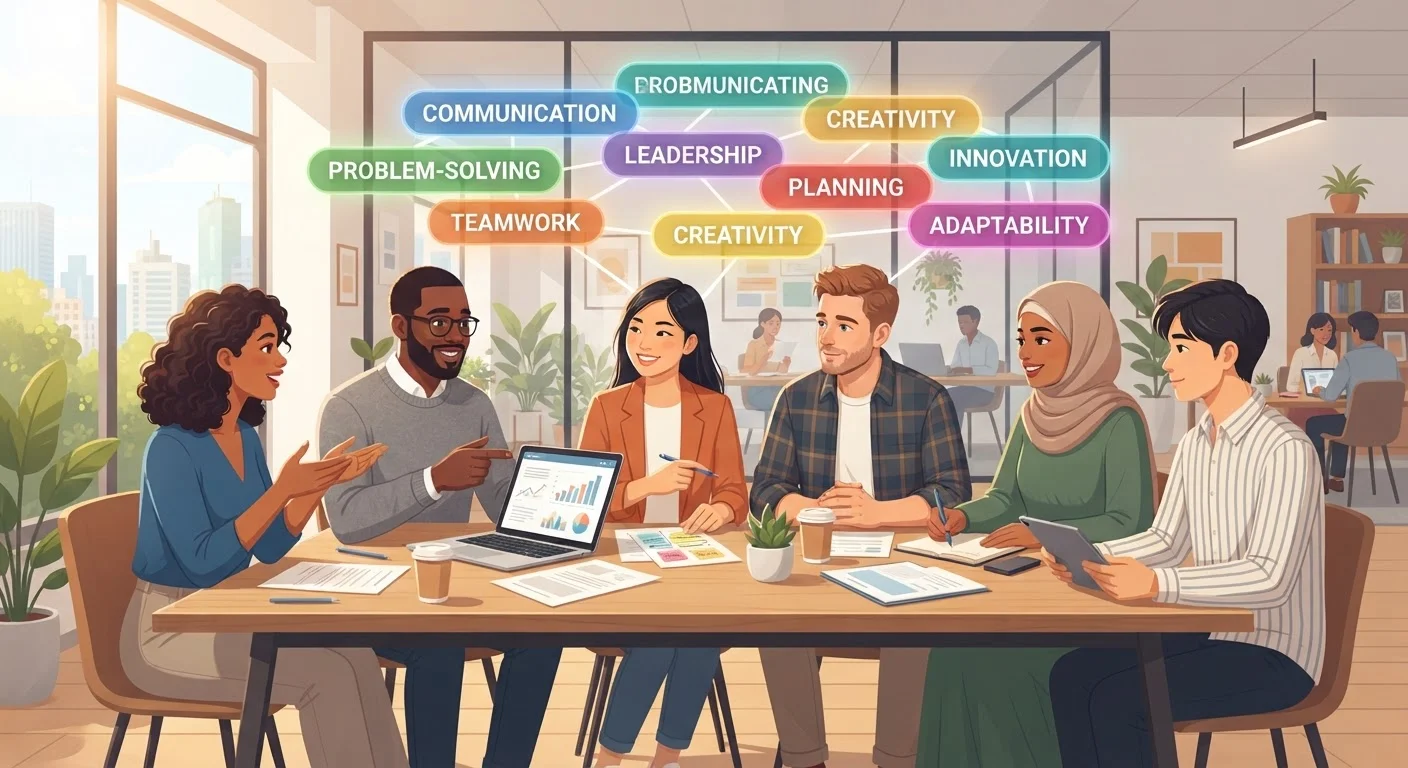
Why Transferable Skills Matter More Than Ever
The average person changes careers - not just jobs - multiple times over a working lifetime. In a landscape where industries evolve, roles are automated, and personal priorities shift, one category of skill remains consistently valuable: the kind you can take with you regardless of where you land next.
Transferable skills are the professional equivalent of portable savings. Unlike a qualification tied to one narrow specialty, these competencies appreciate in value as you accumulate more experience across different contexts. For first-time learners deciding what to study or how to spend their time, understanding this concept early can reshape how you approach every educational choice you make.
Learn how different types of education connect to real career outcomes, including what employers actually prioritize when reviewing candidates from various academic backgrounds.
92%
Employers prioritizing soft skills in hiring
According to LinkedIn's Global Talent Trends research, the vast majority of talent professionals say soft skills - a category that overlaps heavily with transferable skills - are equally or more important than hard skills.
5-7
Average career changes in a lifetime
Labor market researchers estimate that most Americans change careers (not just employers) multiple times over their working lives, making portable skills a long-term professional asset.
The Core Categories of Transferable Skills
Transferable skills cluster into several broad categories. Recognizing them helps you spot the ones you're already building and identify gaps worth closing.
- Communication: Written and verbal ability to share ideas clearly - foundational in virtually every workplace.
- Critical thinking: Analyzing information, questioning assumptions, and forming well-supported conclusions.
- Collaboration: Working productively with others, navigating disagreement, and contributing to shared goals.
- Adaptability: Adjusting your approach when circumstances change without losing effectiveness.
- Time management: Prioritizing tasks, meeting deadlines, and maintaining output under competing demands.
- Leadership: Guiding others toward a goal - relevant even in non-managerial roles.
These aren't personality traits you either have or don't. They're skills developed through practice, feedback, and reflection. Effective study habits that transfer across disciplines can reinforce several of these competencies simultaneously, especially critical thinking and time management.
Turn Every Experience Into Evidence
After any significant project, job, or challenge, take five minutes to write down what skill it required and what result it produced. Over time, this habit builds a personal skills inventory you can draw on for resumes, interviews, and career planning. It's far easier than trying to reconstruct your experience from memory months later.
How to Identify the Transferable Skills You Already Have
Most learners underestimate what they already bring to the table. Before assuming you lack experience, inventory what you've actually done.
Start by listing every significant activity from the past two to three years: coursework, part-time jobs, volunteer work, athletic teams, caregiving responsibilities, or independent projects. For each item, ask yourself: What did I have to do well for this to work? The answers will surface skills you may not have labeled as such.
A retail job, for example, builds customer communication, conflict resolution, and multitasking under pressure. A school group project develops negotiation, task coordination, and deadline management. Even informal caregiving builds empathy, problem-solving, and the ability to stay calm under stress.
Once identified, practice describing these skills in concrete terms. Employers respond to evidence, not assertions. The difference between "I'm a good communicator" and "I coordinated weekly updates between a five-person team and reduced miscommunication errors" is the difference between forgettable and compelling.
Building Transferable Skills Intentionally During Your Education
Education is one of the most efficient environments for deliberately developing transferable skills - if you approach it that way. The goal isn't just to absorb content; it's to practice the underlying competencies that content demands.
Seek out assignments that require synthesis over memorization. Present your work whenever possible. Collaborate with peers on complex problems. Take on responsibility in student organizations. These aren't extracurricular niceties - they're skill-building opportunities with real career relevance.
Transferable Skills and Career Pivots
If you've already completed a qualification and are considering a change in direction, transferable skills are often the bridge. They allow you to demonstrate relevance in a new field without starting from zero. Navigating a career pivot after your first qualification walks through how to make that case effectively to employers.
If you're unsure which direction to head after building a foundational skill set, mapping your interests to a career field before picking a course offers a practical framework for connecting personal strengths to realistic career directions.
It's also worth noting that many industries actively recruit for transferable skills over field-specific credentials. Some sectors value transferable skills and experience over a specific academic background - understanding which ones can open more doors than you might expect.