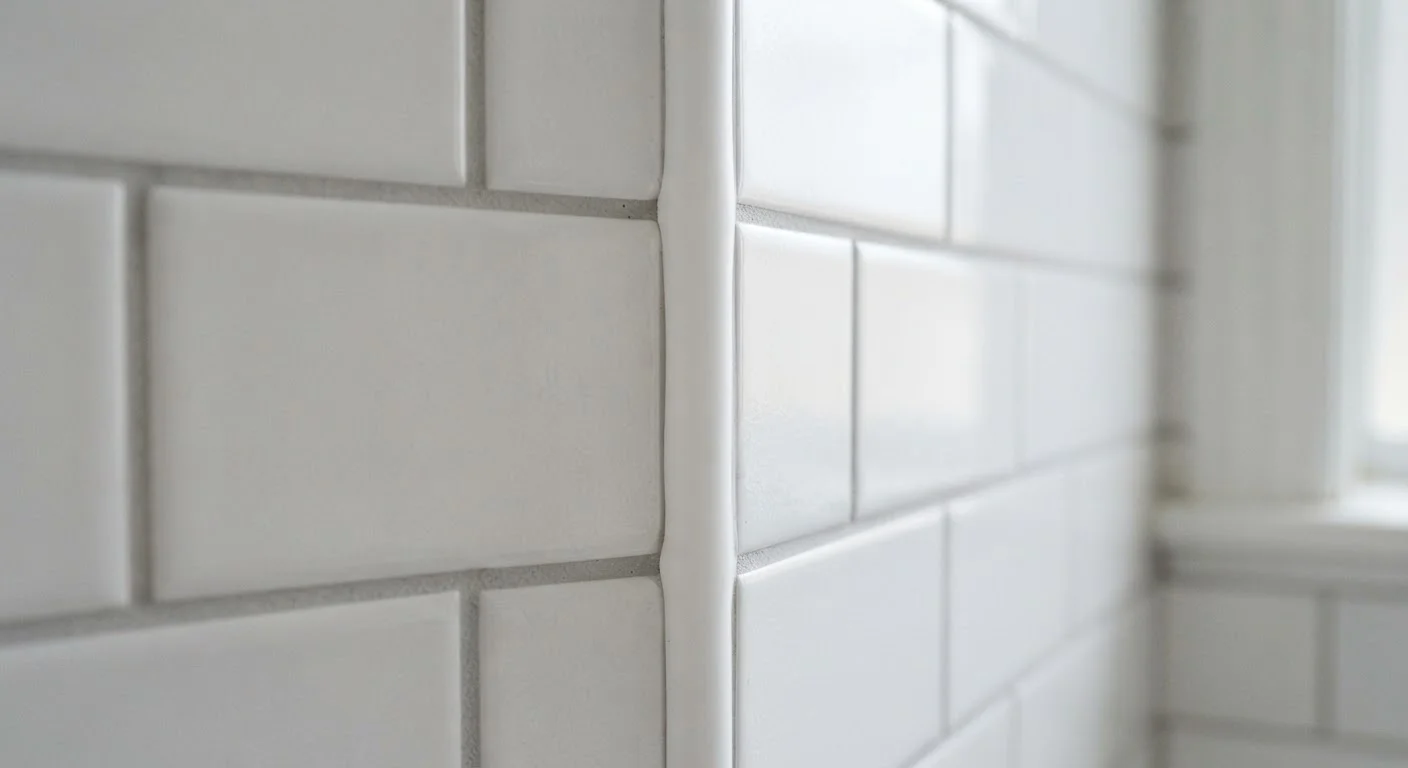
Why This Distinction Actually Matters
Walk into any hardware store and you'll find grout and caulk sitting a few shelves apart, both white, both used in tile work, and both easy to mix up. But using the wrong one in the wrong place isn't just an aesthetic problem - it's how water gets behind your walls.
The core difference is mechanical: grout is rigid and bonds tile joints into a solid, stable surface. Caulk is flexible and creates a watertight seal that can move without breaking. That single difference - rigid versus flexible - determines exactly where each one belongs. See our guide to what's inside your walls to understand just how much damage undetected moisture can cause once it gets past a failed seal.
| Criterion | Grout | Caulk |
|---|---|---|
| Composition | Cement or epoxy based | Silicone or latex based |
| Flexibility after curing | Rigid, does not flex | Stays slightly pliable |
| Best location | Tile-to-tile joints, same plane | Corners, edges, change-of-plane joints |
| Waterproofing | Moisture-resistant surface layer | Fully watertight seal |
| Lifespan in corners | Will crack - wrong tool for the job | Years of durable performance |
| Ease of DIY application | Moderate - requires mixing, timing | Straightforward with a caulk gun |
| Color options | Wide range available | Wide range, often matches grout |
Where Grout Belongs - and How It Works
Grout is a cement-based (or sometimes epoxy-based) filler designed to fill the consistent, evenly spaced joints between tiles. Once mixed and applied, it cures into a hard, stone-like material that holds tiles in alignment and resists surface moisture.
You'll use grout across flat tile fields - a bathroom floor, a shower wall, a kitchen backsplash. The key assumption grout makes is that the surface beneath it is stable and not going to flex. When that assumption holds, grout performs beautifully for years.
There are two common types beginners encounter: sanded grout (used for wider joints, typically over 1/8 inch) and unsanded grout (used for narrower joints and delicate tile surfaces like polished stone). Most tile packaging will indicate which type to use.
#1
Cause of hidden bathroom water damage
Failed or missing caulk at tub and shower perimeters is widely cited by home inspectors as the leading source of concealed moisture intrusion in bathrooms.
3-5 years
Typical caulk replacement interval in wet areas
Most manufacturers and tile industry guides recommend inspecting and refreshing caulk in showers and tubs every three to five years, or sooner if cracking appears.
Where Caulk Belongs - and Why Flexibility Is the Point
Caulk is a silicone- or latex-based sealant that stays slightly pliable after curing. That flexibility is precisely why it's the right tool for joints that experience movement - whether from a person stepping into a bathtub, temperature changes causing materials to expand and contract, or a house settling over time.
The most important caulk locations in a bathroom are: the joint where the tub or shower base meets the tile wall, all inside corner joints where two tiled walls meet, and the perimeter edge where tile meets a different material (like where a backsplash meets a countertop). These are change-of-plane joints. They move. Grout does not move - so grout in these spots will crack, usually within months.
Silicone caulk is the most waterproof option and works well in wet zones. Latex or acrylic caulk is easier to tool and clean up, and is paintable, making it useful in drier areas like around a window trim or baseboard. Both come in colors to match common grout shades.
It's worth knowing that several common home improvement myths lead new owners to skip caulk at corners entirely - often because it looks like an optional finishing touch rather than a structural waterproofing step.
The Quick Rule: Plane vs. Corner
If you're standing in front of a tiled area and unsure which product to reach for, use this mental shortcut:
- Same plane, tile to tile? Use grout. This is any joint between two tiles lying flat on the same wall or floor surface.
- Change of plane or material? Use caulk. Any inside corner, any edge where tile meets a non-tile surface, and any joint where two different materials come together.
When you regrout a bathroom, it's perfectly normal - and correct - to use both materials in the same project. Grout the field joints, then finish every corner and edge with caulk. Matching the caulk color to your grout color keeps the result looking intentional and clean.
What About Existing Grout in a Corner?
If the previous installer used grout in a corner joint, the right fix is to carefully remove it - using a grout saw or oscillating tool - and replace it with caulk. Simply applying caulk over cracked grout won't create a reliable seal because the grout underneath will continue to move and eventually push the caulk off. Taking the time to remove and replace correctly is the only lasting solution.