Why Home Improvement Myths Are So Persistent
Many home improvement beliefs are passed down through neighbourhoods, family advice, and online forums - and they often sound plausible because they contain a kernel of truth. Bleach does kill some pathogens. Paint can hide cosmetic imperfections. The problem is that these partial truths get applied too broadly, leading new homeowners to believe a quick fix has solved something that actually needs proper attention.
Understanding where these myths come from - and why they're wrong - is one of the most practical skills a first-time owner can develop. For a solid foundation on where to begin, see what every first-time homeowner should know about home improvement.
Myth
Bleach kills mould and solves the problem for good.
Fact
Bleach removes surface staining but does not address the root cause - moisture - or eliminate mould embedded in porous materials.
Bleach is effective at disinfecting hard, non-porous surfaces like tile. On drywall, wood, or grout, however, the water content in bleach can actually feed further mould growth while the chlorine evaporates from the surface. The real fix involves identifying and eliminating the moisture source - whether that's a slow leak, poor ventilation, or condensation. See our guide on why small water leaks become big problems for help spotting the underlying issue.
Myth
Any homeowner can legally and safely handle their own electrical work.
Fact
Most electrical work in US homes requires a permit, and in many jurisdictions certain tasks must be performed or inspected by a licensed electrician.
There is a meaningful difference between swapping a like-for-like outlet and running new circuits, adding a subpanel, or modifying your breaker box. The former may be legal DIY in many areas; the latter often is not - and doing it without permits can create insurance gaps and resale complications. Our article on when to DIY versus hire a pro walks through how to assess any job before picking up a tool.
Myth
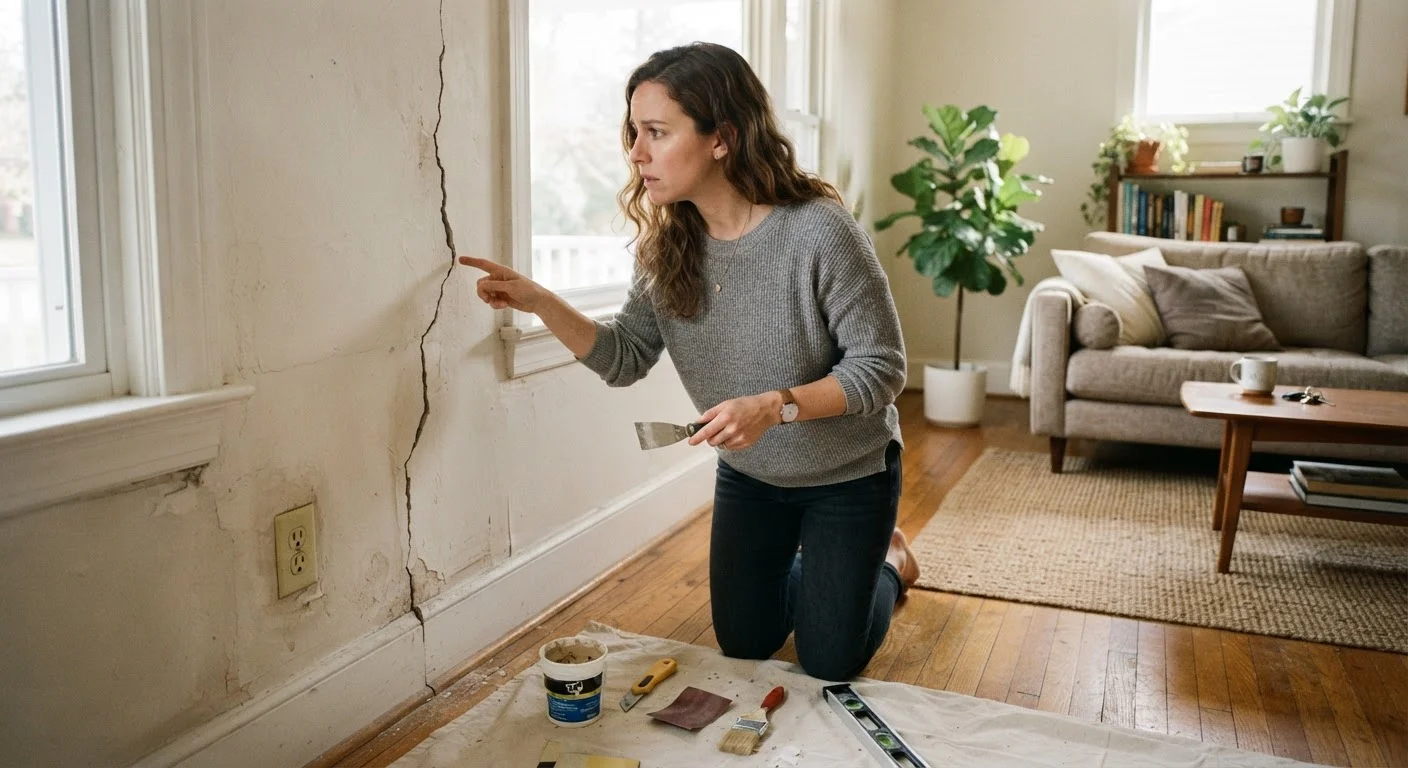
A fresh coat of paint will fix cracks, stains, and uneven surfaces.
Fact
Paint covers cosmetic blemishes but does not repair structural cracks, stop moisture intrusion, or level damaged surfaces.
Painting over a water stain without fixing the leak almost guarantees the stain returns - and the underlying material continues to deteriorate. Cracks wider than a hairline often indicate settling or moisture movement that warrants investigation before any cosmetic work begins. Proper preparation - patching, priming, and addressing the root cause - is what makes a paint job last.
Myth
Caulk and grout are interchangeable - either will seal a gap.
Fact
Caulk and grout serve different purposes and using the wrong one in the wrong location causes premature failure and water damage.
Grout is rigid and fills joints between tiles on flat, stable surfaces. Caulk is flexible and belongs wherever two surfaces meet at a change of plane - such as where a tub meets the wall - because those joints experience movement. Using grout where caulk belongs leads to cracking and water infiltration behind tiles. Our detailed breakdown of caulk vs. grout explains exactly where each material belongs.
Myth
If you can't see a problem, it doesn't need attention.
Fact
Many serious home issues - moisture damage, pest activity, insulation gaps - develop silently and become expensive once visible.
A damp patch on a ceiling is rarely the beginning of the problem; it's usually a late sign of something that has been developing for some time. Regular walkthroughs checking for soft flooring, discoloured walls, or musty odours help catch issues early. What first-time homeowners should know about home improvement covers how to build good inspection habits from day one.
Myth
Tightening everything as hard as possible makes a better, more secure repair.
Fact
Over-tightening fasteners, fittings, and connections is a common beginner mistake that causes cracking, stripped threads, and leaks.
Many plumbing fittings, toilet bolts, and outlet cover screws are designed to be snug - not cranked to maximum force. Over-tightening a toilet base bolt, for example, can crack the porcelain. Similarly, compressing pipe fittings too aggressively can deform the sealing surface and create the very leak you were trying to prevent. The guidance "hand-tight plus a quarter turn" is a reliable starting point for many threaded connections; always check manufacturer instructions where available.
The Risks of Getting It Wrong
Unlike myths in lower-stakes areas, home improvement missteps can compound quickly. A misunderstood electrical repair can create a fire risk. A mould treatment that only addresses the surface means continued exposure and structural deterioration. The financial costs of fixing a problem that was mishandled the first time consistently exceed what a correct initial repair would have cost.
Electrical Work: Don't Go It Alone
In most US states, electrical work beyond replacing a light fixture requires a permit and must be completed or inspected by a licensed electrician. Unpermitted wiring can void your homeowner's insurance, create fire hazards, and complicate future home sales. If you are unsure whether a job requires a permit, contact your local building department before starting.
This pattern - where the cure makes things worse - is also common in organisation and garden projects. If myths in those areas interest you, our articles on organization myths first-time homeowners believe and garden myths that trip up new growers are worth a read.
Mould Requires More Than Bleach
Spraying bleach on mould may remove visible staining on non-porous surfaces, but it does not penetrate porous materials like drywall or wood where mould roots grow. Without addressing the source of moisture, mould will return. For widespread or recurring mould - especially in areas larger than about 10 square feet - the US Environmental Protection Agency recommends consulting a professional remediation service.
~$13,000
Average US home water damage repair cost
According to data from the Insurance Information Institute, water damage and freezing accounts for a significant share of homeowner insurance claims, with average losses often exceeding $10,000.
1 in 3
Homes with unpermitted work at resale
Industry estimates suggest a substantial proportion of homes sold in the US contain at least some unpermitted improvements, which can complicate closings and affect insured value.
Knowing your limits is not a weakness - it's the mindset that protects both your home and your budget. Our guide to essential hand tools can help you understand what you can confidently tackle yourself.