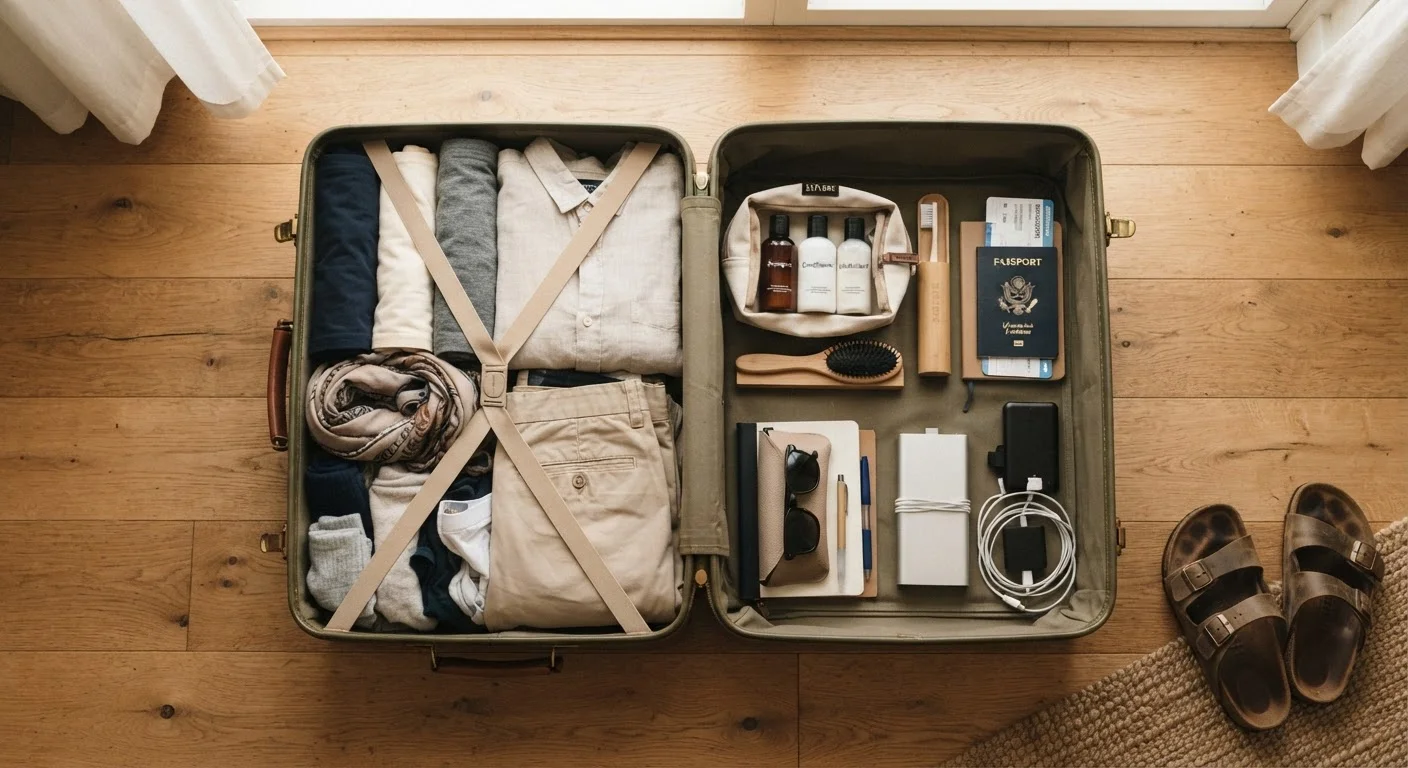
Choosing the Right Luggage
The bag you choose shapes everything that follows. Pick one that is too large and you will fill it; pick one that is too small and you will be stressed at the check-in desk. As part of the broader Trip Planning 101, choosing luggage is the first practical decision to make.
A general rule: match bag size to trip length.
- Weekend to 7 days: A carry-on bag keeps you agile, fee-free, and avoids baggage waits.
- 7-14 days: A medium checked bag (around 24 inches) offers flexibility without excessive weight.
- Two weeks or more: A larger checked bag may be justified, but focus on keeping it under the airline weight limit - typically 50 lb (23 kg) for economy class.
Hard-shell suitcases protect fragile items well; soft-sided bags flex to fit overhead compartments more easily. Backpacks or duffel bags suit adventure travel where you'll carry your luggage over uneven ground. Always check your airline's exact size and weight restrictions before purchasing or packing.
Carry-on bag
A piece of luggage small enough to store in the overhead compartment of a plane, avoiding checked baggage fees. Size limits vary by airline, so always verify before you fly.
Checked baggage
Luggage you hand over to the airline at check-in, which is stored in the plane's hold. It typically has weight and size limits and may incur a fee.
Packing cubes
Small, zippered fabric compartments used inside a suitcase or bag to organize and compress clothing by category, making packing and unpacking faster.
Travel insurance
A policy that may cover certain unexpected costs during travel, such as medical emergencies, cancellations, or lost baggage. Terms and coverage vary widely between providers.
Liquids rule (3-1-1)
A US Transportation Security Administration (TSA) rule requiring that liquids in carry-on bags be in containers of 3.4 oz (100 ml) or less, all fitting in one clear quart-sized bag. Rules may differ for international flights.
Power adapter
A plug converter that lets your home country's electrical devices connect to outlets in other countries, which may use different socket shapes or voltages.
Building Your Packing List
A packing list is not optional - it is your first defense against both forgetting essentials and overpacking. Build yours at least a week before departure so you have time to track down anything missing.
Organize by category:
- Clothing: Plan outfits, not individual items. Aim for pieces that work together. Factor in laundry access if your trip is long.
- Toiletries: Stick to travel-size containers (3.4 oz / 100 ml for carry-on liquids in the US). Many hotels provide basic toiletries, so check before packing duplicates.
- Tech and adapters: Phone charger, power adapter for your destination's outlet type, and a portable battery pack are often more useful than multiple gadgets.
- Medications: Bring a sufficient supply of any prescription medications in their original labeled containers. Consult your healthcare provider about travel health preparations well in advance.
- Comfort and safety items: A reusable water bottle, a small first-aid kit, and a padlock for hostel lockers go a long way.
Once your list is written, lay everything on your bed before it touches the bag. This visual check reveals duplicates and items that don't earn their weight.
Try the One-Week Rule for Clothing
If you're traveling for more than a week, pack for seven days and plan to do laundry rather than adding more clothes. Most destinations have laundromats, hotel laundry services, or hand-wash-friendly accommodations. This approach keeps your bag manageable no matter how long the trip.
Packing Techniques That Save Space
How you pack matters as much as what you pack. Two simple methods work especially well for beginners:
- Rolling: Roll clothes tightly instead of folding flat. This reduces creasing and saves a notable amount of space, particularly for t-shirts, jeans, and casual wear.
- Packing cubes: These zippered fabric organizers compress clothing into defined sections of your bag, making it easier to find items and keeping the bag tidy throughout the trip.
Place heavier items (shoes, toiletry bags) at the bottom of a wheeled suitcase - the end nearest the wheels - so the weight is centered when upright. Lighter, bulkier items like jackets go on top. Stuff socks inside shoes to use every inch of space.
Limit yourself to one pair of shoes beyond what you wear to travel. Footwear is the single heaviest space-taker in most bags.
Don't Ignore Airline Weight Limits
Overweight baggage fees can be surprisingly high - sometimes more than the cost of a budget flight. Weigh your bag at home using an inexpensive luggage scale before you leave, not at the check-in counter. If your bag is over the limit, redistribute heavier items into your carry-on or personal item if allowed.
Documents, Money, and Digital Prep
Lost or forgotten documents can derail a trip entirely. Handle this category deliberately.
Physical documents to carry:
- Passport (valid for at least six months beyond your return date - confirm requirements for your specific destination with official sources)
- Visa documentation, if required
- Travel insurance policy and emergency contact number
- Accommodation confirmations and transport tickets
Digital backups: Photograph or scan every document and store copies in a secure, cloud-accessible location you can reach from any device. Email them to yourself as a secondary backup.
Money: Inform your bank of your travel dates and destination to prevent your card being blocked for suspicious activity abroad. Carry a small amount of local currency for immediate needs on arrival (transport, tips, small purchases). For guidance on staying protected throughout your journey, see our travel safety guide for first-time travelers.
Connectivity: Download offline maps, your airline app, and any translation tools before you leave. Roaming charges can be significant - research SIM card options or international data plans for your destination in advance.
Visa and Entry Requirements Vary Widely
Entry rules - including visa requirements, passport validity minimums, and proof of onward travel - differ by destination and by your citizenship. Requirements can also change. Always verify current entry requirements through your government's official travel advisory website and the destination country's embassy or consulate well before your departure date. Do not rely on third-party summaries alone.
Your Last-Night-Before-You-Leave Checklist
The night before departure is not the time to start packing - it is the time to confirm everything is in order. Run through this sequence:
- Weigh your bag. A simple luggage scale avoids costly overweight fees at the airport.
- Confirm transport. Know exactly how you're getting to the airport or station, how long it takes, and whether there are any disruptions.
- Check your departure details. Verify terminal, gate information (if available), and check-in deadlines directly with your airline or transport provider.
- Charge everything. Phone, camera, e-reader, portable battery - all should be fully charged.
- Set multiple alarms. Don't rely on one.
- Place documents where you'll grab them first. Passport, ID, printed confirmations - these go in a dedicated pocket or pouch, not buried in your bag.
- Secure your home. Lock windows and doors, arrange for plant or pet care, and notify a trusted contact of your travel plans.
For a broader foundation in staying safe throughout your trip, explore the Travel Safety hub - a practical resource for first-time travelers navigating unfamiliar places.