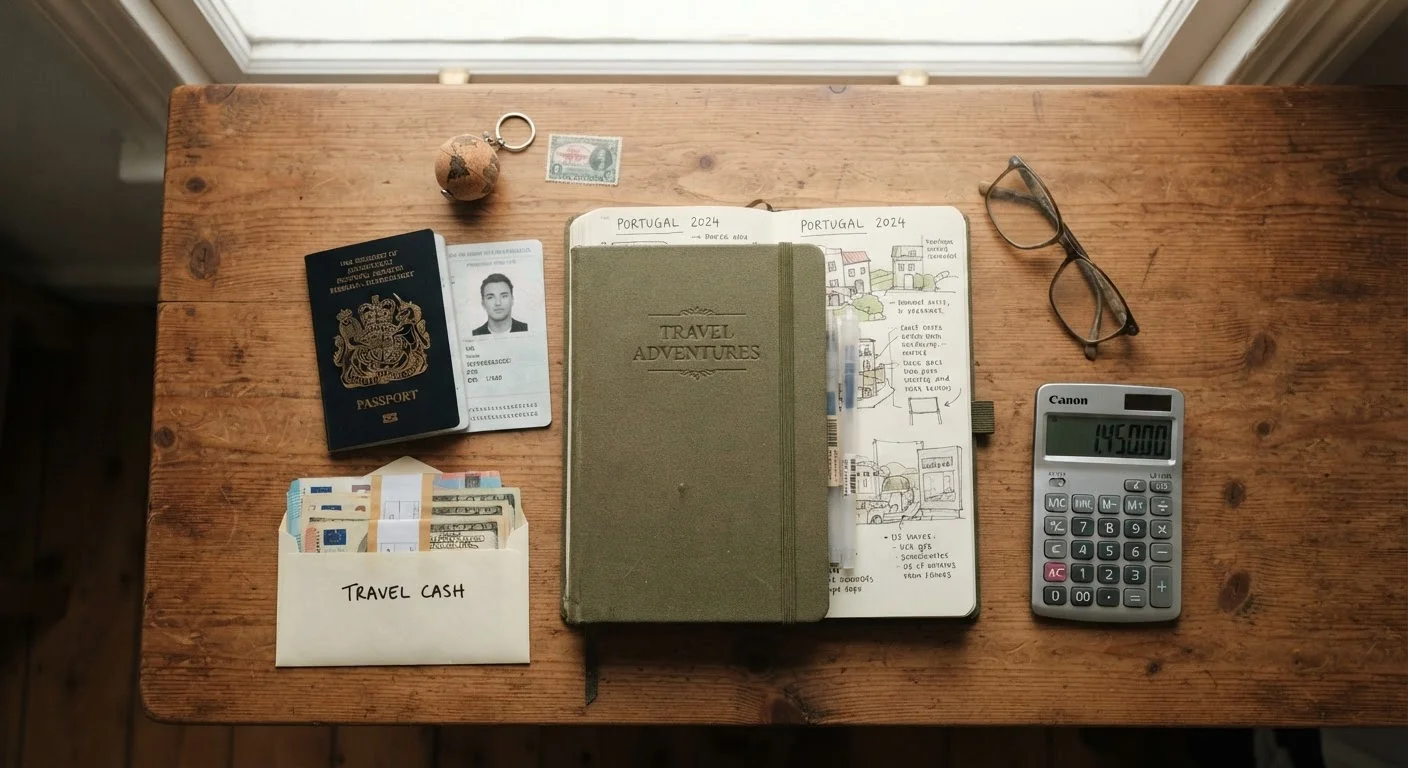
Why Most First-Time Travel Budgets Fall Short
The most common budgeting mistake isn't overspending on flights - it's forgetting entire cost categories until the trip is already booked. First-timers typically price transport and accommodation and call it a budget. But food, local transit, activity fees, travel insurance, and destination-specific taxes can collectively match or exceed accommodation costs on a typical week-long trip.
The good news: building a complete budget before you book anything is straightforward when you approach it category by category. This guide walks you through exactly that process. If you want broader context on managing your money around a travel goal, the Budgeting Basics hub offers practical strategies for tracking spending and building toward financial goals.
Set Your Ceiling Before You Search
Looking at flights or hotels before you have a firm budget ceiling almost always leads to scope creep - you anchor to an exciting option and work backward to justify it. Determine what you can realistically spend in total first, then let that number guide your destination and dates. This one discipline separates travelers who arrive debt-free from those who regret booking impulsively.
Before you start the steps below, gather your financial basics - what you earn and what your fixed monthly costs are. The monthly budget setup checklist is a useful starting point if you haven't mapped this out yet.
Step-by-Step: Building Your Travel Budget
Work through the following steps in order. Resist the urge to skip ahead to booking until you've completed all six - the sequence matters because each step informs the next.
What you will need
Establish your total budget ceiling
Before researching a single flight price, decide the maximum you can spend on this trip - the ceiling. Look at your monthly finances: what can you save per month, and how many months do you have until your target departure? Multiply those two numbers. That figure, minus any emergency fund contribution you want to maintain, is your ceiling.
If you need help building a savings plan around the goal, the Saving & Emergency Funds hub covers how to save consistently without depleting your financial safety net.
Estimate transportation costs end to end
Transportation is usually the largest single category but is also the most commonly underestimated because people only price the headline flight. Account for: flights or train tickets (round trip), ground transport from home to your departure point, airport transfers at your destination, and any local transport you'll use daily - metro passes, buses, taxis, or rental vehicles.
Search for rough flight prices without booking to get a realistic range. The season you choose to travel will affect these prices significantly, so be sure those dates are fixed before researching.
Research accommodation costs per night
Search for accommodation in your destination for your specific dates - not a generic average - because prices vary enormously by season, neighborhood, and availability. Multiply your nightly rate estimate by the number of nights. Then check whether the displayed rate includes taxes and fees; many booking platforms show pre-tax prices that are 12-20% lower than the final charge.
Consider what type of accommodation suits your trip. The choice between a guided tour and independent travel also affects whether accommodation is bundled or budgeted separately.
Budget daily for food and drink
Estimate a realistic daily food spend based on how you actually eat - not an idealized version. Research typical meal costs in your destination: a sit-down meal, a casual lunch, coffee, and snacks. Multiply by the number of days. If you plan to self-cater some meals, adjust down. If you want to try several restaurant dinners, adjust up.
A useful rule of thumb for first-timers: budget slightly more than you think you'll spend on food, because dining out while tired or lost is almost inevitable and usually more expensive than planned.
List activities, entrance fees, and experiences
Write down every activity you're genuinely interested in - museum entry, guided tours, day trips, adventure activities, performances - and look up the actual current admission price for each. Add them up. This category is often left as a vague placeholder ('spending money'), which leads to either overspending in the moment or feeling restricted when you arrive.
Having an itinerary sketched out ahead of time makes this step much easier because you already know what you want to do.
Add a 10-15% contingency buffer
Once you have estimates for all five categories above plus pre-trip costs, add them together. Then add 10-15% of that total as a contingency. This buffer covers delayed transport, an unplanned meal, a medical over-the-counter purchase, a missed connection fee, or simply costs you didn't think to research. It is not extra spending money - treat it as insurance.
If your total including the buffer exceeds your ceiling from Step 1, you have three honest options: save longer, choose a less expensive destination, or reduce the scope of the trip. The destination-selection guide can help you evaluate alternatives without sacrificing a meaningful experience.
Track Estimates in a Simple Spreadsheet
Create one column for each cost category and a second column for your running total. As you research, replace rough estimates with real quotes. A live running total stops the gradual 'just one more thing' drift that quietly blows budgets. Free spreadsheet tools are available through most email account suites.
Don't Forget the Days Before and After
Many first-timers budget for the trip itself but overlook costs at home: airport parking or a ride to the terminal, pet care, holding mail, or travel-sized toiletries. These pre-trip expenses can easily add $50-$200 or more depending on your situation. Build them into your total before you finalize numbers.
Once your budget is firm and realistic, you're ready to move into the booking phase with confidence. See the guide to booking flights and accommodation to understand when and how to lock things in without common first-timer mistakes.