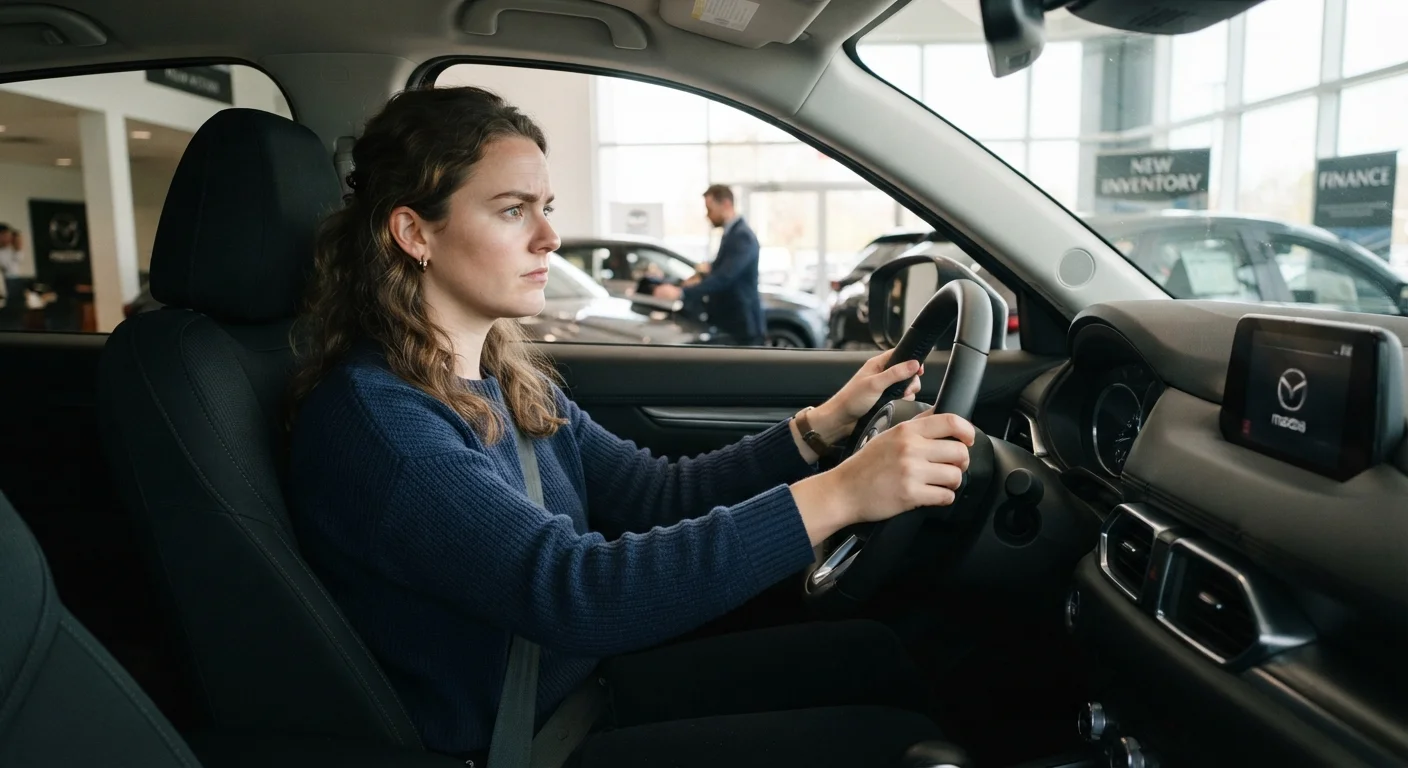
Why Most First-Time Test Drives Don't Go Far Enough
For many first-time buyers, a test drive feels like a formality - a quick lap around the block to confirm the car starts and the seats feel comfortable. In reality, it's the single most valuable tool you have before signing anything. Done properly, a test drive can surface mechanical issues, highlight poor visibility, and reveal whether a car genuinely fits your daily routine.
The problem is that most beginners don't know what they're looking for - or what questions to ask. Excitement takes over, and the drive ends before you've learned much. The tips below are drawn from the kinds of things experienced buyers routinely wish they'd checked the first time around. Keep them in mind, and you'll walk away with real information rather than just a feeling.
Before the drive, it's also worth understanding what a vehicle's history can and can't tell you - see our guide on reading a used car's history for what to look for in the paperwork.
Plan your own route before you arrive
Dealerships often suggest a short, familiar loop - one that shows the car at its best. Instead, plan your own route in advance that includes a mix of conditions: city streets with stop-start traffic, a stretch of faster road, a speed bump or two, and ideally a tight parking scenario. This gives you a realistic picture of how the car behaves in your actual driving environment, not a controlled showcase.
If you commute on a highway, ask to include highway speeds. If you park in a tight garage, find a similar space to test. The drive should reflect your life, not the dealer's comfort zone.
Your test drive route should mirror your real daily driving, not the dealer's preferred loop.
Drive in silence first - then try the stereo
It's tempting to fill the drive with conversation or music, but your first few minutes should be quiet. Noise tells you a great deal about a car's mechanical health. Listen for rattles over bumps, a humming from the wheels at speed (which can indicate worn wheel bearings), squealing when braking, or a knocking sound during acceleration. These aren't always deal-breakers, but they're worth knowing about.
Once you've assessed the sound profile of the car itself, by all means try the audio system and check that Bluetooth pairing, climate controls, and any screens respond as expected.
Drive in silence first - rattles, hums, and knocks reveal what a clean exterior never will.
Test visibility and blind spots deliberately
Sit in the driver's seat and note how much you can see without moving your head. Look over both shoulders, check what the mirrors actually cover, and identify where your blind spots are. Many first-time buyers are surprised to find that a car that looked sleek from the outside has a thick rear pillar that cuts off a significant portion of rearward visibility.
Reversing into a parking space - rather than simply pulling in forward - is one of the most effective ways to test this in a realistic setting. Our article on mirror myths for new drivers explains why blind spots are often misunderstood.
Reversing into a parking space during the test drive reveals visibility issues no brochure will mention.
Accelerate, brake, and corner with purpose
Many buyers treat the test drive as a polite, cautious outing. But within legal limits and safety, you need to drive the car the way you actually will. Accelerate briskly from a junction to see how the engine responds. Brake firmly (in a safe, traffic-free stretch) to feel whether the stopping is smooth and confident or if there's any pulling to one side. Take a corner at a realistic speed to assess how the car handles and whether the steering feels precise or vague.
A car that feels fine at 20 mph but unsettled at 50 mph is telling you something important.
Brake firmly, accelerate confidently, and corner with purpose - a gentle test drive hides real problems.
Check the practical details you'll use every day
It's easy to be seduced by the driving experience and forget the mundane but essential details. How easy is it to load the trunk? Are the rear seats spacious enough for your passengers? Do the controls fall naturally to hand, or do you have to hunt for the wipers each time it rains? Is the driving position adjustable enough for your height?
These things seem small in the showroom but become daily frustrations if they don't suit you. Spend a few minutes genuinely using the car - not just driving it.
Daily frustrations start with details - check trunk access, seat space, and control layouts before deciding.
Don't rush - and don't feel obligated to decide on the day
Salespeople are skilled at creating a sense of urgency, but a test drive does not obligate you to buy. If you feel uncertain, ask to return for a second drive. Many buyers wish they'd driven the same car twice - once to get used to the novelty and once to actually evaluate it. If you're comparing multiple vehicles, drive them on the same day if possible so the experience is fresh and comparable.
Remember: the pressure you feel in the moment is temporary. A poor purchase decision lasts much longer. For more on the patterns that lead to overpaying, see why first-time buyers overpay.
A test drive never obligates you to buy - if uncertain, return for a second drive before deciding.
Turn the Test Drive Into a Real Decision-Making Tool
A well-planned test drive isn't just about whether you enjoyed the experience - it's about gathering objective data on a significant purchase. The more systematically you approach it, the harder it is for excitement or sales pressure to distort your judgment. If you're also thinking about the broader costs of ownership beyond the purchase price, our article on total cost of ownership is a useful companion read.
Bring a simple checklist with you
Write down the key things you want to assess before you arrive: visibility, braking feel, noise, controls, cargo space, and so on. It's easy to forget half your criteria once you're behind the wheel and the excitement kicks in. A checklist keeps you systematic and makes it easier to compare different cars objectively afterward.
Once you've found the right car and driven it home, the learning continues. Our guide to your first year of car ownership covers everything you'll need to stay on top of from day one.