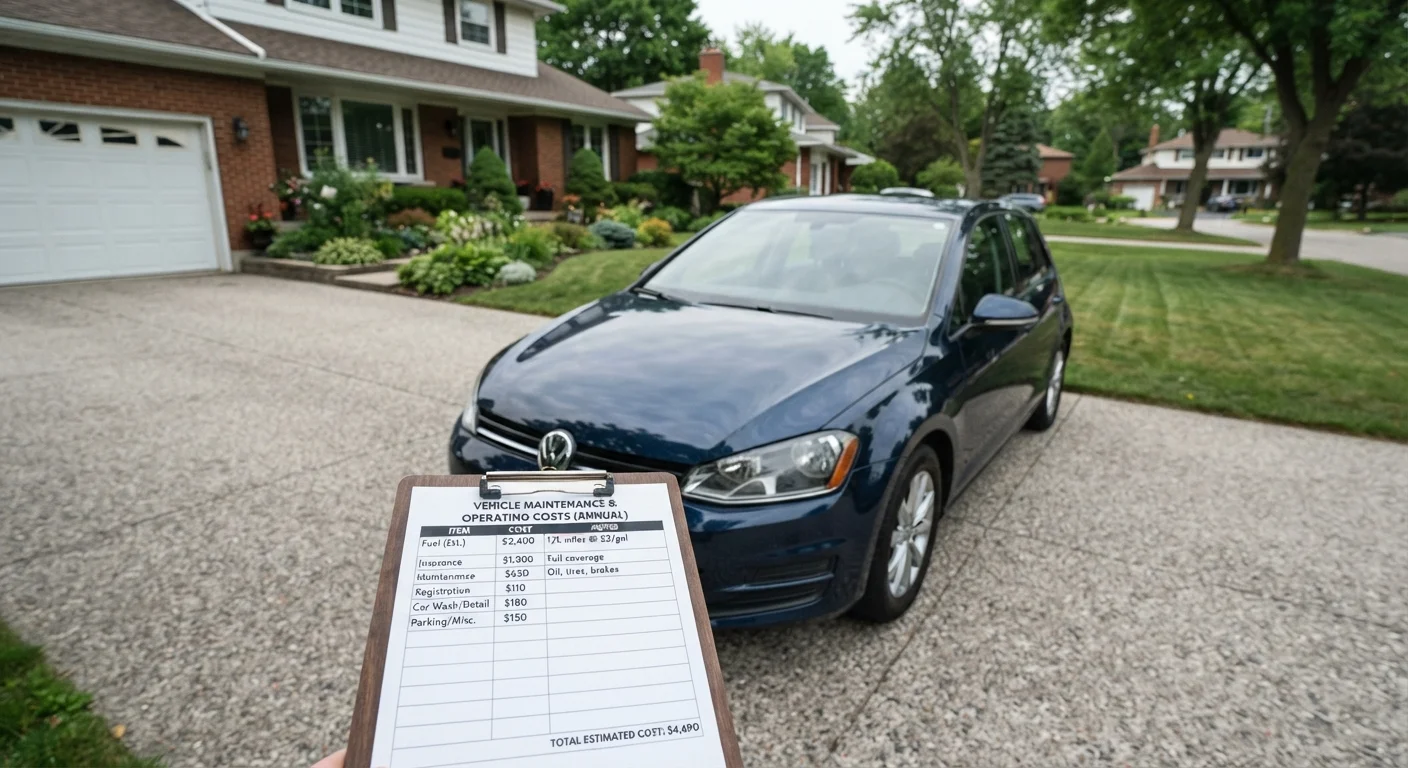
Why the Sticker Price Is Only the Starting Point
Walk into any dealership and the number on the window - the Manufacturer's Suggested Retail Price (MSRP) - is the first figure you'll notice. For first-time buyers, it's tempting to treat that as the cost of the car. It isn't. That price covers the moment of purchase; everything that comes after is on you.
Total Cost of Ownership is the framework that captures all of those ongoing expenses. It's how car-buying professionals, fleet managers, and savvy consumers actually compare vehicles. If you're building your first realistic car budget, TCO is the number you need - not just the monthly payment.
The gap between sticker price and true cost surprises many first-time buyers. Understanding what fills that gap is the first step toward making a decision you won't regret.
~$12,000
Average annual cost to own and operate a vehicle
According to AAA's annual 'Your Driving Costs' study, the average American spends roughly this amount per year when all ownership costs are combined.
15-25%
Portion of car value lost in the first year
Industry estimates commonly place new vehicle depreciation in this range during the first year of ownership, making it one of the steepest single-year costs.
3x
Maintenance cost multiplier for deferred repairs
Automotive service organizations note that postponing routine maintenance can multiply repair costs significantly compared to addressing issues on schedule.
The Core Components of TCO Explained
Breaking TCO into its parts makes it far less intimidating. Here are the main categories to account for:
- Financing costs: If you take out a loan, you'll pay interest on top of the vehicle's price. The interest rate and loan term together determine how much extra you pay over time.
- Insurance: Required by law in every U.S. state, insurance premiums vary widely based on your vehicle, driving history, location, and coverage level. Get quotes before you fall in love with a specific model.
- Fuel: A vehicle's fuel economy (measured in miles per gallon, or MPG) directly affects what you spend at the pump each month. City driving typically burns more fuel than highway driving.
- Registration and taxes: Annual registration fees and any applicable sales or excise taxes are fixed costs that vary by state and sometimes by vehicle weight or value.
- Scheduled maintenance: Oil changes, tire rotations, brake inspections, and filter replacements are predictable and manageable if planned for. See our guide on what maintenance actually involves for a plain-language overview.
- Depreciation: Your car loses value from the moment you drive it off the lot. This isn't a cash payment you make, but it directly affects what you'll recover when you sell or trade in.
- Unexpected repairs: Tires wear out, brakes fail, and sensors malfunction. Setting aside a small monthly buffer for unplanned repairs prevents these events from derailing your finances.
Get Insurance Quotes Before Finalizing Any Vehicle
Many buyers don't think about insurance until they're sitting at the dealership. Getting quotes ahead of time - on the specific year, make, and model you're considering - can reveal cost differences that meaningfully change which vehicle makes financial sense. It takes about 15 minutes and can save you hundreds of dollars annually.
Depreciation: The Invisible Cost Most Beginners Miss
Of all the components in TCO, depreciation is the one first-time buyers most consistently overlook - because it doesn't show up as a bill. Depreciation is simply the difference between what you paid for a vehicle and what it's worth when you eventually sell it.
New vehicles typically depreciate fastest in their first few years of ownership. A car that cost $28,000 new might be worth considerably less after three years of typical use. That lost value is a real cost, even if it's easy to ignore in the moment.
This is one reason why first-time buyers sometimes overpay - they focus on the monthly payment and don't account for what the vehicle will be worth down the road. Understanding depreciation puts you in a much stronger position, both when buying and when deciding how long to keep a car.
“The monthly payment is what dealers want you to focus on. Total cost of ownership is what you should focus on. They are rarely the same conversation.”
— Consumer Financial Protection Bureau, U.S. government agency providing auto loan and vehicle-buying guidance
How to Build a Simple TCO Estimate Before You Buy
You don't need a spreadsheet degree to estimate TCO. Start with these steps:
- Get insurance quotes on specific vehicles before making any decisions. The premium difference between two similarly priced cars can be substantial.
- Calculate annual fuel cost by estimating your yearly mileage, dividing by the vehicle's MPG rating, and multiplying by current average fuel prices in your area.
- Research scheduled maintenance costs for the make and model you're considering. Luxury brands often carry significantly higher service costs than economy vehicles.
- Factor in financing costs by using a simple loan calculator - multiply your monthly payment by the number of payments, then subtract the purchase price to see total interest paid.
- Add a repair reserve. Even for reliable vehicles, a modest monthly buffer (many advisors suggest $50-$100) smooths out the inevitable surprises.
Once you've assembled these numbers, add them to the purchase price. That total is your TCO estimate. It often looks quite different from the number on the window sticker.
For a broader walkthrough of the purchase process, the car-buying process explained from start to finish is a useful companion to this guide. And if you want to build a complete budget framework, the budgeting basics hub can help you see how auto costs fit into your overall finances.
TCO Varies Significantly by Location
Where you live affects several components of TCO - including insurance rates, state registration fees, fuel prices, and even how quickly a vehicle depreciates. A TCO estimate built for one state may look quite different in another. Always use local data when building your own calculations.