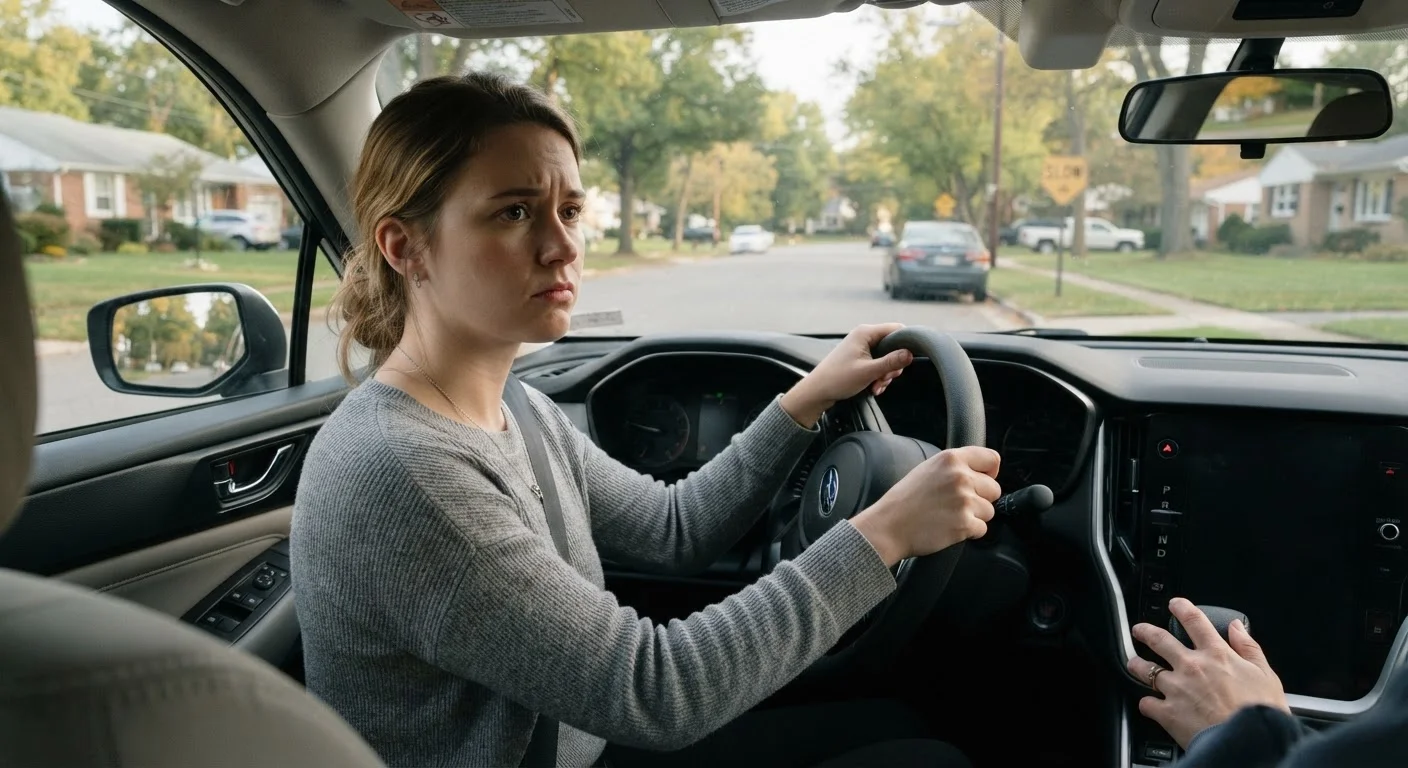
What the First Week Actually Feels Like
Your first week behind the wheel is rarely what you imagined. The car feels bigger, the road feels faster, and your brain is working harder than it ever does in a classroom. That cognitive overload - juggling pedals, mirrors, steering, signs, and other vehicles all at once - is completely normal. It means your mind is actively building new neural pathways.
Most new drivers describe a mix of exhilaration and anxiety. Some sessions will feel like progress; others will feel like you've forgotten everything. Both are part of the same learning curve. The goal in week one isn't perfection - it's simply repeated, safe exposure.
Before any session, take a moment with our pre-drive safety check guide to build the habit of verifying mirrors, seat position, and controls before you move off.
Everyone's Timeline Is Different
There's no universal schedule for how quickly new drivers progress. Factors like how often you practice, the type of roads available, and individual learning styles all affect the pace. Comparing your week one to someone else's is rarely useful - focus on your own incremental improvements instead.
The Core Skills You'll Be Working On
Week one is almost entirely about basic vehicle control - the physical inputs that keep the car smooth and predictable. These are the building blocks everything else depends on.
Biting point
The moment when releasing a manual clutch pedal causes the engine to begin connecting with the wheels. Finding it smoothly is key to pulling away without stalling.
Situational awareness
The ability to notice, process, and anticipate what is happening around your vehicle - including other drivers, pedestrians, road conditions, and potential hazards.
Progressive braking
A braking technique where you increase pedal pressure gradually and then ease off gently as the car slows, producing a smooth stop rather than an abrupt jolt.
Scanning ahead
The habit of looking 10-15 seconds down the road rather than fixating on what's immediately in front, giving you more time to react to changes in traffic.
Hazard perception
The skill of identifying situations on the road - a pedestrian stepping out, a car changing lanes - early enough to respond safely before they become emergencies.
- Steering: New drivers often over-correct. Aim to make small, deliberate steering inputs and let the wheel return gently rather than spinning it back.
- Acceleration: Press the accelerator gradually. Stomping it causes jerky starts that feel alarming and burn more fuel.
- Braking: Begin braking earlier than you think you need to. Progressive pressure - increasing gently then easing off as you stop - produces smooth halts.
- Clutch control (manual vehicles): Finding the biting point - the moment the clutch begins to engage the engine - is the trickiest part of manual driving. Expect stalls. They're a normal part of the process.
Practice each input individually in a quiet area before combining them. Competence in isolation makes combining them far less overwhelming.
Reading Traffic and Making Decisions
Vehicle control is only half the challenge. The other half is situational awareness - understanding what's happening around you and anticipating what might happen next.
New drivers tend to fixate on the road immediately in front of the bonnet. Experienced drivers scan much further ahead - typically 10-15 seconds down the road - picking up hazards, signals, and changes in traffic flow before they require a reaction. Training yourself to look up and forward is one of the most important shifts you can make in week one.
Key awareness habits to practice early:
- Check your mirrors every 5-8 seconds, not just when you plan to maneuver.
- Watch brake lights several vehicles ahead, not just the car directly in front.
- Anticipate pedestrians near crossings, cyclists at junctions, and parked cars that may open doors.
- Use junctions as decision points - slow early, look both ways deliberately, and only proceed when you're certain it's clear.
Narrate the Road Out Loud
As you drive, try saying what you see: 'pedestrian on the left', 'light turning amber', 'car pulling out ahead'. This technique - used by many driving instructors - forces your eyes to scan actively rather than tunnel-focus. It feels odd at first but rapidly improves awareness.
Building Confidence Day by Day
Confidence in driving is earned incrementally. Try to structure your practice sessions so each one introduces a small, manageable new challenge rather than throwing you into unfamiliar territory without preparation.
A rough progression for week one might look like this:
- Days 1-2: Parking lot practice - starts, stops, turns, and basic clutch control.
- Days 3-4: Quiet residential streets - navigating junctions, parking, reversing.
- Days 5-7: Light traffic roads - merging into moving traffic, roundabouts, and reading signs under mild pressure.
Keep sessions to 30-45 minutes. Fatigue degrades concentration quickly when everything is still new. End on a positive moment when possible - a clean stop, a smooth turn - so your brain associates driving with capability rather than difficulty.
As you progress, you'll eventually want to tackle higher-speed roads. When that time comes, our motorway driving guide for new drivers sets out exactly what to expect.
Common Early Mistakes and How to Avoid Them
Understanding the most frequent new-driver errors means you can watch for them in yourself before they become habits.
- Looking too close: Fix it by deliberately focusing on a point further down the road at the start of every session.
- Gripping the wheel too tightly: Tense arms reduce feel and slow your reactions. Aim for firm but relaxed hands.
- Forgetting to check mirrors before braking or turning: Build mirror checks into every decision, not just lane changes.
- Rushing junctions: Most new-driver near-misses happen at junctions. Always come to a full stop when required, and don't let impatience - yours or anyone behind you - rush your decision.
- Neglecting vehicle checks: Staying on top of basics like tyre pressure and fluid levels matters from day one. Our car maintenance basics hub is a good starting point for new owners.
Progress will feel uneven. That's not a sign you're failing - it reflects how skill acquisition actually works. Each session deposits a little more experience, and over time, decisions that feel laboured now will become automatic.