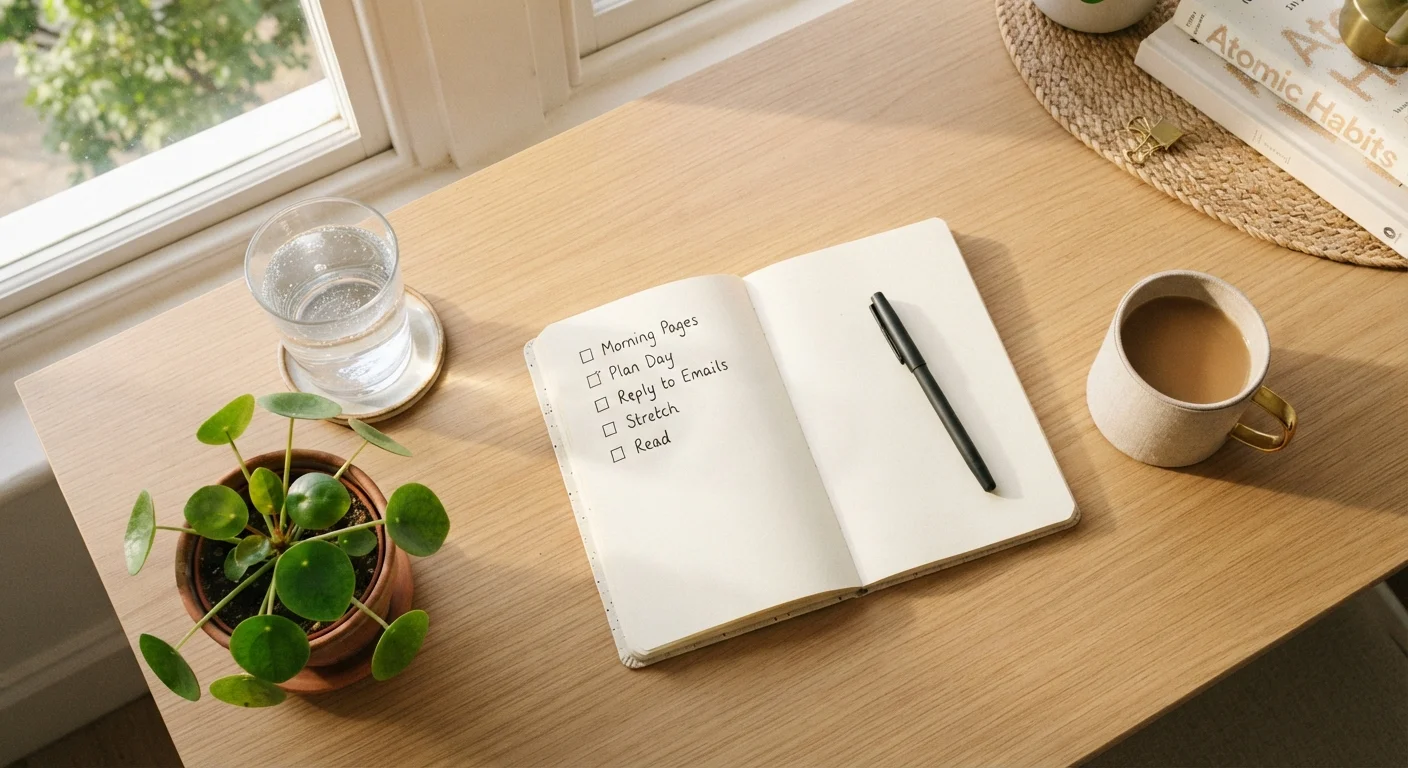
Why a Daily Habit Checklist Works for Beginners
Starting a healthier routine can feel paralyzing when you're not sure where to begin. The good news: you don't need a perfect plan. You need a starting point. This checklist breaks daily wellness into five practical areas - sleep, hydration, movement, meals, and mental health - so you can build gradually without burnout.
Research in behavioral science consistently suggests that small, repeated actions form lasting habits more reliably than dramatic, all-at-once changes. Pick two or three items from this list to focus on first. Once those feel automatic, layer in more. If you'd like a structured day-by-day approach alongside this checklist, Your First Week of Better Health walks you through a low-pressure seven-day starter plan.
This article provides general health information for educational purposes only and is not a substitute for advice from a qualified healthcare professional. If you have existing health conditions or concerns, please speak with your doctor before making changes to your routine.
This Is General Information, Not Medical Advice
The habits on this checklist are general wellness education suitable for most healthy adults. They are not a replacement for personalized medical guidance. If you have a chronic condition, are pregnant, or are managing a mental health diagnosis, please consult a qualified healthcare professional before making changes to your routine. In a mental health emergency, contact a crisis line or seek immediate professional support.
What You'll Need Before You Start
This checklist requires almost no equipment - most items rely only on your time and attention. A few simple tools can make habit-tracking easier and more consistent.
Reusable water bottle
Keeps water accessible throughout the day, making hydration habits easier to maintain.
Notebook or journal
Used for daily check-ins, habit tracking, and brief evening reflections.
Habit-tracking app
Helps you log completed habits each day and spot patterns over time - many free options are available.
Sleep-tracking app or alarm
Supports consistent sleep and wake times by sending reminders and logging sleep duration.
Once you have your basics in place, work through the checklist groups below. Aim to complete each item at roughly the same time each day - consistency in timing helps reinforce new habits more effectively than random scheduling.
Your Daily Habit Checklist
The checklist below is organized into five habit pillars. Items marked must are the non-negotiable basics that make the biggest difference for most beginners. Should items are strongly recommended once the basics feel manageable. Nice-to-have items are worth adding when you're ready to go further.
Sleep
Hydration
Movement
Meals
Mental Health Check-Ins
For habits specifically around movement, Walking vs Structured Exercise can help you decide what level of activity makes sense for where you are right now.
Adding Mental Wellness to Your Daily Routine
Mental health habits are just as foundational as physical ones - and many require no equipment, no subscription, and very little time. A two-minute breathing exercise, a brief journal entry, or simply stepping outside for fresh air can meaningfully shift how you feel across a day.
If you're new to this area, Getting Started with Mental Wellness offers a solid grounding in core concepts. When you're ready to develop a structured morning, Building a Morning Routine That Actually Supports Your Mental Health shows how to design one that fits your life. You can also explore Mental Health Habits That Require No Equipment or Subscription for accessible daily practices, or try Starting a Journaling Practice for Emotional Clarity if you want to process your thoughts more regularly.
Persistent Symptoms Deserve Professional Attention
If you regularly experience poor sleep, low mood, persistent fatigue, or significant changes in appetite that don't improve with basic habit changes, these may be signs of an underlying condition. No checklist substitutes for professional evaluation. Please speak with a licensed healthcare provider if symptoms continue or worsen.