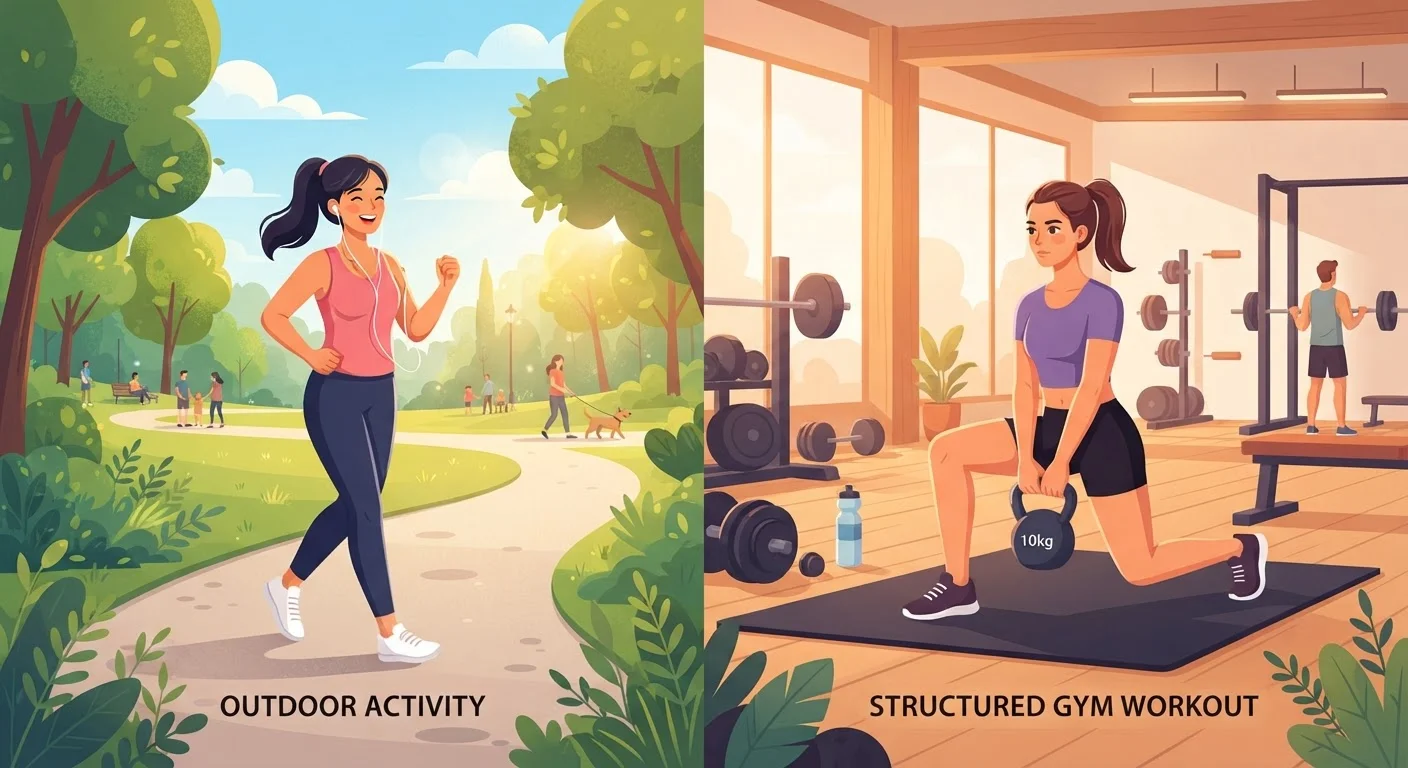
Why This Comparison Matters for Beginners
When you're new to prioritising your health, the sheer number of exercise options can feel paralyzing. Do you need a gym membership? A structured program? Or is a daily walk actually enough? These are fair questions, and the answer depends more on your starting point than on any universal rule.
Physical activity guidelines from public health bodies like the U.S. Department of Health and Human Services generally recommend that adults aim for at least 150 minutes of moderate-intensity activity per week. Importantly, that guidance doesn't specify how you achieve it - walking counts. So does a structured workout class. The goal is consistent movement, not a particular method.
If you're building healthy habits from scratch, it helps to understand what each approach actually offers - and where each one has limits. See our beginner's week-by-week starting guide for a practical way to ease into either approach.
This article is for general informational purposes only and is not medical advice. Consult a qualified healthcare professional before starting any new exercise program, especially if you have an existing health condition.
What Walking Offers (and Where It Falls Short)
Walking is one of the most studied forms of physical activity, and its benefits are well established. Regular walking supports cardiovascular health, helps manage body weight, improves mood through endorphin release, and requires no equipment or special training. It's also low-impact, meaning it places minimal stress on your joints - a meaningful advantage for beginners or those with certain physical limitations.
The accessibility factor is hard to overstate. You can walk out your front door, adjust pace to how you feel that day, and stop whenever needed. That flexibility makes it easier to build a consistent habit, which is the true foundation of any long-term health improvement.
Make Walking Work Harder for You
You can increase the intensity of walking without turning it into a structured workout. Try adding hills, picking up your pace for short intervals, or walking with a weighted backpack (if cleared by a healthcare provider). These small adjustments can meaningfully increase cardiovascular effort while keeping the low-barrier nature of walking intact.
However, walking does have real limitations. It's primarily an aerobic (endurance-focused) activity and does relatively little to build muscular strength or improve bone density compared to resistance-based exercise. If your goals include building strength, improving posture, or managing certain chronic conditions, walking alone may not be sufficient. Think of it as an excellent starting point - not necessarily a complete fitness solution on its own.
What Structured Exercise Offers (and Where It's Harder to Start)
Structured exercise refers to planned, deliberate workouts - things like strength training, group fitness classes, cycling sessions, or guided programs. The key distinction is intentionality: you're targeting specific physical adaptations rather than just accumulating general movement.
The benefits of structured exercise include improved muscle mass, stronger bones (particularly important as we age), better metabolic health, and more efficient cardiovascular conditioning. Research consistently shows that resistance training, in particular, plays a role in reducing risk for conditions like type 2 diabetes and osteoporosis over time.
| Walking | Structured Exercise | |
|---|---|---|
| Equipment needed | None (comfortable shoes recommended) | Varies - minimal to gym-level gear |
| Barrier to entry | Very low | Moderate to high |
| Cardiovascular benefit | Moderate | Moderate to high (depending on type) |
| Strength building | Minimal | Significant (with resistance training) |
| Injury risk for beginners | Low | Low to moderate (form-dependent) |
| Flexibility of schedule | High - do it anywhere, anytime | Lower - requires planning and space |
| Habit-forming ease | High - simple to start and repeat | Moderate - learning curve involved |
The barrier to entry, though, is genuinely higher. Structured programs often require learning proper form to avoid injury, navigating gym environments, or understanding how to sequence exercises. For many beginners, this complexity is exactly what causes them to give up before habits form. If you've ever related to all-or-nothing thinking about health routines, it's worth reading about the trade-offs of rigid versus flexible approaches before committing to an intense program.
How to Choose - and How to Combine Both
There's no single right answer, but there are useful questions to ask yourself:
- What's your current baseline? If you're largely sedentary, walking is an appropriate and effective starting point.
- What are your goals? General health maintenance differs from building strength or training for an event.
- What can you realistically sustain? A moderate habit you maintain beats an ambitious one you abandon.
Many people find that starting with walking builds the consistency and confidence needed to eventually add structured movement. You might begin with daily 20-30 minute walks, then gradually introduce two short strength sessions per week as movement becomes part of your routine. The Daily Habit Starter Checklist is a practical tool for mapping out how movement fits alongside sleep, nutrition, and other wellness basics.
150 min
Recommended weekly moderate activity
U.S. Department of Health and Human Services guidelines recommend at least 150 minutes of moderate-intensity aerobic activity per week for adults.
~8,000
Daily steps linked to health benefits
Research published in JAMA Internal Medicine found that walking around 8,000 steps per day was associated with lower risk of all-cause mortality compared to lower step counts.
Whatever you choose, remember that progress in physical health is gradual and individual. Avoid comparing your pace to others, and consult a healthcare provider if you have any conditions that might affect what type of activity is appropriate for you.