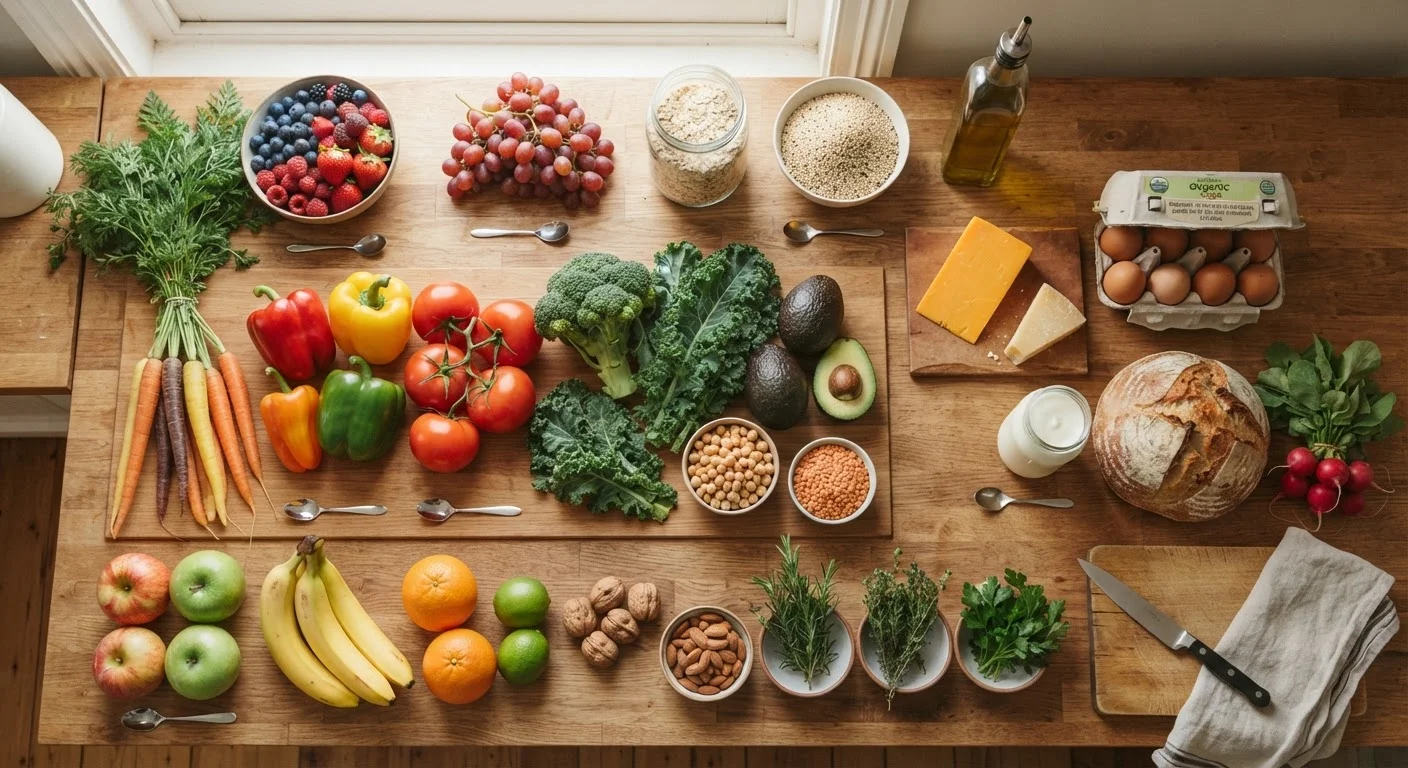
Why Structure Your Grocery List by Nutrition?
Most people write grocery lists based on habit or what they're craving - which often means the same foods week after week and accidental gaps in nutrients. Structuring your list around food groups and nutritional needs is a practical way to make balanced eating the default, not an afterthought.
Before you shop, it helps to understand what a balanced diet actually looks like at a foundational level. Our nutrition basics guide is a good starting point if you're new to thinking about food this way. And for a visual breakdown of portions and food groups on a single plate, see what a balanced plate actually looks like.
This checklist walks you through every category you should consider before your weekly shop - not to make grocery shopping complicated, but to make sure nothing important gets left out.
Blank weekly meal plan template
Map out 5-7 dinners and a few breakfast and lunch options before writing your grocery list, so every item has a purpose.
Nutrition Facts panel (on packaged food)
Use the serving size, fibre, added sugar, and sodium figures to compare similar products in-store.
Smartphone notes or grocery app
Organise your list by store section (produce, dairy, grains) to shop faster and avoid backtracking.
Freezer inventory list
Check what proteins, vegetables, or grains you already have frozen before buying duplicates.
How to Use This Checklist
Go through each group below before you head to the store. You don't need to buy from every sub-category every week - the goal is awareness and variety over time. Tick what you have, note what you need, and use the priority levels to guide what's non-negotiable versus what's flexible.
This Is General Guidance, Not Personal Medical Advice
Nutritional needs vary significantly based on age, health conditions, pregnancy, medications, and other individual factors. This checklist provides general educational information about food groups and balanced eating patterns. Always consult a registered dietitian or your healthcare provider before making significant changes to your diet, especially if you have a chronic health condition or specific nutritional concerns.
When checking labels in-store, keep it simple: scan the ingredients list (shorter is generally better) and check the Nutrition Facts panel for serving size, added sugars, sodium, and fibre. Our guide to reading ingredient lists without getting overwhelmed explains exactly what to look for. For a handy reference on specific vitamins and minerals, see vitamins and minerals at a glance.
Vegetables
Fruits
Whole Grains and Starches
Protein Sources
Dairy and Calcium Sources
Healthy Fats
Pantry and Label Check
Keeping Costs in Check
Eating with nutritional balance in mind doesn't have to mean a bigger grocery bill. Staples like dried legumes, oats, eggs, frozen vegetables, and canned fish are among the most nutrient-dense foods available and tend to be affordable. Buying versatile ingredients that work across multiple meals - a bag of brown rice, a large container of plain yogurt, a bunch of leafy greens - is usually more economical than buying single-use specialty items.
If budget is a concern, it's worth linking grocery planning to broader household budgeting habits. Our budgeting basics hub covers simple strategies for tracking weekly spending. Planning meals before you shop is one of the most effective ways to reduce both cost and food waste.
Beware of 'Health Halo' Labelling
Terms like 'natural,' 'multigrain,' 'low fat,' or 'made with real fruit' are marketing phrases and do not guarantee a product is nutritionally sound. 'Multigrain' bread, for example, may still be made primarily from refined flour. Always check the Nutrition Facts panel and ingredients list rather than relying on front-of-pack claims.