What 'Balanced' Really Means
The word balanced gets used constantly in nutrition conversations, but it rarely comes with a clear definition. At its most practical, a balanced diet means consistently providing your body with the range of nutrients - carbohydrates, proteins, fats, vitamins, and minerals - it needs to function well, without any single category crowding out the others.
It does not mean eating every food group in equal amounts at every meal, or never enjoying foods you love. Nutrition researchers and registered dietitians generally describe balance as a pattern across meals and days, not a strict checklist applied to a single plate.
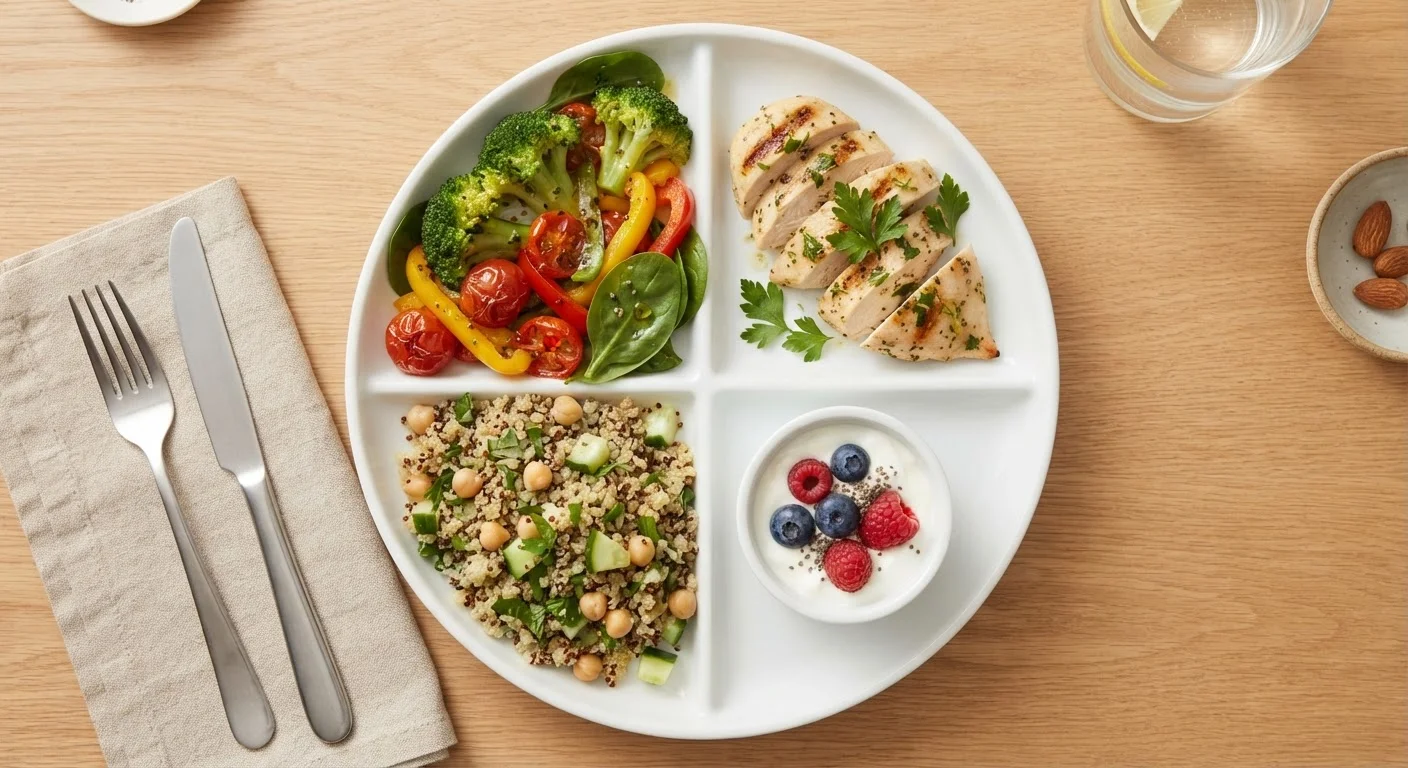
The USDA's MyPlate model - a plate divided into four sections for vegetables, grains, protein, and fruit, with a small circle for dairy on the side - is a widely used visual starting point for American adults. It's not a perfect system, but it gives beginners a useful mental picture before worrying about grams and percentages.
Macronutrients
The three main nutrient categories your body needs in relatively large amounts: carbohydrates, proteins, and fats. Each provides energy and serves specific functions.
Micronutrients
Vitamins and minerals your body needs in smaller amounts to support functions like immunity, bone health, and energy metabolism.
Dietary fiber
A type of carbohydrate found in plants that your body can't fully digest. It supports digestive health and helps you feel fuller for longer.
Whole grain
A grain that still contains all three original parts - bran, germ, and endosperm - making it richer in fiber and nutrients than refined grains.
Unsaturated fat
A type of fat, found in foods like olive oil, nuts, and avocados, that is generally considered beneficial for heart health in moderate amounts.
Essential amino acids
Building blocks of protein that the body cannot produce on its own and must obtain through food. Different protein sources provide different combinations.
The Four Building Blocks of a Balanced Plate
Most balanced meals draw from four broad categories. Understanding each one helps you make intentional choices rather than guessing.
Vegetables and Fruits
These should make up roughly half your plate at most meals. They deliver fiber, vitamins, minerals, and plant compounds that support a range of body functions. Variety in color is a practical shortcut - different pigments tend to signal different nutrients. Fresh, frozen, and canned forms all count; watch for added salt or sugar on labels. For more on reading those details, see our line-by-line breakdown of the Nutrition Facts label.
Whole Grains
Grains provide carbohydrates - your body's preferred fuel source. Whole grains (brown rice, oats, whole-wheat bread, quinoa) retain their outer bran and germ layers, which means more fiber and nutrients compared to refined grains like white bread or white rice. Aim to make at least half your grain choices whole-grain options.
Protein
Protein supports muscle maintenance, immune function, and countless other processes. Sources include lean meats, poultry, seafood, eggs, beans, lentils, tofu, and nuts. Plant-based proteins are entirely viable - the key is eating enough variety to cover the full range of essential amino acids (the building-block compounds your body can't make on its own).
Healthy Fats
Fat is not the enemy. Unsaturated fats from foods like avocados, olive oil, and nuts support cell health and help your body absorb certain vitamins. The practical goal is replacing saturated fats - common in butter and fatty meats - with unsaturated options where possible, not eliminating fat altogether.
Start With What's Already on Your Plate
You don't need to rebuild your meals from scratch. Look at a typical dinner and identify which building blocks are present - then consider what's missing or small. Adding a side of roasted vegetables or swapping in a whole-grain option is often all it takes to shift the balance meaningfully.
Using Your Hand as a Portion Guide
Scales and measuring cups are accurate, but you won't always have them handy. A hand-based portion framework gives you a body-proportional estimate you can use anywhere:
- Vegetables: Two cupped hands (roughly 1-2 cups)
- Grains: One cupped hand (roughly ½ cup cooked)
- Protein: Palm of one hand (roughly 3-4 oz)
- Fats (e.g., olive oil, nut butter): Thumb-sized amount
These are general reference points, not prescriptions. Your actual needs depend on your age, activity level, health status, and other individual factors. A registered dietitian or your healthcare provider is the right person to help you calibrate portions to your specific situation.
Common Mistakes Beginners Make
A few patterns trip up most people who are new to thinking about nutrition intentionally. Being aware of them makes it easier to avoid them.
Avoid Labeling Foods as 'Good' or 'Bad'
Framing individual foods as entirely off-limits can make eating stressful and unsustainable. Nutrition guidance generally focuses on overall patterns rather than eliminating any single food. If certain foods cause you health concerns, speak with a healthcare provider rather than making drastic cuts based on general advice.
Treating all carbs as equal. There's a meaningful difference between the fiber-rich carbohydrates in beans and vegetables and the rapidly digested carbohydrates in sugary drinks or white bread. Both are technically carbohydrates, but they behave differently in your body.
Overloading on protein while neglecting vegetables. High-protein meals are popular, and protein is genuinely important - but crowding vegetables off the plate in the process undermines overall balance. Check out common nutrition misunderstandings for more on this pattern.
Ignoring hunger and fullness cues. Portion guides are starting points. Learning to recognize when you're comfortably satisfied - not stuffed - is a skill that supports long-term balance better than any rigid meal plan.
Putting It All Together at Every Meal
You don't need to overhaul your entire diet at once. A useful first step is to look at what's already on your plate and ask: Where are the vegetables? Is there a protein source? What kind of grain is this?
From there, small shifts compound over time. Swap white rice for brown rice once a week. Add a handful of spinach to something you already enjoy. Include a bean-based dish at one dinner per week. These incremental changes are more sustainable than dramatic resets.
If ingredient labels feel confusing when you're shopping, reading ingredient lists without feeling overwhelmed is a practical skill worth building early. And if you want to understand the micronutrient side of balance - vitamins and minerals - our plain-language vitamins and minerals reference is a good next read.
Above all, balance is a direction, not a destination. Most meals don't need to be perfect - they just need to be generally on track, most of the time.
This article is for general informational and educational purposes only and is not a substitute for personalized medical or dietary advice. Consult a qualified healthcare professional or registered dietitian for guidance tailored to your individual health needs.
MyPlate (USDA)
The USDA's official visual eating guide for Americans, with tools and resources to help you understand food groups and portion concepts at no cost.
Dietary Guidelines for Americans
Published jointly by the USDA and HHS, this federal resource outlines evidence-based eating patterns and nutrient recommendations for the US population.
Academy of Nutrition and Dietetics - Find a Dietitian
A directory tool from the Academy of Nutrition and Dietetics that helps you locate a registered dietitian in your area for personalized nutritional guidance.