Why Soil Type Is the First Thing to Understand
Before you choose plants, buy tools, or plan a single bed, it helps to know what you're working with underground. Soil isn't just an inert backdrop - it determines how much water your plants receive, how easily roots can spread, and how many nutrients are actually available. If you've ever watched plants struggle despite regular watering and care, the soil is often the culprit.
If you're just getting started outdoors, this pairs well with our guide to starting a garden from scratch, which walks through the full picture of setting up your space for the first time.
~45%
Mineral content of healthy garden soil
Healthy soil is roughly 45% minerals, 25% water, 25% air, and 5% organic matter - according to general soil science principles widely cited in agricultural education.
6.5-7.0
Ideal pH range for most vegetables
Most vegetable crops perform best in a slightly acidic to neutral pH range, as noted by university extension gardening programs across the US.
The Four Main Soil Types Explained
Loam
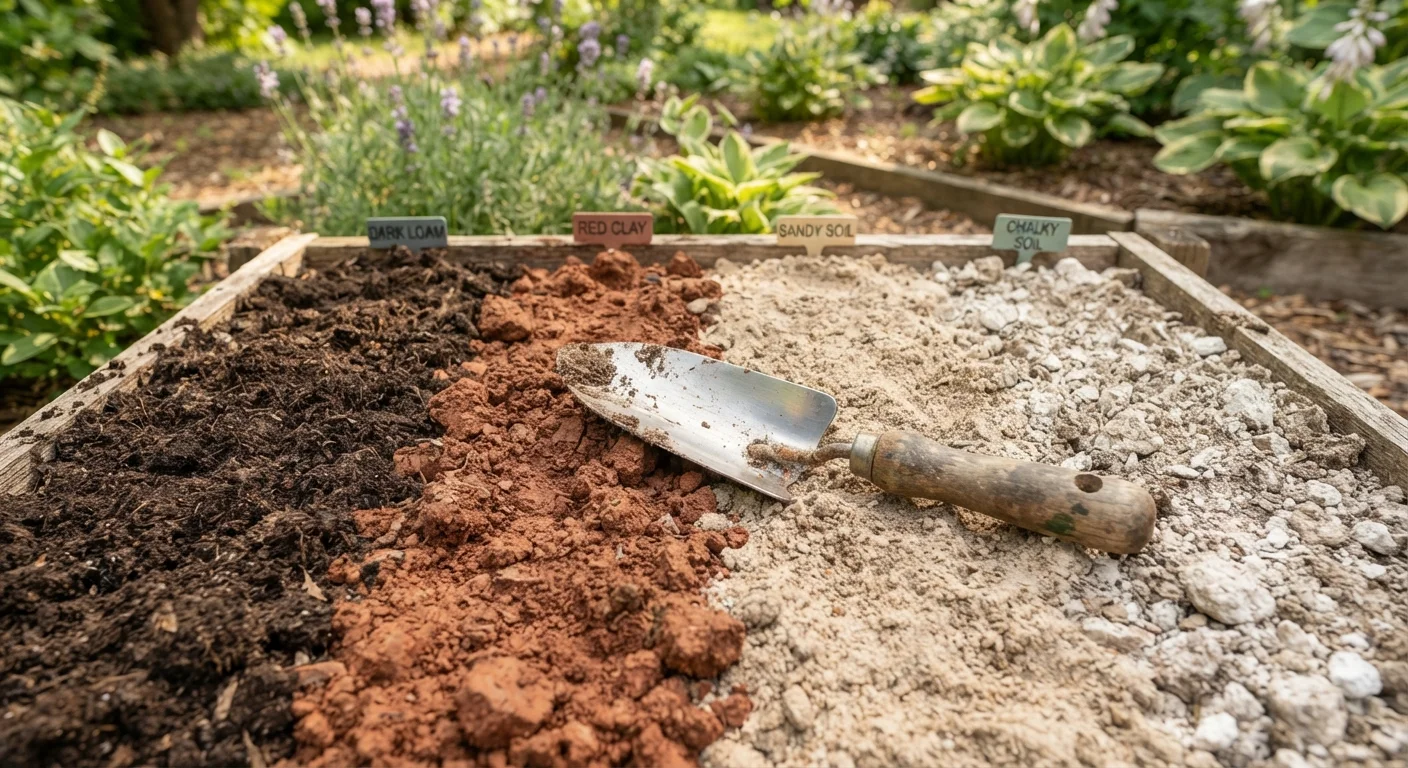
Loam is often described as the 'ideal' garden soil, and for good reason. It contains a balanced mix of sand, silt, and clay particles, which means it drains well enough to prevent waterlogging but holds enough moisture and nutrients to support most plants. If your soil is dark, crumbles easily after being squeezed, and smells earthy, you likely have loam - consider yourself fortunate.
Clay Soil
Clay soil is made of very fine particles that pack together tightly. It holds water and nutrients well, but drains slowly - which can suffocate roots and cause puddles after rain. Clay is also heavy and sticky when wet, and sets hard when dry. Despite its reputation, clay can be genuinely productive once improved with organic matter.
Sandy Soil
Sandy soil feels gritty and falls apart in your hand. It drains very quickly, which prevents waterlogging but also means water and nutrients wash through before plant roots can absorb them. Sandy soil warms up faster in spring, which can be an advantage for early sowing, but it needs regular feeding and mulching to stay fertile.
Chalky (Alkaline) Soil
Chalky soil sits over limestone or chalk bedrock and tends to be thin, stony, and free-draining. Its high pH (alkalinity) can prevent plants from absorbing iron and manganese, causing yellowing leaves. It suits lavender, clematis, and many herbs, but struggles with acid-loving plants like blueberries or rhododendrons.
How to Test Your Soil at Home
You don't need specialist equipment to get a reliable read on your soil. Start with the squeeze test: take a small handful of moist soil and press it firmly in your fist. Clay soil holds its shape and may feel slightly slippery; sandy soil crumbles apart immediately; loam holds together but breaks apart with a gentle poke. Chalky soil often contains visible white stones or fragments.
For drainage, dig a hole about 12 inches deep, fill it with water, and watch how quickly it disappears. If it drains in an hour or less, you have fast-draining sandy or loamy soil. If it takes several hours or sits overnight, clay is likely dominant.
For pH, inexpensive test kits are available at garden centers and give you a rough reading of whether your soil is acidic, neutral, or alkaline. A reading around 6.5-7.0 is considered neutral and suitable for the widest range of vegetables and flowers.
Test Before You Amend
Before adding lime, sulfur, or any pH-adjusting product to your soil, do a simple pH test first. Amending without knowing your baseline can push soil chemistry in the wrong direction. Inexpensive test kits from a garden center take only a few minutes and can save you from wasted effort and plant losses.
How to Improve the Soil You Have
The most universally effective soil improver is compost - whether homemade from kitchen and garden waste, or bagged from a garden center. Working compost into clay loosens its structure and improves drainage. Adding it to sandy soil helps retain moisture and nutrients. Even good loam benefits from a yearly top-dressing of compost as organic matter naturally breaks down over time.
For clay soil, grit or coarse sand can also be dug in to open up the texture - but use it generously; a small amount makes little difference. Avoid digging clay when it's waterlogged or bone dry, as this can damage its structure further.
For chalky or highly alkaline soil, adding sulfur chips or acidic organic matter like pine bark can lower pH gradually - but changes take time and repeated applications. If you want to grow acid-loving plants, raised beds or containers with a purpose-mixed ericaceous compost are often the more practical solution.
Be wary of common shortcuts. Our article on garden myths that trip up new growers explains why some popular fixes - like adding gravel at the bottom of pots for 'drainage' - don't actually work the way most people assume.
Soil Improvement Takes Time
Don't expect to transform your soil in a single season. Clay that has taken years to compact won't become perfectly workable after one application of compost. Consistent yearly additions of organic matter - and avoiding heavy foot traffic on garden beds - produce the most lasting results. Patience is genuinely part of the process.
Working With Your Soil, Not Against It
One of the most practical shifts a beginner can make is choosing plants that suit the soil they already have, rather than spending significant effort trying to transform it. Clay suits moisture-loving plants like hostas, astilbes, and many shrub roses. Sandy soil is excellent for drought-tolerant herbs, lavender, and ornamental grasses. Matching plants to conditions, much like matching plants to your garden's light levels, reduces maintenance and sets plants up for long-term success.
That said, improving your soil gradually each year - through compost, mulching, and avoiding unnecessary digging - is one of the most rewarding long-term habits a gardener can build. Think of it less as a one-time fix and more as an ongoing relationship with the ground beneath your feet.
“The soil is the great connector of lives, the source and destination of all. It is the healer and restorer and resurrector, by which disease passes into health, age into youth, death into life.”
— Wendell Berry, Author and farmer, writing on agricultural and environmental stewardship