Why Light Is the First Thing to Figure Out
New gardeners often start by picking plants they love the look of, then find a spot for them afterward. This approach frequently leads to disappointment. Light availability is one of the few conditions in your garden that is very difficult to change - you can improve soil, adjust watering, and add fertilizer, but you can't easily move a tree or reposition your house to change where the sun falls.
Before you buy a single plant or sow a single seed, take time to observe your outdoor space. Which areas are in direct sun all morning? Where does afternoon shade roll in? Are there spots that barely see any direct sun at all? This upfront observation takes one good clear day and pays off every season afterward. It's also worth considering how light shifts across the year - a patio that bakes in summer may be much shadier in early spring when trees are in full leaf.
Understanding light pairs directly with other foundational knowledge. See our guide to garden soil types for another key factor that shapes what will grow in your space.
The Three Main Light Categories Explained
Plant labels and gardening resources use three main terms. Here's what each one actually means in practice:
Full Sun
A full-sun location receives six or more hours of direct sunlight per day. This is where most vegetables (tomatoes, peppers, squash), many herbs (basil, rosemary, thyme), and popular flowering plants like marigolds and coneflowers perform best. Full-sun plants placed in shade tend to grow leggy and weak, and flowering varieties often fail to bloom well.
Partial Sun / Partial Shade
These two terms are sometimes used interchangeably, though there's a subtle difference. Partial sun leans toward the sunnier end - roughly four to six hours - while partial shade suggests two to four hours, often with shelter from harsh afternoon sun. Plants suited to this range include many popular perennials like astilbe, coral bells, and impatiens. Morning sun with afternoon shade is often the ideal arrangement for plants in this category.
Full Shade / Deep Shade
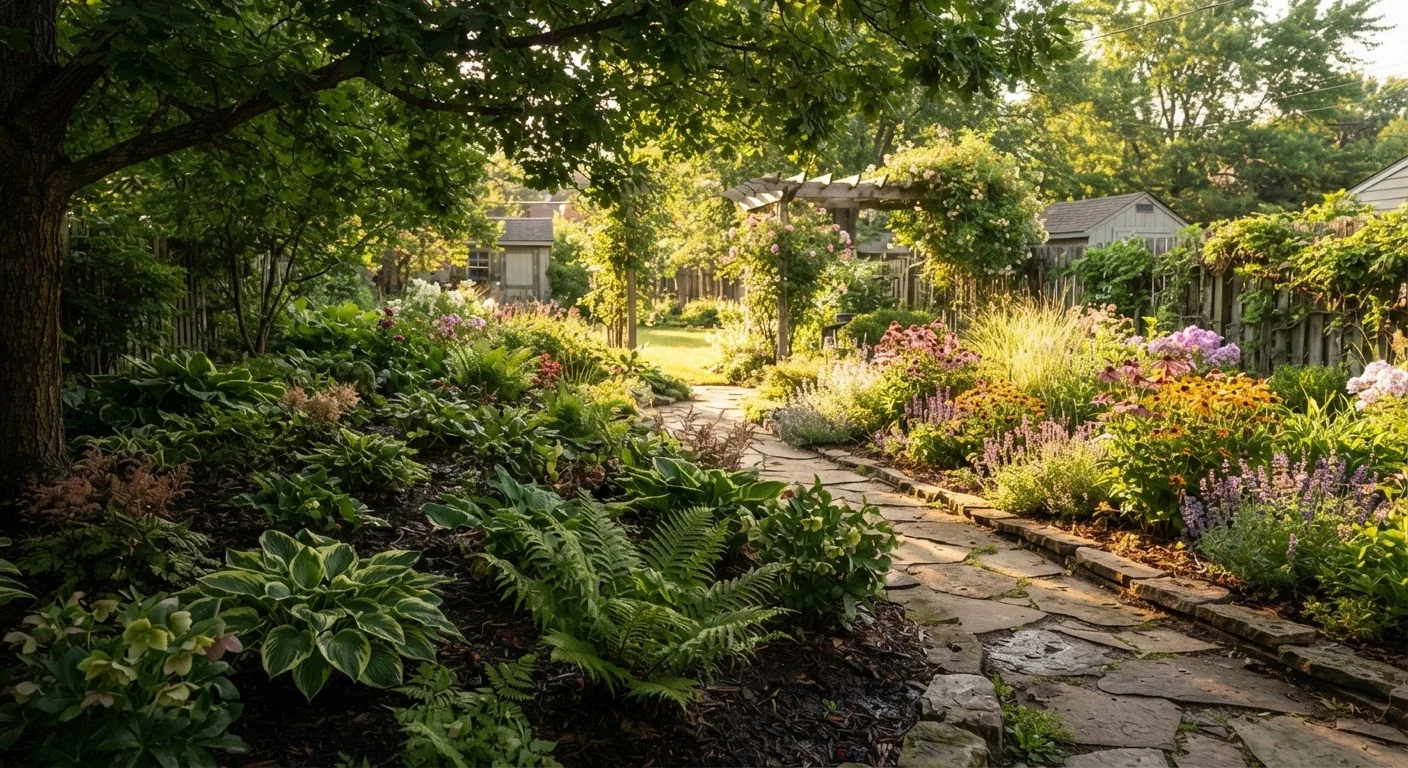
Full shade means fewer than two hours of direct sun per day. This doesn't mean total darkness - reflected light and ambient brightness still reach these areas. Hostas, ferns, and lily of the valley are classic examples of plants adapted to low-light conditions. True deep shade, such as under a dense evergreen canopy, is challenging for most plants and limits your options considerably.
6+ hrs
Daily sun needed for full-sun plants
Most vegetable crops and flowering annuals require a minimum of six hours of direct sunlight to perform well.
2-6 hrs
Daily sun for partial shade plants
Many popular perennials and woodland plants thrive in this middle range, especially with morning sun and afternoon protection.
<2 hrs
Daily direct sun in full shade zones
Areas under dense tree canopies or on the north side of structures often fall into this category, limiting suitable plant choices.
Common Mistakes and How to Avoid Them
The most frequent beginner mistake is underestimating how much shade a garden actually has. A yard that looks bright and open in early spring may become significantly shadier once nearby trees leaf out in late spring and summer. Always assess light during the growing season, not before it starts.
Another common error is trusting memory instead of measurement. It's easy to overestimate how long the sun hits a particular bed. If you spend one day logging light at hourly intervals - even just with a notepad or your phone - you'll have a far more accurate picture than gut instinct provides.
Use the One-Day Light Mapping Method
On a clear day, check each area of your garden at 8 a.m., 10 a.m., noon, 2 p.m., and 4 p.m. Mark whether each spot is in full sun, partial shade, or deep shade at each time. By the end of the day, you'll have a reliable snapshot of your light zones that you can reference for all future planting decisions.
It's also worth knowing that plants will often show you when light conditions are wrong. Sun-loving plants in too much shade grow tall and spindly reaching for light, and rarely flower well. Shade plants caught in too much direct sun develop pale, scorched patches on their leaves. These are useful clues if you've placed a plant and it isn't thriving.
When planning which plants to try, it helps to understand their life cycles too. Our guide to annual, biennial, and perennial plants explains how plant types affect your planning decisions season to season.
Putting It Together: Matching Plants to Your Zones
Once you've mapped your garden's light zones, the process of choosing plants becomes much simpler. Group your observations into three rough areas - sunny, partly shaded, and shaded - then use that map when reading plant labels at the nursery or decoding a seed packet.
A practical approach for beginners is to start with plants that are labeled for the conditions you actually have, rather than trying to push plants into the wrong light. Success in the right spot builds confidence and gives you a thriving garden to build on. Over time, you can experiment with borderline conditions - a plant that tolerates partial shade might do fine on the shadier edge of your sunny bed - but begin with the closest match you can find.
Light works alongside watering needs as well. Many shade-tolerant plants prefer consistently moist soil because they're often growing under trees whose roots compete for water. Our guide to watering your garden well covers how to think through water needs alongside light when planning your beds.