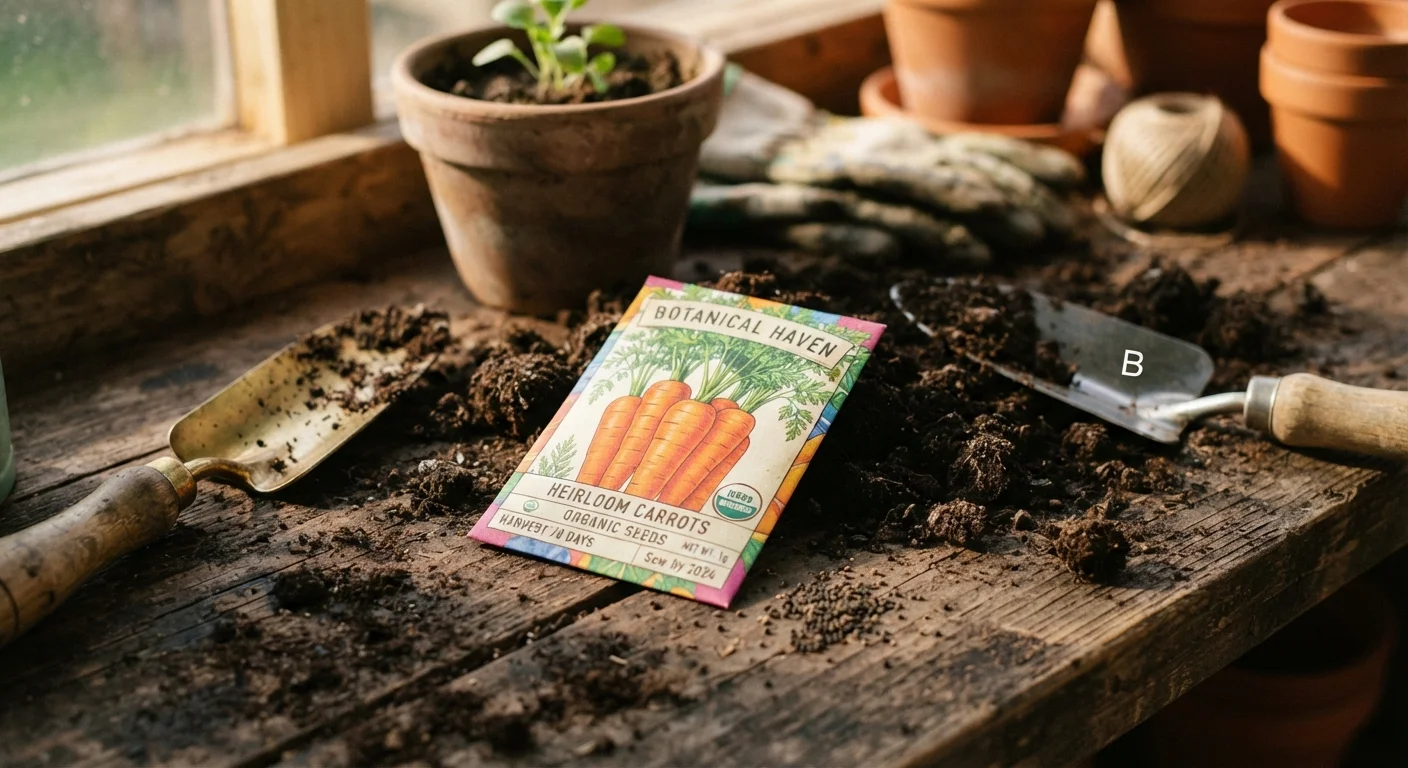
What's Actually Printed on a Seed Packet
Pick up any seed packet and you'll find it crowded with numbers, symbols, and abbreviations. Most beginners scan for the plant name and ignore the rest - but those details are genuinely useful. They tell you when to sow, how deep to plant, how far apart to space your plants, and what kind of conditions the seeds need to germinate. Reading a packet carefully before you plant can save you weeks of frustration.
| Key packet sections | Sowing time, depth, spacing, light, water, soil, days to germination, days to maturity |
| Full sun definition | 6+ hours of direct sunlight per day |
| Partial shade definition | 2-4 hours of direct sunlight per day |
| Common sowing depth rule | 2-3× the seed's diameter (always defer to packet) |
| Seed viability concern | Germination rates decline as seeds age past their lot date |
Packets vary by brand, but nearly all include the same core categories of information. Once you know what each section means, you can decode any packet in under a minute.
Sowing Time and USDA Hardiness Zone
Most packets list a recommended sowing window - something like "Start indoors 6-8 weeks before last frost" or "Direct sow after all danger of frost has passed." To use this guidance, you need to know your local last frost date, which varies by region. The USDA Plant Hardiness Zone Map divides the US into numbered zones based on average annual minimum temperatures, and many packets reference these zones to indicate where a plant will reliably grow outdoors.
If a packet says a plant is hardy in Zones 5-9, that tells you whether it can survive your winters. For annuals that complete their life cycle in one season, the zone is less about winter survival and more about whether your growing season is long enough. See our guide to annual, biennial, and perennial plants for a plain-language explanation of how plant life cycles affect your sowing decisions.
Depth, Spacing, and Days to Germination
Three numbers that beginners often overlook are sowing depth, plant spacing, and days to germination.
- Sowing depth tells you how far below the soil surface to place the seed. A common rule of thumb is to plant seeds at a depth roughly two to three times their diameter, but always follow the packet - some seeds (like lettuce) need light to germinate and should barely be covered.
- Spacing appears in two forms: the gap between seeds in a row, and the gap between rows. Crowding plants stunts growth and encourages disease, so resist the urge to plant more than the label recommends.
- Days to germination is an estimate of how long it takes for seedlings to break the soil surface under good conditions. It's a range, not a deadline - cooler soil slows germination, warmer soil speeds it up.
Days to Germination
The estimated number of days between sowing and the first seedling emerging from the soil. This is an average range under typical conditions - temperature and moisture will affect the actual timing.
Days to Maturity
The time from germination (or transplanting) until a plant is ready to harvest or reaches full bloom. Used to judge whether a variety suits your available growing season.
Hardiness Zone
A geographic designation from the USDA Plant Hardiness Zone Map indicating the average annual minimum winter temperature in an area. Helps determine whether a plant can survive year-round outdoors in a given location.
Sowing Depth
How deep below the soil surface a seed should be planted. Depth affects moisture retention around the seed and, for some seeds, determines whether it receives the light it needs to sprout.
Thinning
The practice of removing weaker or excess seedlings after germination to ensure proper spacing. Thinned seedlings are usually pulled or snipped at soil level rather than transplanted.
Lot Date / Packed-For Date
The date printed on a seed packet indicating when the seeds were packaged. Seeds gradually lose viability after this date, so older packets may produce lower germination rates.
If your seedlings still haven't appeared well beyond the listed range, our article on why seedlings fail walks through the most common causes.
Light, Water, and Soil Requirements
Packets typically include short phrases like "Full Sun," "Partial Shade," or "Well-drained soil." These aren't vague suggestions - they describe the conditions that give the plant its best chance. Full sun generally means at least six hours of direct sunlight per day; partial shade usually means two to four hours. Planting a sun-loving vegetable in a shadowy corner will produce weak, unproductive plants no matter how carefully you follow every other instruction.
"Well-Drained" Doesn't Mean Dry
Well-drained soil holds enough moisture for roots to absorb but doesn't stay waterlogged after rain. If water pools in your bed for more than an hour after heavy rain, you may need to improve drainage before planting. Adding organic matter like compost is the most beginner-friendly way to improve both drainage and soil fertility at the same time.
Soil descriptions like "well-drained" mean the ground shouldn't stay waterlogged after rain. "Rich" or "fertile" soil implies you may want to amend with compost before planting. These cues help you decide whether your existing bed is ready or needs preparation first. For a deeper look at matching plants to your outdoor space, see our overview of sun, shade, and partial shade.
Days to Maturity and the Seed Lot Date
Days to maturity tells you how long after germination (or transplanting, for plants started indoors) before the plant is ready to harvest or reaches full flower. This number is important for planning: if your growing season is 120 days and a squash variety needs 100 days to maturity, you don't have much margin for a late start.
Look also for the packed-for or lot date - usually printed on the back or bottom of the packet. Seeds lose viability over time, and older seed lots may have lower germination rates. If you're using leftover packets from a previous season, expect that some seeds may not sprout. Deciding whether to start from seed at all - or buy young plants instead - is worth thinking through; our seeds vs. seedlings comparison lays out both options clearly.
Finally, check for any notes on thinning. Many packets recommend sowing more seeds than you need, then removing weaker seedlings once they emerge. This sounds wasteful but results in stronger, better-spaced plants overall. Plan your sowing calendar around all of these cues for a smoother growing season - our beginner's gardening year guide can help you fit seed-sowing into the broader seasonal rhythm.