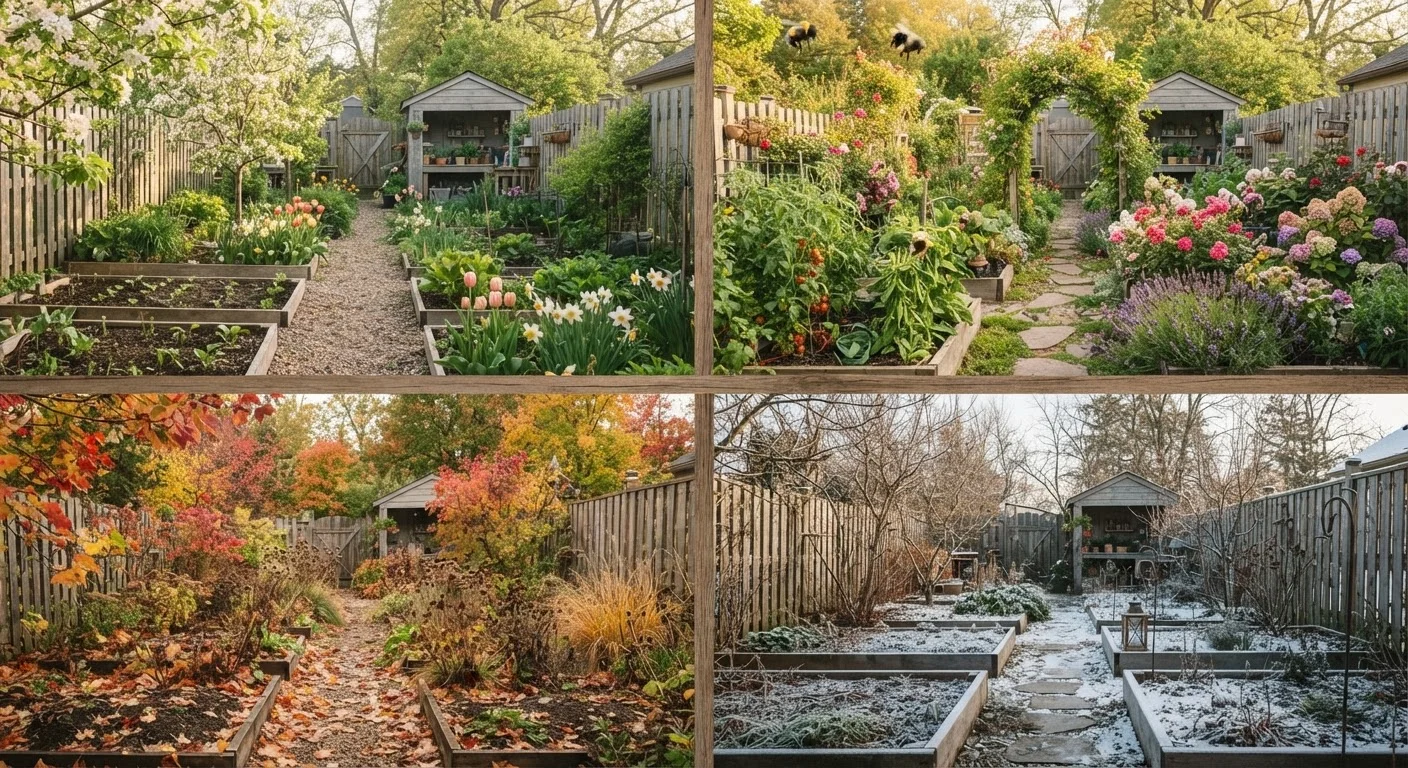
How the Gardening Year Actually Works
Many beginners imagine gardening as a summer hobby - you plant things in June and harvest them in August. In reality, outdoor gardening is a year-round rhythm where each season sets up the next. Missing autumn prep, for example, makes spring harder. Skipping a summer feeding routine can mean poor harvests even with healthy-looking plants.
This guide walks through what actually needs doing in each season, why it matters, and what you can safely skip if you're just starting out. No prior experience is assumed. The tasks here focus on common US growing conditions, but because climates vary significantly - from the Pacific Northwest to the Gulf Coast - always treat any calendar as a starting guide, not a rule.
Before anything else, it helps to understand what tools you'll actually need. See our beginner's guide to garden tools to avoid over-buying at the start.
35%
US households that grow food at home
According to the National Gardening Association, roughly one in three American households participates in some form of food gardening.
6-8 weeks
Head start needed for warm-season crops
Seed-starting guides consistently recommend beginning tomatoes, peppers, and eggplants 6-8 weeks before the last expected frost date in your area.
1 inch
Weekly water most vegetables need
University cooperative extension programs broadly recommend approximately 1 inch of water per week as a baseline for vegetable garden irrigation.
Spring: Sow, Prep, and Plant
Spring is the most active season in the garden, typically running from March through May in most parts of the US. Soil begins to warm, days lengthen, and plants respond quickly - which means timing matters more now than at any other point in the year.
Key spring tasks
- Soil preparation: Work compost or organic matter into beds before planting. If you're unsure what type of soil you're working with, understanding your soil type is a worthwhile first step.
- Sowing seeds indoors: Tomatoes, peppers, and squash benefit from being started indoors 6-8 weeks before your last frost date.
- Direct sowing outdoors: Once the soil reaches around 50°F, cool-season crops like lettuce, spinach, and peas can go straight into the ground. Reading your seed packet carefully will tell you exact depth and spacing requirements.
- Transplanting seedlings: After the last frost, harden off indoor seedlings by placing them outside for increasing periods before planting out.
Find your local last frost date before you do anything else in spring - it's the single date that drives nearly every planting decision you'll make.
Planting too early risks frost damage that wipes out weeks of work; knowing your date lets you count backwards confidently to schedule seed starting.
Resist the urge to sow everything the moment seeds arrive in the mail. Stagger plantings by 2-3 weeks so harvests are spread out rather than arriving all at once.
Succession sowing is one of the most effective strategies experienced gardeners use to avoid the feast-or-famine cycle common in beginner gardens.
Spring is also when common gardening myths do the most damage - for example, the idea that more water always helps young seedlings. See our piece on garden myths that trip up new growers for a reality check.
Summer: Water, Feed, and Manage
Summer shifts the focus from planting to maintaining. Between June and August, most plants are in active growth or producing, and your main jobs are keeping up with their needs and catching problems early.
Key summer tasks
- Watering consistently: Most vegetable gardens need about 1 inch of water per week, either from rainfall or irrigation. Water at the base of plants in the morning to reduce disease risk.
- Feeding plants: Vegetables growing in containers or poor soil benefit from a balanced fertilizer applied every 2-3 weeks during peak growth.
- Weeding regularly: Small weeds pulled early require far less effort than large ones left to establish. A 10-minute weekly pass through beds prevents major infestations.
- Monitoring for pests: Check the undersides of leaves for eggs and larvae. Catching problems early usually means simpler solutions.
- Succession sowing: Sow fast-growing crops like salad greens every 2-3 weeks to keep harvests coming rather than getting everything at once.
Don't Overwater in Hot Weather
Wilting plants in summer heat don't always mean the soil is dry - sometimes soil stays moist at root level while surface temperatures are high. Before watering, push a finger 2 inches into the soil. If it feels moist, wait. Overwatering is one of the most common causes of root disease in vegetable gardens.
If you're growing in pots, container vegetables dry out faster than bed plantings and may need daily watering in hot spells.
Autumn: Clear, Plant, and Build Soil
Autumn - September through November - is underrated by beginners but loved by experienced gardeners. The workload is lighter than spring, but the decisions you make now pay dividends next year.
Key autumn tasks
- Clearing spent crops: Remove finished vegetable plants promptly. Leaving diseased material on beds can carry problems into next season.
- Planting spring bulbs: Tulips, daffodils, and alliums go in the ground in October and November for spring color. This is a satisfying, low-skill project.
- Building compost: Autumn generates plenty of raw material - fallen leaves, spent plants, and kitchen scraps. If you haven't started composting, making compost at home is easier than most beginners expect.
- Improving soil: Apply a 2-3 inch layer of compost or aged manure over empty beds and let it work in over winter.
- Protecting tender plants: Bring frost-sensitive plants indoors or cover them with horticultural fleece before the first hard frost.
Autumn Soil Work Pays Off in Spring
Adding compost to empty beds in autumn gives organic matter the entire winter to break down and integrate before you plant. Come spring, your soil will be noticeably easier to work and more fertile - with almost no extra effort on your part.
Winter: Rest, Plan, and Prepare
In most US regions, winter means little active growing in outdoor beds. That's not a problem - it's an opportunity. The gardener who uses winter well starts spring ahead.
Key winter tasks
- Planning next year's layout: Sketch out where you want to grow what. Rotating vegetable families prevents soil-borne disease buildup year over year.
- Ordering seeds early: Popular varieties sell out. Reviewing seed catalogs and ordering in January or February gives you more choices.
- Tool maintenance: Clean, sharpen, and oil tools before storing or before the spring rush begins.
- Reading and learning: Winter is ideal for filling in knowledge gaps - for example, understanding how light levels affect what you can grow in different parts of your yard.
“The best fertilizer is the gardener's shadow - meaning that simply being present, observant, and attentive in the garden consistently produces better results than any single product or technique.”
— Traditional gardening adage, Long-standing principle in horticultural education
In milder regions (USDA zones 8-10), winter gardening is more active - cool-season greens, garlic, and overwintered onions all grow through the cooler months.
Beginner Tips That Apply Year-Round
Beyond seasonal tasks, a few habits make every part of the gardening year easier:
- Keep a simple garden journal. Note what you planted, when, and how it performed. Even rough notes dramatically improve decision-making next season.
- Don't try everything at once. Starting with 3-4 crops you genuinely want to eat is more satisfying and educational than an overcrowded, chaotic first garden.
- Think about plant combinations. Certain plants support each other - companion planting is a simple concept that can reduce pest pressure and improve yields with no extra cost.
- Accept failures as data. Every gardener, regardless of experience, loses plants. The useful question is always: what can I learn from this?
Gardening rewards consistency over intensity. Fifteen minutes in the garden three times a week will produce better results than an occasional marathon session - and it's far more enjoyable.