Why Less Is More When You're Starting Out
New gardeners often feel pressure to stock up before they've even turned a single sod. Walk into any garden center and you'll see walls of equipment that seem essential - but most beginners use fewer than half a dozen tools regularly. Buying too much too soon is a common and expensive mistake, and one that's easily avoided with a little forethought.
The same principle applies to organizing your home. Just as our guide on resisting the urge to shop first encourages you to assess real needs before buying storage products, the same logic holds for garden tools: understand what your garden actually demands before spending anything.
Use the checklist below to think through your garden's specific needs, evaluate tools honestly, and build a practical starter kit - not a cluttered shed.
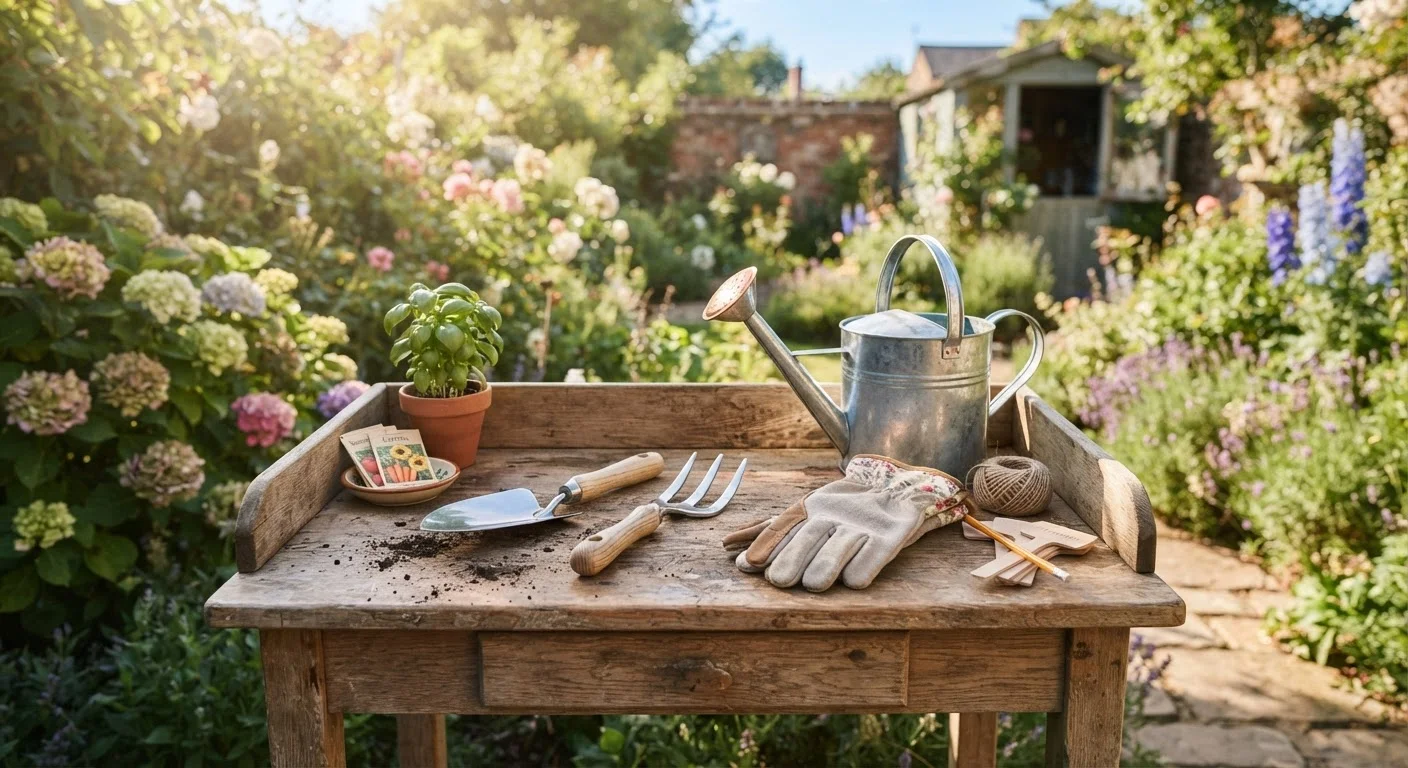
Hand trowel
Used for digging small planting holes, transplanting seedlings, and working compost into soil.
Hand fork
Loosens compacted soil and removes weeds without disturbing plant roots nearby.
Watering can (2-gallon)
Delivers water gently and precisely to new plantings without washing away soil or seeds.
Gardening gloves
Protects hands from thorns, splinters, and soil-borne irritants during all garden tasks.
Long-handled border fork or spade
Needed for breaking and turning soil in beds larger than a container or small raised bed.
Hoe
Quickly disrupts weed seedlings between rows before they establish - most useful in vegetable plots.
Kneeler pad
Reduces joint strain during extended planting or weeding sessions at ground level.
How to Use This Checklist
Work through each group in order. The first section helps you define your garden's character; the sections that follow guide you through evaluating specific tools against those needs. Mark each item as you go, and treat it as a genuine audit rather than a shopping list. Many items will confirm that you don't need something - that's the point.
Know Your Garden Before You Shop
Evaluate the Core Hand Tools
Decide on Long-Handled Tools
Watering Equipment
Safety and Comfort Basics
Don't Let the Garden Center Decide For You
Garden centers are designed to make every display item look necessary. Many tools marketed as "starter sets" bundle low-quality items you won't use. Work through this checklist before you walk into a store - not inside one. A short list decided at home will save you money and cupboard space.
Getting More From Your Tools From Day One
Even the best tools perform poorly without a little basic care. After each use, knock soil off blades and wipe metal parts dry to prevent rust. A light coat of linseed oil on wooden handles once a season keeps them from splitting. Store tools upright or hung on a wall - never left flat on damp ground.
Understanding your soil will also help you choose tools wisely. A heavy clay garden needs sturdier digging tools than a loose sandy one. If you haven't yet explored what your soil is made of, our article on what your garden soil actually needs is a logical next step.
Once you have your tools sorted, you'll be ready to follow a seasonal rhythm. The beginner's seasonal gardening guide walks you through what to do - and when - across the full year.
Sharp Tools Are Safer Than Blunt Ones
It sounds counterintuitive, but a dull spade or trowel requires significantly more force, which increases the chance of slipping and injuring yourself. Keep blades reasonably sharp using a basic metal file, and replace any tool with a cracked handle immediately - a snapped handle mid-use can cause serious injury.