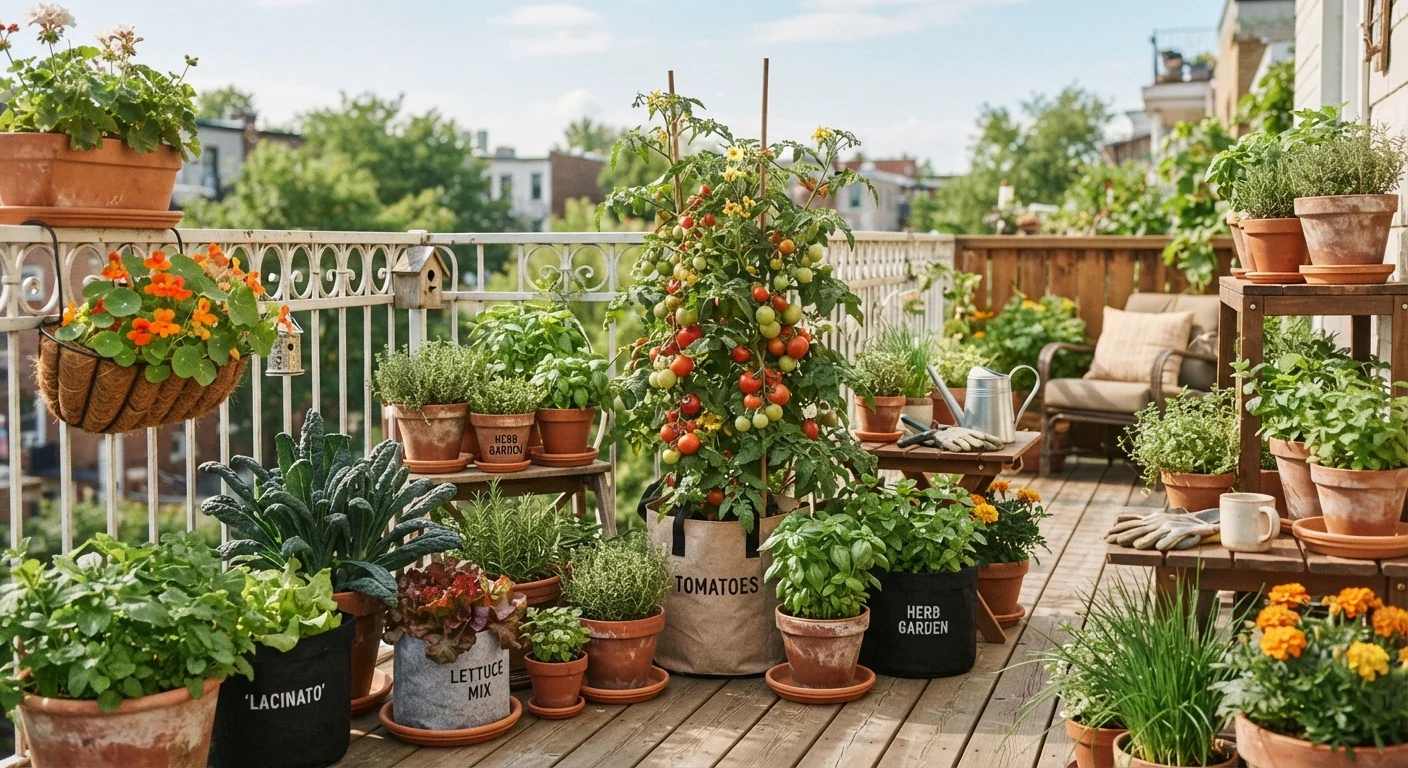
Why Container Gardening Appeals to Beginners
If you have a balcony, a stoop, or even a reasonably bright windowsill, you already have enough space to grow food. Container gardening removes two of the biggest obstacles new growers face: poor native soil and limited outdoor space. You fill your own containers with quality potting mix, place them exactly where the sun hits, and scale up or down as your confidence grows.
It's also forgiving in the sense that mistakes stay contained. A soil-borne disease or pest problem in one pot rarely spreads the way it might across a full garden bed. If an experiment fails, you tip out the pot and try again next season. For a complete first-timer, that low-stakes quality matters. See our guide to starting a garden from scratch if you're still deciding which growing method suits you best.
No garden bed or good native soil required
You fill containers with quality potting mix regardless of what the ground beneath looks like - ideal for renters or urban settings with compacted or contaminated soil.
Flexible placement and easy repositioning
Containers can be moved to follow the sun, brought indoors before frost, or rearranged to suit changing conditions throughout the season.
Fewer weeds and reduced pest pressure
A fresh potting mix introduces far fewer weed seeds than garden soil, and the elevated position of many containers can deter some ground-level pests.
Low startup cost and commitment
A few pots, a bag of potting mix, and a packet of seeds represent a modest investment - far less than building a raised bed or preparing a new planting area.
Scales easily as experience grows
Start with one or two containers and add more each season as you build confidence, without committing to a fixed garden layout.
The Real Limitations You Should Know First
Container growing has genuine constraints, and going in without understanding them is the fastest way to get discouraged. The biggest issue is water. Containers - especially terracotta and small plastic pots - lose moisture quickly, particularly in summer heat. In warm weather, some containers may need watering every day or even twice a day. Miss a few sessions and plants stress fast.
Nutrients are the second constraint. Potting mix loses its nutrients within a growing season, and frequent watering flushes them out faster still. Without regular liquid feeding (typically every one to two weeks once plants are actively growing), yields drop noticeably. This is a maintenance commitment that an in-ground bed partly handles through its larger soil volume. Our comparison of raised beds vs. in-ground planting lays out how these approaches differ for new gardeners.
Frequent watering is non-negotiable
Containers dry out much faster than garden beds. During summer heat, daily watering is often necessary, and missing sessions can quickly stress or kill plants.
Nutrients deplete rapidly and need replacing
Potting mix is not self-replenishing. Regular liquid feeding every one to two weeks during the growing season is essential to maintain healthy yields.
Container size limits root development
Undersized containers restrict root growth, reduce yields, and dry out faster. Many beginners underestimate how large a pot fruiting vegetables actually need.
Not suitable for large or sprawling crops
Corn, large squash, and indeterminate tomatoes are difficult or impractical to grow in containers, limiting which vegetables you can realistically produce.
More vulnerable to temperature extremes
Soil in containers heats and cools faster than ground soil, which can stress roots during heat waves or early frosts if containers aren't insulated or moved.
Which Vegetables Actually Thrive in Pots
The crops best suited to containers share a few traits: compact growth habits, shallow-to-moderate root depth, and high productivity relative to their footprint. Here's a practical breakdown:
- Salad greens and spinach - Shallow roots, fast harvest, ideal for window boxes or 6-inch-deep troughs. Cut-and-come-again varieties give multiple harvests from one sowing.
- Radishes - Ready in as little as three weeks. One of the most rewarding crops for impatient beginners.
- Herbs (basil, parsley, chives, cilantro) - Compact, frequently used, and perfectly sized for smaller pots on a kitchen windowsill or patio railing.
- Peppers and chili peppers - Naturally compact plants that do very well in 3-5 gallon containers with full sun.
- Bush tomatoes - Dwarf or patio-bred varieties (labeled "bush" or "determinate") stay manageable. Standard indeterminate types get too large for most container setups.
- Green onions and garlic - Minimal space needed, reliable producers.
Pairing plants thoughtfully can also improve results. Our article on companion planting explains which vegetables grow better side by side.
5 gal
Minimum container size for most fruiting vegetables
Extension gardening programs consistently recommend at least a 5-gallon container for crops like peppers and bush tomatoes to allow adequate root development.
2-3×
More frequent watering vs. in-ground beds
University cooperative extension resources note that container plants typically require watering two to three times more often than the same crops grown in garden soil.
What Tends to Struggle or Fail
Some crops are technically possible in containers but rarely worth the effort for beginners. Large, sprawling, or deep-rooted vegetables hit the walls of a pot before they reach full production.
- Corn - Needs large numbers of plants close together for pollination. Container yields are almost always disappointing.
- Pumpkins and winter squash - Vines spread aggressively and the fruit is heavy. Even large containers rarely give satisfying results.
- Parsnips and carrots (standard varieties) - Long taproots need deep containers of at least 12-18 inches. Short "ball" or "Chantenay" varieties are more realistic.
- Potatoes - Possible in large grow bags, but require consistent hilling (mounding soil over stems as they grow) and produce less than in-ground growing.
A common beginner mistake is using containers that are too small. An undersized pot stunts roots, dries out within hours, and produces little. When in doubt, size up - a 5-gallon pot is a reasonable minimum for most fruiting vegetables. Avoid the common gardening myths that can derail a first season, including the belief that small pots with gravel layers improve drainage (they don't).
Choosing the Right Container Material
Terracotta pots are breathable and attractive but dry out the fastest - a drawback in hot climates. Plastic and glazed ceramic containers retain moisture longer and suit beginners who may miss a watering. Fabric grow bags offer excellent drainage and air-prune roots naturally, which can improve plant health. Whatever material you choose, drainage holes are essential - without them, roots will rot.
Setting Up for Success From the Start
A few practical decisions made before you plant will shape your entire season. First, use a quality potting mix - not garden soil, which compacts in pots and drains poorly. Second, ensure every container has drainage holes. Standing water at the root zone causes root rot faster than almost anything else.
For feeding, a balanced slow-release granular fertilizer mixed into your potting medium at planting, supplemented by liquid feed once fruiting begins, covers most crops well. Improving your mix with homemade compost is also worthwhile - our plain-language guide to making compost explains how to get started with minimal effort.
Finally, track your season. Different crops suit different times of year. Our seasonal gardening overview shows when to sow, plant out, and expect harvests - which keeps you from planting tomatoes in April frost or salad greens in July heat.