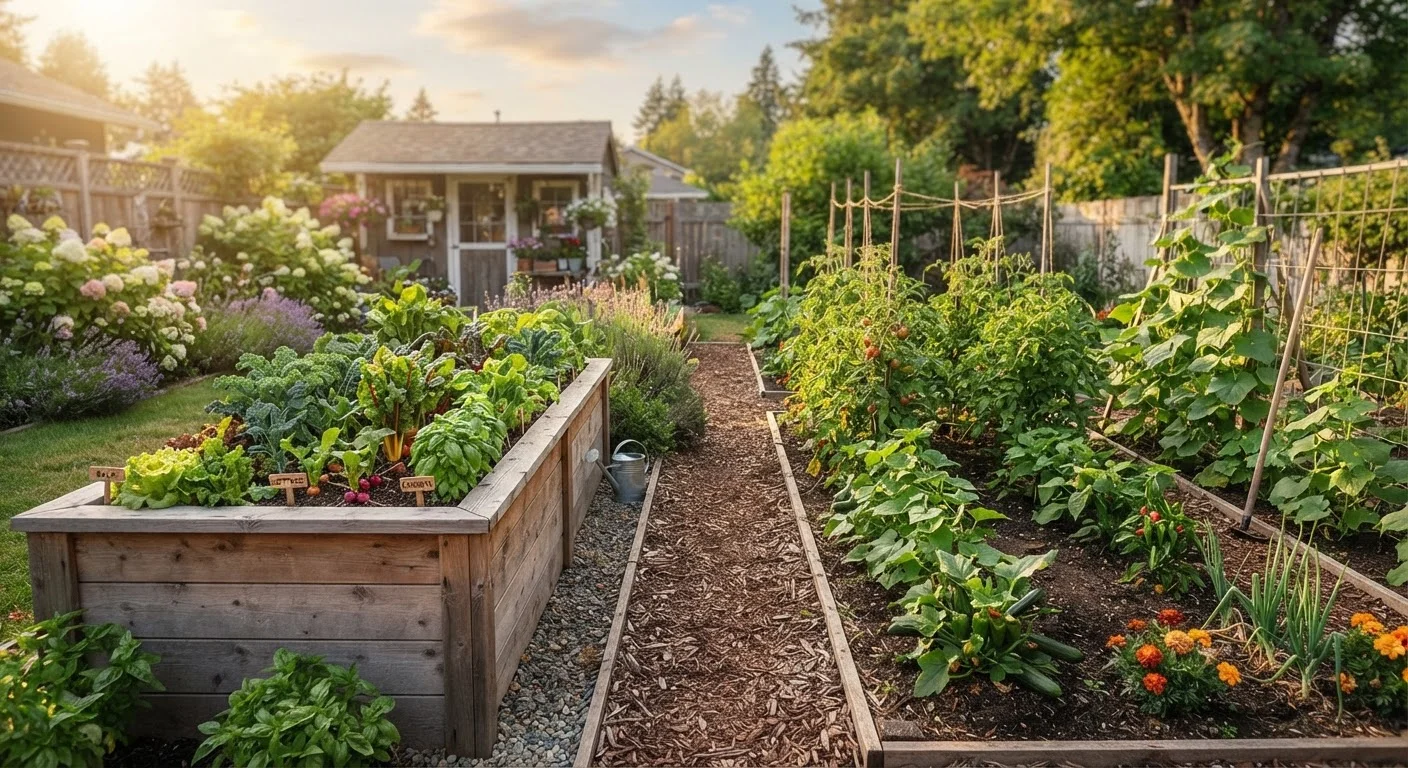
What You're Actually Choosing Between
When new gardeners ask whether to start with raised beds or plant directly in the ground, the question usually comes down to three things: the soil you already have, the space available, and how much you want to spend before your first seed goes in.
Raised beds are bottomless frames - typically built from wood, galvanized metal, or composite material - filled with a soil mix you purchase or blend yourself. In-ground planting means working directly with the native soil in your yard, amending it as needed over time.
Both methods grow vegetables well. The differences show up in setup cost, long-term maintenance, and how quickly you can get growing in less-than-ideal conditions. If you're still deciding what to plant, our guide to seeds vs. seedlings can help you figure out that piece of the puzzle too.
How They Compare Across Key Factors
The table below covers the practical differences most beginners run into in their first season or two.
| Raised Beds | In-Ground Planting | |
|---|---|---|
| Upfront cost | Higher (materials + soil mix) | Lower (amend existing soil) |
| Soil control | Full control from day one | Depends on native soil quality |
| Drainage | Excellent | Variable - depends on soil type |
| Spring warm-up speed | Faster (weeks earlier) | Slower in cold climates |
| Weed pressure | Generally lower | Often higher |
| Scale/expansion | Costly to expand significantly | Easy to expand affordably |
| Physical accessibility | Easier - less bending required | Requires kneeling or bending |
| Long-term soil improvement | Soil stays managed | Improves naturally over seasons |
One factor the table can't fully capture is soil quality. If you've moved into a new home, especially one with clay-heavy, compacted, or construction-disturbed soil, building that soil up to a productive level takes multiple growing seasons. Raised beds let you skip that wait entirely by filling them with a known, workable mix from the start.
A Simple Soil Test Saves Guesswork
Before committing to either method, consider testing your native soil. Many US cooperative extension services offer inexpensive or free soil tests that reveal pH and nutrient levels. The results will tell you whether amending your existing soil is practical - or whether starting fresh in a raised bed makes more sense for your yard.
The Case for Raised Beds
Raised beds shine in a few specific situations that are very common for first-time gardeners:
- Poor native soil: If your yard has heavy clay, excessive sand, or soil contaminated by prior construction, a raised bed gives you a clean slate.
- Limited space: A 4×8-foot raised bed is a manageable, defined project - easier to water, weed, and keep track of than a sprawling in-ground plot.
- Earlier planting: Raised beds warm up several weeks before ground-level soil in spring, which can meaningfully extend your growing season.
- Drainage: Elevated soil drains more freely, which matters for vegetables like tomatoes and carrots that dislike waterlogged roots.
The tradeoff is upfront cost. Materials for a basic wooden raised bed, plus enough quality soil mix to fill it, can represent a real investment before you've grown a single plant. That said, a well-built bed can last a decade or more.
For ideas on what to grow alongside your vegetables, companion planting combinations work just as well in raised beds as in the ground.
The Case for In-Ground Planting
In-ground gardening is the older, simpler approach - and it still makes a lot of sense in the right circumstances:
- Lower startup cost: You're working with existing soil, so the main expense is amendments like compost, not entirely new growing medium.
- Larger scale: Growing enough food to meaningfully supplement your household's diet is far more economical in-ground, where you're not paying to fill cubic feet of raised bed space.
- Deep-rooted crops: Vegetables like parsnips, potatoes, and winter squash that spread or root deeply may actually do better with unrestricted ground space.
The key prerequisite is soil quality. A simple soil test - available through many cooperative extension offices - tells you your soil's pH and nutrient levels, so you know what amendments to add. Building up in-ground soil with compost over one or two seasons is genuinely achievable. Our plain-language guide to home composting explains how that process works.
Watch Out for Contaminated Soil
Older properties - particularly those built before the 1980s - may have soil contaminated with lead paint chips or other residues near the foundation. If you're unsure about your soil's history, a soil test that includes heavy metals is worth considering before growing edible crops in-ground. Raised beds filled with clean soil mix are a straightforward way to sidestep this concern entirely.
Making Your Decision
Here's a straightforward way to think it through:
- If your soil is clearly poor or unknown, start with a raised bed.
- If your budget is tight and you have reasonable soil, try amending an in-ground plot first.
- If mobility or accessibility is a concern, the height of a raised bed is a genuine ergonomic advantage.
- If you're dreaming of a large vegetable patch, in-ground planting will cost far less to expand.
Many experienced gardeners use both - raised beds for high-value or finicky crops (salad greens, herbs, root vegetables) and in-ground rows for sprawling plants like squash or corn. There's no rule that says you have to commit to just one.
If outdoor space is your limiting factor altogether, it's worth knowing that pots and grow bags are a third option. Our article on growing vegetables in containers covers what that approach can and can't realistically deliver.
4×8 ft
Common starter raised bed size
A 4×8-foot bed is widely recommended for beginners because it's reachable from all sides without stepping on the soil, which prevents compaction.
6-8 inches
Minimum soil depth for most vegetables
Most vegetable crops need at least 6-8 inches of loose, workable soil to develop healthy root systems, whether in a raised bed or in the ground.