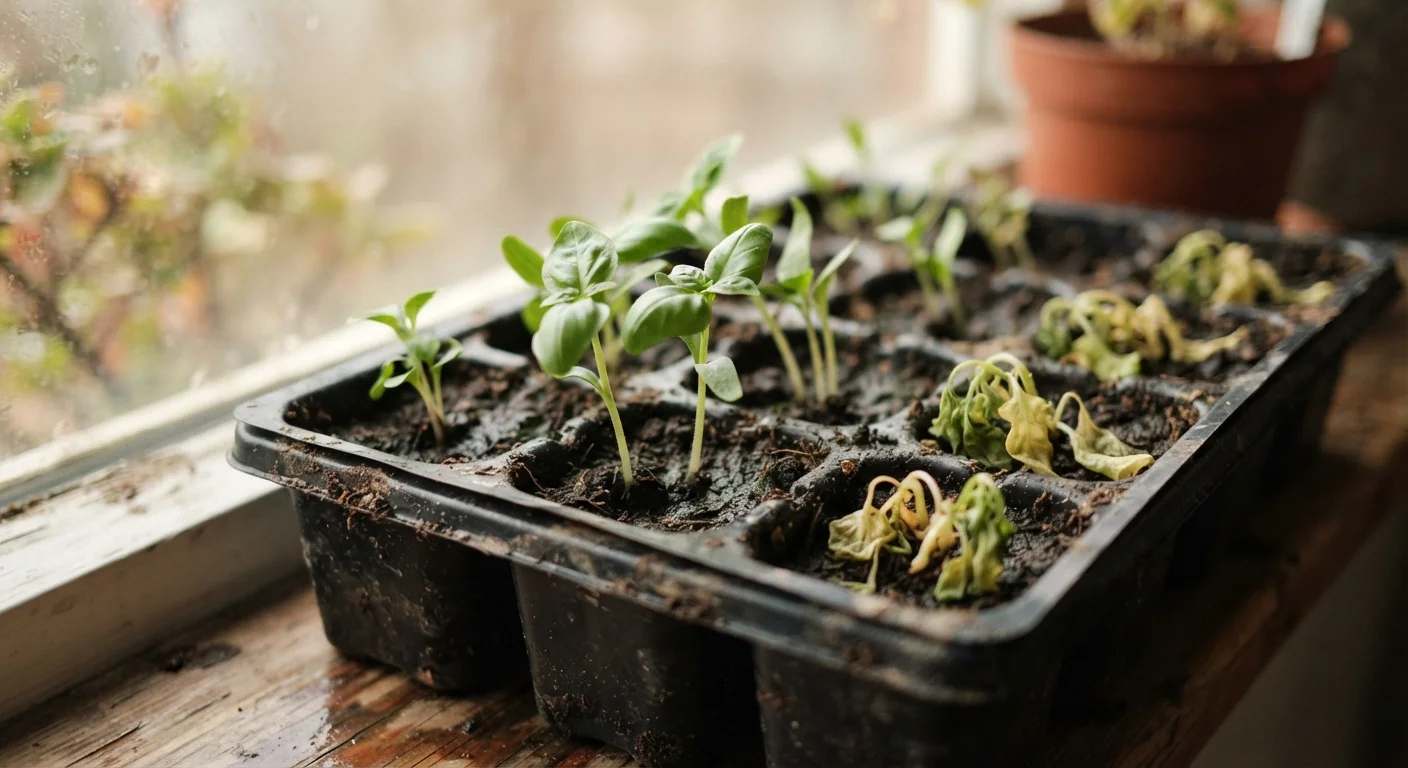
Why Seedlings Are So Fragile
A seedling's first weeks are its most vulnerable. The root system is minimal, the stem has little structural strength, and the plant has almost no reserves to draw on if conditions go wrong. Small mistakes that a mature plant shrugs off - a day of too-dry soil, a cool draft, slightly compacted growing medium - can be fatal to a seedling in its first fortnight.
The encouraging news is that seedling failures follow predictable patterns. The same five or six mistakes account for the vast majority of losses in home gardens, and every one of them is avoidable once you know what to watch for. This article walks through each error, why it happens, and exactly how to correct it.
Overwatering seedlings, keeping the soil constantly wet rather than evenly moist.
Why it happens: Beginners often equate more water with more care, and it's easy to mistake wilting from root rot for wilting from drought.
Providing too little light, resulting in leggy, pale seedlings that flop over.
Why it happens: A bright windowsill looks adequate, but most windows deliver far less light intensity than outdoor conditions, especially in winter and early spring.
Sowing seeds at the wrong depth - either too deep, preventing germination, or too shallow, drying out the seed.
Why it happens: Many beginners skip or misread the sowing depth guidance on the packet, guessing instead.
Using regular garden soil or potting mix instead of a proper seed-starting mix.
Why it happens: Garden soil is what's available and seems like a natural choice, but it compacts under repeated watering and can harbor pathogens.
Starting seeds indoors too early, so plants become root-bound and overgrown before it's safe to transplant.
Why it happens: Enthusiasm early in the season leads many gardeners to start seeds weeks ahead of when outdoor conditions will actually allow transplanting.
Putting It Together: A More Reliable Setup
Most seedling problems share a common cause: conditions that are inconsistent or mismatched to what the seed actually needs. Building a simple, repeatable setup solves many issues at once.
Damping Off Acts Fast
Damping off is a fungal condition that causes seedlings to collapse at the soil line, often overnight. Once it appears, affected seedlings cannot be saved. Prevent it by using clean trays, sterile seed-starting mix, and good air circulation from day one.
Start with clean equipment. Wash trays and pots with soapy water between uses. Fill them with fresh, sterile seed-starting mix - not reused soil from last season. Sow at the depth specified on the packet, water in gently from below by setting the tray in a shallow dish of water until the surface feels moist, then drain completely.
Don't Rush Outdoor Transplanting
Moving seedlings outside before they are hardened off - gradually acclimatized to outdoor temperatures and wind - causes rapid wilting and often death. Even a single night of unexpected cold can set back weeks of progress. Always check your local frost dates and introduce seedlings to outdoor conditions incrementally over seven to ten days.
Keep temperature consistent - most common vegetables and flowers germinate best between 65°F and 75°F. A heat mat designed for seed starting can help if your home is cool. Once sprouts appear, prioritize light above almost everything else.
If you are weighing whether to start from seed at all, seeds vs. buying transplants breaks down both approaches honestly. And if common gardening advice has ever left you confused, myths that trip up new growers is worth a read before your next sowing session.
~80%
Seedling failures linked to watering errors
Horticulture educators commonly estimate that the majority of early seedling losses in home gardens stem from overwatering or poor drainage rather than disease or pests.
6-8 weeks
Typical indoor head start for warm-season crops
Most seed packets for tomatoes, peppers, and similar crops specify six to eight weeks before last frost as the recommended indoor start window.