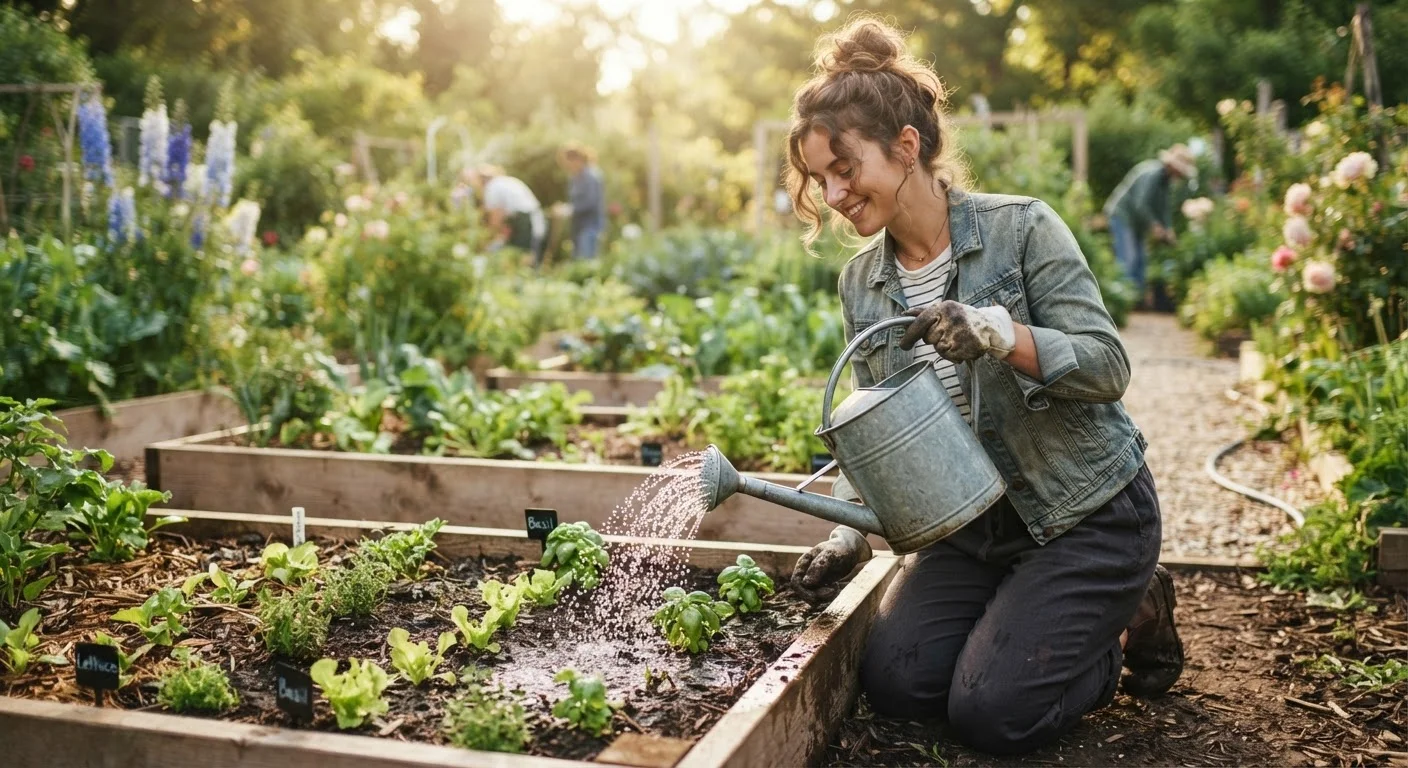
Why Watering Matters More Than You Think
Water is the most basic input in any garden - and yet it's the area where beginners make the most consequential mistakes. Overwatering is responsible for more plant deaths than drought, pests, or poor soil combined. The good news is that once you understand a few core principles, you can avoid the most common errors and give your plants exactly what they need.
This guide focuses on practical technique for outdoor garden beds and containers. Whether you're growing vegetables, flowers, or a mix of both, the same fundamentals apply. And if you're noticing problems with young plants specifically, our guide to seedling failures covers the role watering plays there too.
Reading Your Plants (and Your Soil)
No two gardens are identical. A set watering schedule that works for a neighbor's sandy raised bed could lead to root rot in your clay-heavy border. Before you can water well, you need to understand two things: what your soil does with water, and what your plants are telling you.
Wilting is often the first sign gardeners notice - but wilting in the morning is a different signal from wilting at midday. Some plants droop briefly in peak afternoon heat even when they have plenty of moisture. If they perk back up by evening, they were fine. If they're still limp the following morning, they likely need water.
Always check soil moisture before reaching for the watering can.
Many new gardeners water on a fixed daily schedule regardless of what the soil actually needs. This leads to waterlogged roots, which cuts off oxygen and invites root rot - often more damaging than dry spells. A quick finger-test tells you far more than a calendar.
Water deeply and infrequently rather than a little every day.
Shallow, frequent watering trains roots to stay near the surface, making plants more vulnerable to heat and drought. Deep watering encourages roots to grow downward where moisture is more stable and consistent.
Water in the early morning whenever possible.
Morning watering gives foliage time to dry before temperatures drop at night, which significantly reduces the risk of fungal diseases like powdery mildew. Less water is also lost to evaporation than midday watering.
Direct water at the soil, not the leaves.
Wetting foliage repeatedly creates damp conditions that encourage mould, mildew, and other fungal problems. Getting water to the root zone where plants can actually absorb it is also more efficient.
Adjust your watering frequency for soil type and season.
Sandy soils drain quickly and may need watering every two to three days; clay soils hold moisture longer and can easily become waterlogged if overwatered. Summer heat increases demand, while cool, wet spring conditions may mean you barely need to water at all. Understanding your soil helps you avoid both extremes.
For more on how soil structure affects drainage and moisture retention, see our soil type guide.
Timing, Technique, and Common Mistakes
Even the right amount of water can cause problems if it's delivered at the wrong time or in the wrong way. Getting the basics of timing and technique right is just as important as frequency.
Container Plants Dry Out Faster
Pots and planters have limited soil volume, so they lose moisture much more quickly than garden beds - especially unglazed terracotta pots, which are porous. In warm weather, containers may need watering daily, while the same plant in the ground might go four to five days between waterings. Always check the soil rather than assuming a schedule works for both.
Many beginners also hold onto myths about watering - for example, that sun-hot water droplets on leaves act like a magnifying glass and burn foliage. This is not supported by evidence. What does cause harm is leaving wet foliage in damp, still air overnight. See our roundup of garden myths for more beliefs worth questioning.
The best tools for beginners are a watering can with a detachable rose head (the sprinkler attachment) for seedlings and a simple hose with an adjustable nozzle for established beds. Drip irrigation is worth considering once you're more comfortable - it delivers water slowly at root level and is highly efficient - but it isn't necessary to start.
Building a Watering Habit That Actually Sticks
Consistency matters more than perfection. A garden watered thoughtfully three times a week will generally outperform one watered every day by habit without checking whether it's needed. Build your routine around observation, not obligation.
Keep a simple log for the first few weeks - note when you watered, how much, and how the plants looked the next day. This feedback loop is the fastest way to calibrate your instincts. Over time you'll recognize what your garden looks like when it's just right, slightly dry, or beginning to suffer.
Seasonal shifts matter too. Spring gardens often need little supplemental watering in much of the US, while summer heat can double or triple demand. Our seasonal gardening overview explains how to adjust your approach month by month.
“The single most important thing a new gardener can learn is that plants need air at their roots just as much as they need water. Soggy soil is suffocating soil.”
— Cooperative Extension Gardening Educators, University-based cooperative extension programs across the United States
With the right technique, the right timing, and a little patience, watering becomes one of the most satisfying parts of gardening - a daily (or every-other-day) check-in with plants that are clearly thriving because of the care you're giving them.