Why Organizing Has Its Own Language
Walk into any conversation about home organization and you'll quickly encounter words like decluttering, zones, and systems. These aren't buzzwords - they describe specific, practical concepts that professional organizers and experienced homeowners use every day. Learning what they mean gives you a shared vocabulary to research further, follow guides, and make confident decisions about your own space.
This glossary covers the terms you're most likely to encounter as a first-time homeowner setting up a functional, clutter-free home. Read through it once, then keep it handy as a reference when you're ready to put ideas into practice. When you're ready to move from vocabulary to action, see our beginner's guide to home organization for practical next steps.
Decluttering
The process of intentionally removing items from a space that are no longer needed, used, or valued. Decluttering is typically the first step before any organizing system is put in place - you organize what remains after decluttering, not before.
Zone
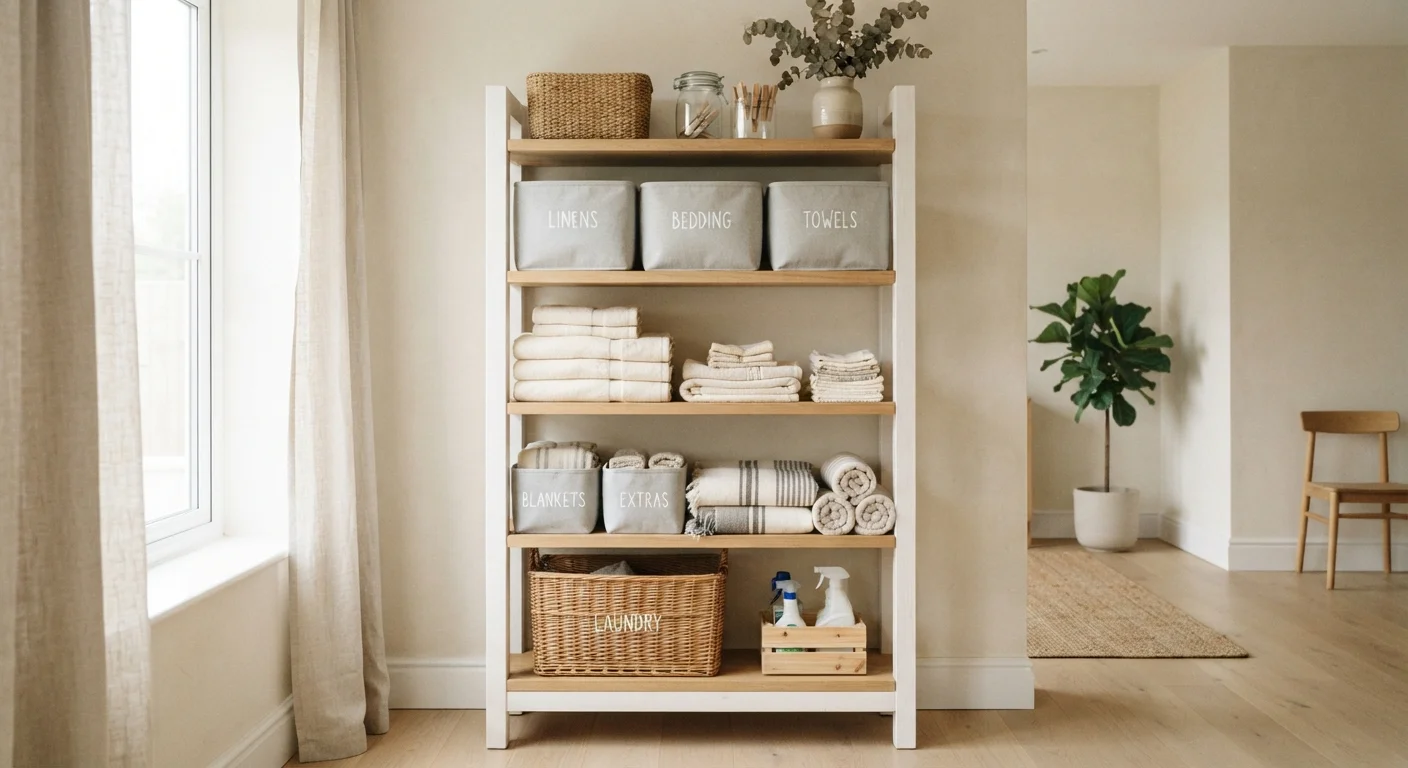
A designated area within a room assigned to a specific activity or category of items. Zones help reduce effort and create predictability - you always know where to look and where to return things.
System
A repeatable set of structures and habits that keep a space organized over time. A system goes beyond a single tidy-up session; it's the ongoing framework that makes order easy to maintain.
Home (for an object)
The fixed, specific location where a particular item always lives. When every item has a designated home, tidying becomes a matter of returning things rather than deciding where they go.
Capsule Wardrobe
A small, intentionally curated clothing collection in which every piece coordinates with multiple others. The goal is versatility with fewer items, making closet organization simpler and getting dressed faster.
Dead Space
Areas of the home that currently serve no functional storage or living purpose, such as the space under stairs or above tall cabinets. Identifying dead space is the first step toward activating it with appropriate storage solutions.
Category
A logical grouping of similar items stored together. Organizing by category - rather than by room - is a foundational principle in many popular organizing methods.
One-In, One-Out Rule
A maintenance habit where one item is removed from the home for every new item that enters. It is a simple and effective way to prevent accumulation without relying on periodic large purges.
Vertical Space
The usable area above floor level, including walls, high shelving, and over-door storage. Making use of vertical space dramatically increases storage capacity without requiring more floor area.
Donation Staging Area
A permanent, designated spot - typically a box or bag - where items earmarked for donation are collected before leaving the home. It removes the need to make a decision each time you find something to give away.
Inventory
A complete count or list of what you own within a category or space. Taking an inventory before organizing helps you understand exactly how many items you have, identify duplicates, and make more informed decisions about what to keep.
Decanting
The practice of transferring items out of their original retail packaging into uniform, reusable containers. Decanting is common in pantries and bathrooms; it creates visual consistency and often makes better use of shelf space.
Core Concepts to Know Before You Start
A few foundational ideas underpin almost every organizing approach you'll encounter. Understanding these concepts makes every other term easier to place in context.
| Primary goal of organizing | Create systems that maintain order automatically, not just tidy up once |
| First step in any organizing project | Declutter before organizing - sort and remove before finding homes for items |
| Capsule wardrobe origin | Concept introduced by fashion consultant Susie Faux in the 1970s |
| Most overlooked storage area | Vertical space - walls and high shelving are frequently underused in beginner setups |
| Simplest maintenance habit | One-in, one-out rule: remove one item for every new item that enters the home |
Systems vs. One-Time Tidying
A common mistake beginners make is treating organization as a single event - one big clean-up on a Saturday afternoon. Professional organizers distinguish between tidying (putting things back in their correct place) and building a system (a set of consistent habits and structures that prevent disorder from accumulating in the first place). A well-designed system does the heavy lifting so you don't have to re-organize the same space every few weeks.
Categories and Homes
Every object in your home belongs to a category - a logical grouping with similar items. Once you've identified a category, you assign it a home: a specific, fixed location where those items always live. When everything has a home, putting things away becomes almost automatic. If you find yourself repeatedly setting something on a random surface, that's usually a sign the item doesn't have a designated home yet.
Organizing Methods Use These Terms Differently
Popular organizing frameworks - such as the KonMari method or the PARA method for digital files - sometimes use these terms in specific ways that differ slightly from general usage. When following a particular method's guide, check how that method defines its key terms. The definitions in this glossary reflect common, general usage rather than any single system's proprietary language.
Spatial Terms: How Organizers Think About Space
Organizers don't just see rooms - they see functional areas within rooms. Learning a few spatial terms helps you plan storage and flow more deliberately.
Zones
A zone is a designated area within a room dedicated to a specific activity or category. A kitchen might have a coffee zone near the kettle, a meal-prep zone near the cutting board, and a baking zone near the oven. Zones reduce the distance you travel to complete tasks and keep related items together. You can create zones in any room without renovating - it's primarily about grouping and positioning.
Dead Space
Dead space refers to areas in your home that currently serve no functional purpose - the awkward corner under the stairs, the top shelf nobody can reach, the gap between the refrigerator and the wall. Organizers look for ways to activate dead space with the right storage solutions, converting wasted area into usable real estate.
Vertical Space
Most beginners focus on floor-level storage and overlook what's above eye level. Vertical space - walls, shelving stacked high, over-door organizers - dramatically increases storage capacity in small rooms without taking up any floor area.
For a related look at how specialized vocabulary can help you navigate a new subject, the home repairs glossary for new homeowners follows the same plain-language approach for DIY projects.
Wardrobe and Closet Terms
Closets generate some of the most specific organizing terminology you'll come across - particularly in wardrobe organization.
Capsule Wardrobe
A capsule wardrobe is a curated, intentionally small clothing collection in which every item coordinates with multiple others. The goal is fewer pieces that see more use, reducing decision fatigue and making closet organization simpler. The concept originated with fashion designer Susie Faux in the 1970s and has since become a mainstream organizing strategy.
One-In, One-Out Rule
This is a simple maintenance habit: whenever a new item enters your home, one existing item leaves. It's most commonly applied to clothing and kitchenware, but works for any category. The rule prevents gradual accumulation without requiring periodic large-scale purges.
Donation Staging Area
A donation staging area is a designated spot - often a box or bag in a closet - where items destined for donation are collected before leaving the home. Having a permanent spot for outgoing items means you don't have to make a decision every time you declutter; items simply wait in the staging area until the bag is full.
This article is for informational and educational purposes only. Organizing approaches vary by household size, layout, and personal preference - what works well for one home may not suit another.