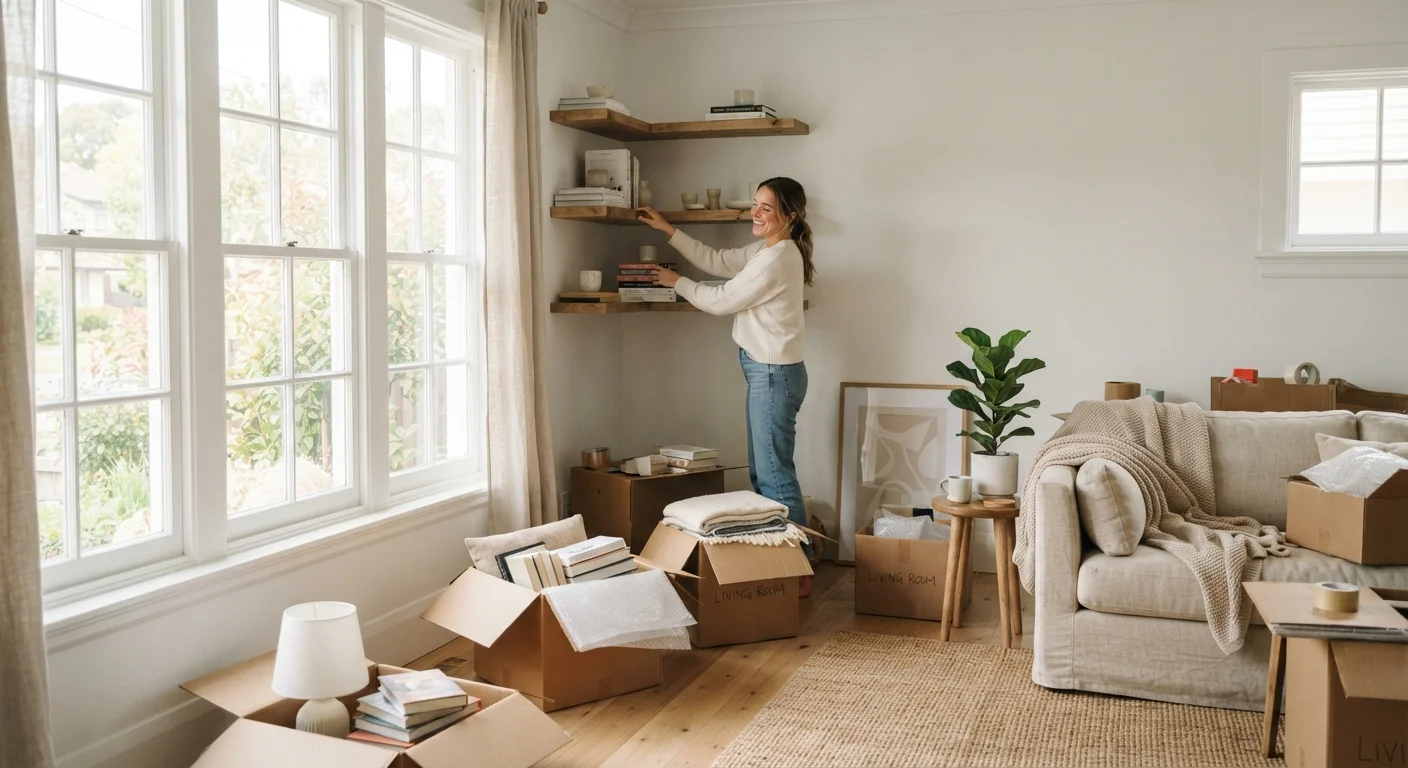
Why Organization Should Come Before Decorating
Moving into a new home feels like a rare opportunity, and it is. The rooms are empty, the surfaces are clear, and you have a window to set up intentional systems before habits form around clutter. That window closes faster than most people expect.
Many new homeowners instinctively reach for paint swatches and furniture catalogs first. But decorating a space before organizing it often means rearranging things repeatedly as you figure out what actually goes where. Starting with organization - even in a rough, working sense - means every decorating decision you make afterward serves a space that already functions well.
This doesn't mean your home needs to look like a magazine shoot. It means thinking about how each room will be used before deciding how it will look. Those two things are closely connected, but function should lead. For a broader look at how this principle plays out room by room, see our guide to zones, systems, and flow.
Empty rooms are a rare advantage
Most people only get one chance to organize a home before it fills up - the move-in window. Even a rough plan for where categories of items will live (cleaning supplies, paperwork, tools) is more valuable than no plan at all. Taking an hour to walk each empty room and sketch out a basic layout can prevent months of reactive reorganizing later.
The Core Principles Every New Homeowner Needs
Good home organization rests on a handful of ideas that apply regardless of your square footage or budget. Understanding these before you start will save you from redoing work later.
Functional zone
A defined area of your home where specific activities take place and related items are stored together, making tasks easier and more intuitive.
Designated home
A specific, consistent location where a particular item is always stored so it can be found and returned without effort.
Editing
In an organizing context, this means going through your belongings and deciding what to keep, donate, or discard before assigning storage.
One-in, one-out rule
A habit where every new item brought into the home is paired with removing an existing item, keeping overall volume stable over time.
Daily reset
A brief, routine walkthrough of your home - usually at the end of the day - to return items to their designated spots and prevent clutter from accumulating.
Store things where you use them. This sounds obvious, but it's frequently ignored. If you use scissors in the kitchen, that's where they belong - not in a home office drawer across the house. Proximity to use is the single most powerful organizing principle you can apply.
Group like with like. Items that belong to the same category should live together. This makes it easy to see what you have, notice when something is missing, and return items after use without thinking hard about where they go.
Every item needs a designated home. Clutter almost always accumulates in spaces where things don't have a clear "home." If an item doesn't have a place, it lands on the nearest flat surface - and stays there. Assigning locations intentionally prevents this.
These principles apply to everything from a kitchen junk drawer to a garage full of tools. Before assuming you need more storage, check whether your current storage is organized around these ideas. You may find you have more space than you thought. Our article on common organization myths explores why "more storage" is rarely the real solution.
Where to Start: Prioritizing Rooms and Spaces
Trying to organize your entire home at once leads to exhaustion and half-finished rooms. A more effective approach is to work through spaces in order of daily impact.
- Kitchen: You'll use this room multiple times a day. Prioritize it first. Organize counters, cabinets, and the pantry around how you actually cook - not how kitchens look in photos.
- Bedroom and bathroom: These support your morning and evening routines. Getting them functional early helps you start and end each day with less friction.
- Entryway: This is where things enter and exit your home. A chaotic entry point spreads disorder everywhere else. Even a simple hook-and-shelf setup can make a meaningful difference.
- Living areas and secondary rooms: These matter, but they're less time-sensitive. Tackle them once the daily-use spaces are stable.
Use our room-by-room organization checklist to work through each area systematically without missing anything important.
Live in the space before buying organizers
After moving in, give yourself two to four weeks before purchasing any bins, baskets, or shelving systems. You'll quickly learn which surfaces attract clutter, which drawers get ignored, and what your actual daily patterns look like. Buying storage based on real behavior rather than guesses almost always leads to better choices.
Common Mistakes That Create Long-Term Clutter
Several organizing mistakes are so common among first-time homeowners that they're worth naming directly.
- Unpacking without editing first. Moving is a natural moment to let go of things you no longer need. Unpacking everything without reviewing it means you're organizing items you might not want.
- Buying storage before assessing the problem. A bin purchased before you understand the space often solves the wrong issue, or doesn't fit at all. Measure and assess before you shop.
- Organizing for appearance rather than function. A beautifully labeled pantry that doesn't match how you actually reach for things will stop working within days. Systems need to fit your real behavior, not an idealized version of it.
- Treating organization as a one-time event. No system stays organized on its own. The habits you build around maintenance matter as much as the initial setup. Clutter has a way of coming back unless everyday behaviors support the system.
If your home is on the smaller side, these pitfalls can have an outsized impact. Our small-space organization guide addresses strategies specific to compact homes.
Don't confuse a tidy surface with an organized home
Shoving items into closets or drawers to clear counters can create the appearance of organization without any of the function. Hidden clutter still costs you time when you can't find things, and it tends to compound quickly. Real organization means everything has a logical, accessible home - not just a hiding place.
Building Habits That Keep Organization Going
The most functional homes aren't organized because their owners did one massive overhaul. They're organized because small, consistent behaviors happen regularly without much thought.
A few habits worth building from the start:
- The daily reset: A 10-minute walkthrough each evening to return items to their designated spots prevents pile-ups from forming overnight.
- One-in, one-out: When something new enters the home, something old leaves. This keeps volume manageable over time without requiring periodic purges.
- Immediate return: After using something, return it to its home before moving on. This single habit prevents more clutter than any storage product.
Building these routines takes time, but starting them early - when your home is freshly organized and the systems are clear - is far easier than introducing them after disorder has taken hold. For a deeper look at what comes after the initial setup, our guide on maintaining an organized home outlines the weekly and monthly routines that keep things running smoothly. And if you're also thinking about broader home improvement projects as you settle in, what every first-time homeowner should know about home improvement is a useful companion read.
Organization is not a destination. It's a framework you build once and maintain - and the sooner you start building it well, the less effort it takes to sustain.