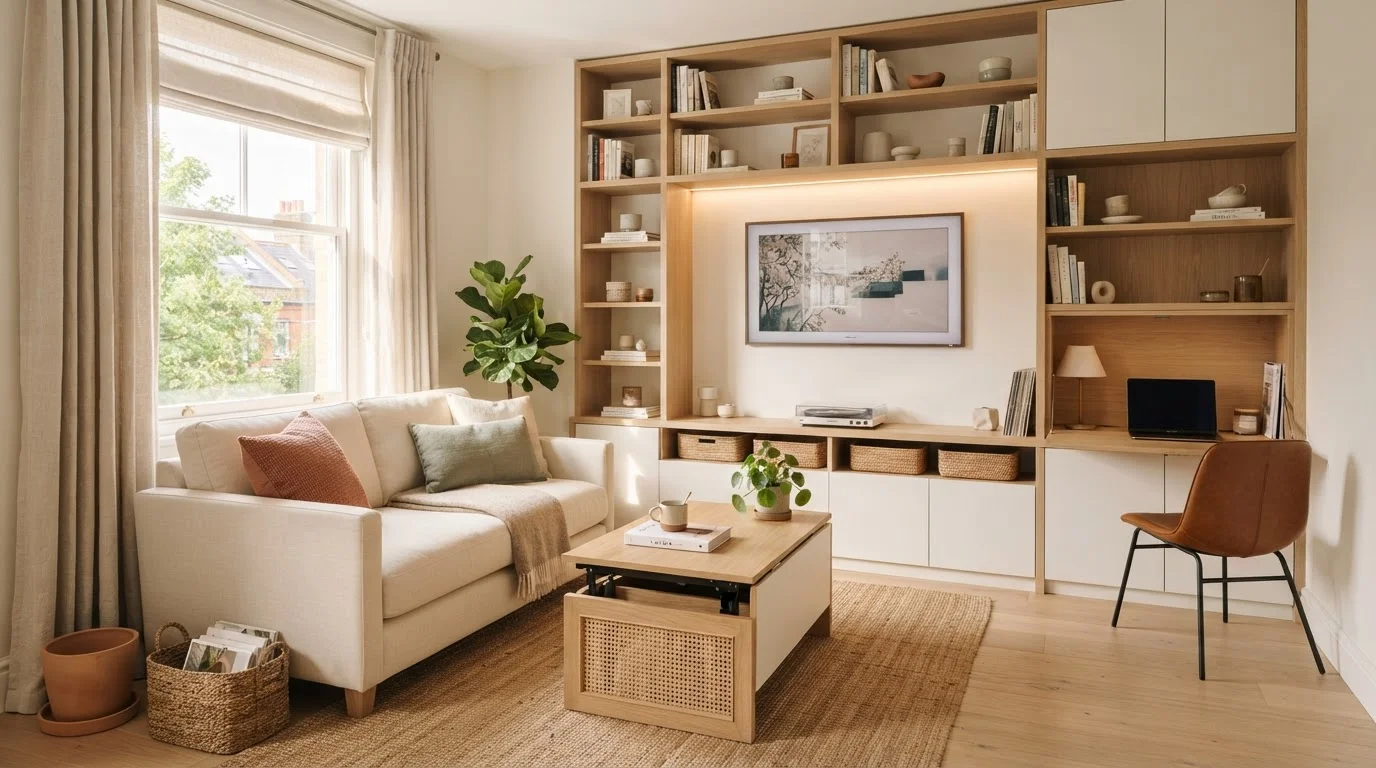
Why Small Spaces Demand a Different Approach
Moving into a compact home - whether it's a studio apartment, a small starter house, or a condo - can feel exciting right up until the boxes arrive. Then reality sets in: there's simply less room to absorb your belongings, and the margin for disorder is razor-thin. A pile of mail that would disappear in a larger home becomes the centerpiece of a tiny kitchen counter.
The good news is that organization in a small space isn't about sacrifice - it's about intention. If you're starting fresh, our guide for new homeowners starting from scratch lays out the foundational thinking before you arrange a single drawer. And before you reach for a shopping cart full of bins and baskets, assess your actual storage needs first - buying solutions before you understand the problem is one of the most common organizing mistakes.
The strategies below are practical, beginner-friendly, and designed to work in real compact spaces - not magazine-perfect ones.
Declutter before you organize anything
This is the step most people skip - and it's the most important one. Organizing clutter just means neatly storing things you don't need. Before touching a single shelf or drawer, go through your belongings and make deliberate decisions: keep, donate, discard, or relocate.
A useful mental test: if you were moving into a smaller home tomorrow, would you bother packing this item? If the answer is no, it probably doesn't belong in your compact space today. Start with the easiest categories first - expired pantry items, duplicate tools, worn-out linens - and build momentum before tackling sentimental or complicated decisions.
Organizing clutter just means neatly storing things you don't actually need.
Think vertically - walls are storage
In a compact home, floor space is precious and limited. Wall space, on the other hand, is often almost entirely wasted. Floating shelves, wall-mounted hooks, pegboards in the kitchen or entryway, and over-door organizers all move storage off the floor and onto surfaces that would otherwise be blank.
In a small bedroom, a floor-to-ceiling bookshelf uses minimal square footage while providing substantial storage. In a bathroom, a narrow shelf above the toilet can hold months' worth of supplies. The principle is simple: wherever something currently sits on the floor or a counter, ask whether a wall-mounted alternative would work just as well.
Wall-mounted storage frees up floor space without sacrificing a single square foot of living area.
Invest in multi-functional furniture
A bed with drawers underneath, an ottoman that opens for storage, a dining bench with a hollow interior, a coffee table with shelving - these pieces do double duty in a way that standalone furniture simply can't. In a small space, every piece of furniture should ideally serve at least two purposes.
When evaluating furniture for a compact home, consider storage capacity as a core feature, not a bonus. A sofa with a built-in chaise that conceals blankets and pillows isn't just comfortable - it eliminates the need for a separate linen closet or storage chest. Think of multi-functional furniture as a one-time investment that pays off in daily ease.
Every piece of furniture in a small home should ideally serve at least two purposes.
Create zones, not just storage spots
Random storage - a hook here, a basket there - creates visual chaos and makes items hard to find. Zoning means grouping related items together in a dedicated area, even when space is tight. A small entryway zone might include a hook for keys, a tray for mail, and a shelf for shoes. A compact home office zone might be just a corner of the living room, but it has everything needed within arm's reach.
Zones reduce the mental effort of living in a small space because everything has a logical home. When something doesn't fit neatly into an established zone, it signals that either the zone needs adjusting or the item doesn't belong in the space.
Clearly defined zones reduce mental effort and make small spaces feel intuitive to navigate.
Use consistent containers and labels
Mismatched bins and containers make small spaces feel busier and harder to navigate. Choosing a consistent style - similar sizes, matching colors or materials - creates visual calm that makes a compact space feel more intentional and less cramped.
Labels matter too, especially in shared spaces. When anyone in a household can find an item without asking, the system works. Clear containers are particularly useful in pantries and under-sink cabinets, where it's easy to forget what's stored in the back. Labels don't need to be elaborate - a piece of masking tape and a marker works perfectly well.
Consistent containers and simple labels make shared small spaces significantly easier to navigate.
Practice the one-in, one-out rule
In a compact home, there's no buffer zone for acquisitions. Bringing in a new item without removing an old one means something - eventually everything - won't have a proper place. The one-in, one-out rule is a simple, sustainable practice: when something new comes in, something comparable leaves.
This doesn't require strict accounting of every item, but it does require a habit of awareness. Bought a new kitchen gadget? Consider what's currently in the drawer that rarely gets used. Got new towels? Retire the worn-out ones. Over time, this keeps the volume of belongings matched to the actual capacity of your space.
One-in, one-out keeps your belongings permanently matched to the capacity of your home.
Building Habits That Stick
Even the most cleverly arranged small space will unravel without consistent habits. The advantage of a compact home is that small daily actions have an outsized impact - a five-minute tidy each evening genuinely resets the whole space. Maintaining an organized home is less about willpower and more about building routines that run on autopilot.
It's also worth understanding why clutter tends to creep back. Everyday habits quietly undo organization efforts - and identifying your personal patterns is the first step to interrupting them. For a broader, room-by-room perspective as your skills grow, the complete room-by-room organizing guide offers deeper coverage of each area of the home.
Start With One Room, Not the Whole Home
Trying to organize an entire compact home in a single weekend often leads to exhaustion and abandoned halfway projects. Pick one room - ideally the one that causes the most daily friction - and complete it fully before moving on. A finished, functional space builds confidence and gives you a working model to apply elsewhere. Progress you can see is far more motivating than a whole home in partial disarray.