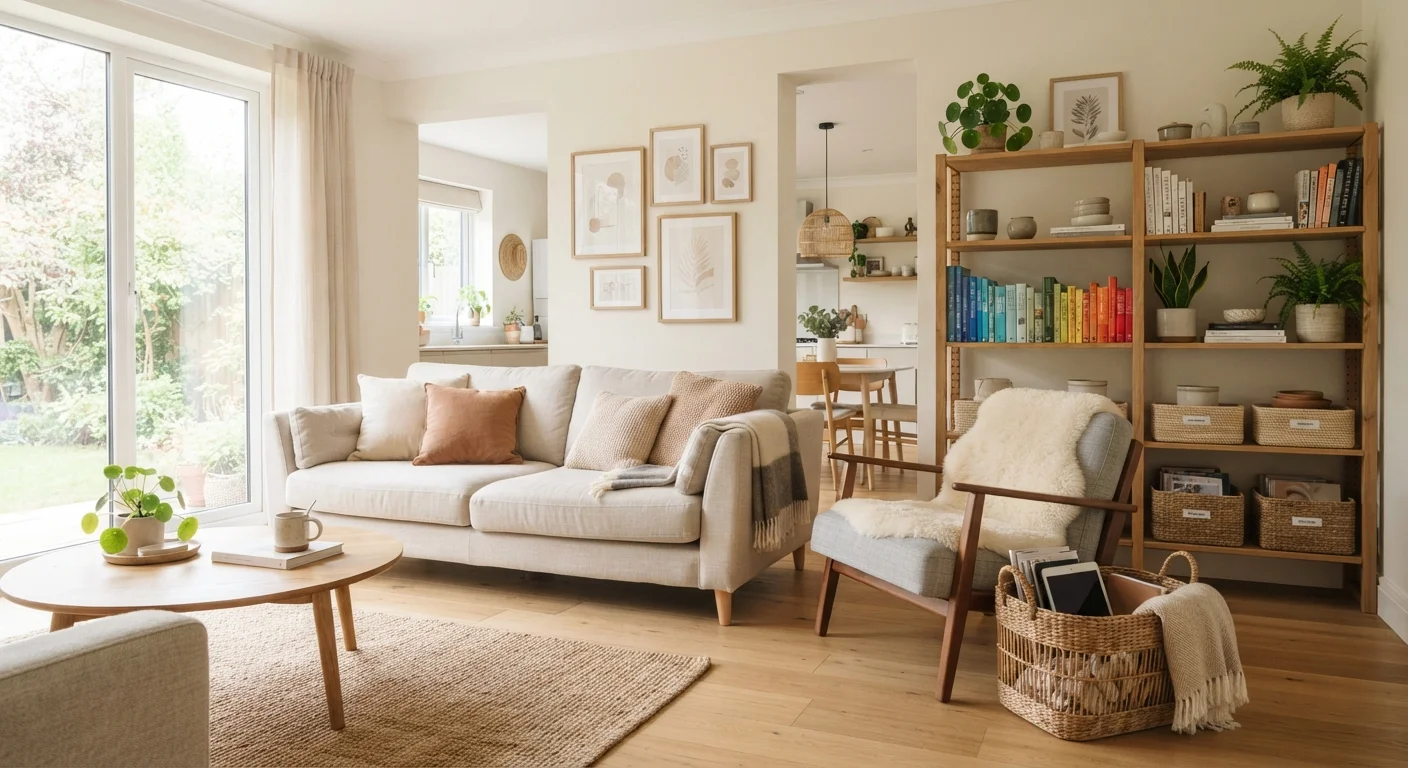
Why Organization Fades Without a System
Getting your home organized for the first time is genuinely satisfying. But within weeks, many new homeowners watch that order quietly unravel. Countertops fill back up. Closets get stuffed. The entry hall becomes a catch-all again.
This happens not because you failed, but because organization is a moving target - new items arrive, routines shift, and life keeps generating stuff. The solution isn't to re-organize from scratch every few months. It's to build lightweight maintenance habits that keep entropy in check automatically.
Understanding what causes disorder to return is a useful first step. For a closer look at the specific behaviors that quietly undo your efforts, see Clutter Keeps Coming Back.
Quick Wins You Can Start Today
You don't need a free weekend to maintain order. Most of the habits below take under five minutes and can be dropped into routines you already have - morning coffee, winding down before bed, or waiting for the laundry to finish.
Building a Realistic Weekly and Seasonal Rhythm
Daily habits handle the small stuff, but a broader rhythm catches what slips through. A light weekly reset - roughly 20 to 30 minutes - is enough to return displaced items, wipe down surfaces, and assess what needs attention.
Seasonally, set aside time to review storage areas, donate what you no longer use, and adjust systems as your household's needs change. If you find that certain areas always overflow, that's a signal to revisit your storage setup rather than simply tidy more often.
For homeowners managing both organization and broader upkeep, it helps to coordinate these reviews with your home's maintenance schedule. Our guide on seasonal home maintenance pairs well with this approach. Likewise, if you're building habits around tracking home-related tasks, keeping a home maintenance log offers a practical framework.
Homes with limited square footage face extra pressure when clutter builds. If space is a constraint, explore the strategies in Small Space, Big Clutter for storage approaches suited to smaller living spaces.