Why Clutter Always Seems to Come Back
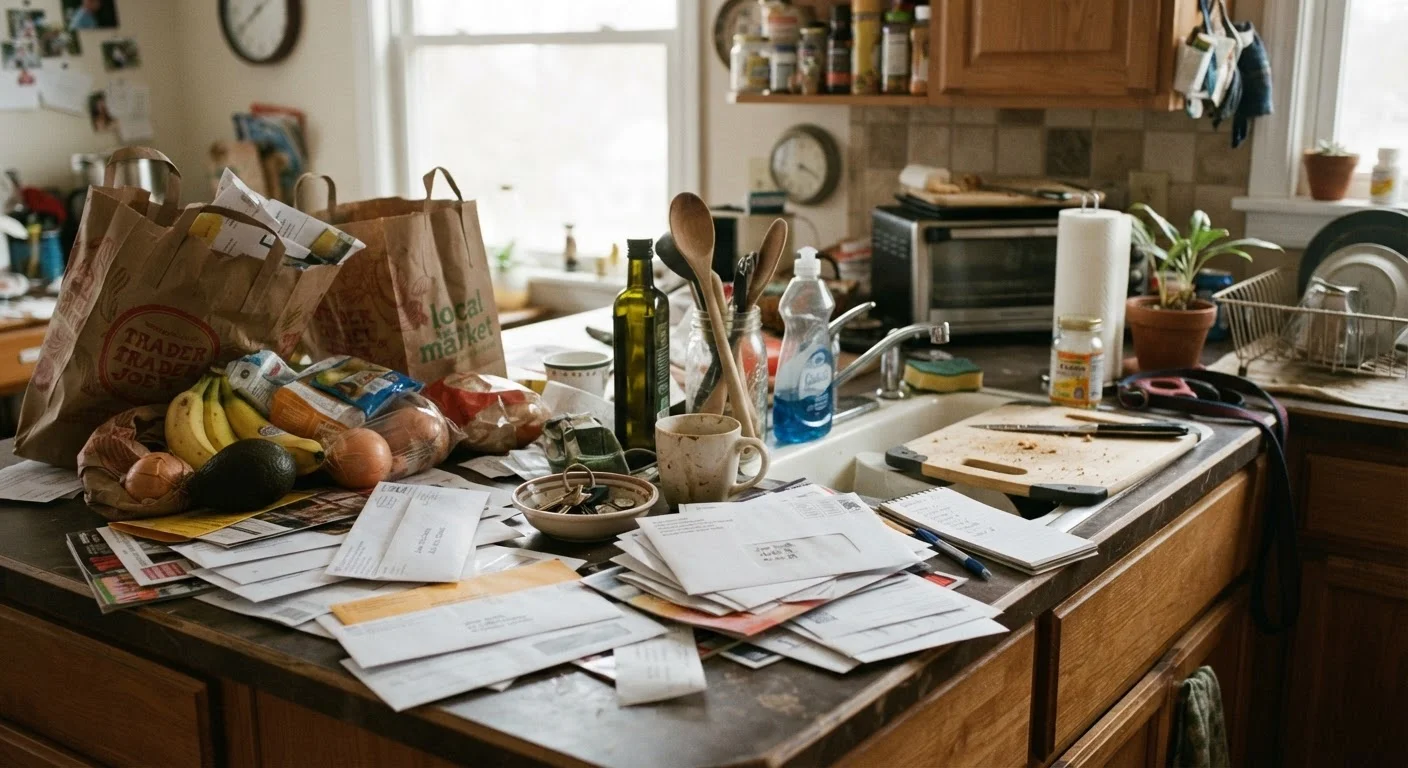
If you've ever spent a weekend organizing your home only to find it cluttered again a month later, you're not failing at organization - you're experiencing a predictable pattern. Clutter isn't a static problem you solve once. It's produced continuously by the small, repeated decisions of everyday life.
For new homeowners especially, the excitement of setting up a space can give way to frustration when disorder creeps back in. Understanding why it returns is the first step to interrupting the cycle. Our guide to home organization from zero covers the foundational principles worth establishing early - but habits are what keep those principles alive over time.
Organization Requires Ongoing Habits, Not One Big Effort
Many new homeowners treat organization as a single project - declutter once, set up storage, done. In reality, clutter is produced continuously by daily life. Without small, consistent habits to counter it, even a beautifully organized home will drift back to chaos within weeks. The goal is to build routines, not just tidy spaces.
The Everyday Habits That Undo Your Efforts
Most clutter doesn't arrive all at once. It accumulates through small, repeated behaviors that feel harmless in the moment. The habits below are the most common culprits - and each one has a practical fix.
Putting things down instead of putting them away.
Why it happens: After a long day, returning items to their proper place feels like an unnecessary extra step. Flat surfaces - counters, tables, chairs - become convenient landing spots.
Delaying decisions about items that have no clear home.
Why it happens: Unsorted items accumulate in a vague 'deal with it later' pile because making a decision requires mental energy that isn't always available in the moment.
Bringing new items in without removing old ones.
Why it happens: Shopping feels like addition, not exchange. It's easy to buy a new item without consciously registering that storage space is finite.
Skipping a regular maintenance routine in favor of occasional deep cleans.
Why it happens: Deep-cleaning sessions feel more productive and satisfying than small daily resets, so people default to waiting until disorder becomes obvious.
Organizing without first decluttering.
Why it happens: Arranging and containing items feels like progress, so many people skip the harder step of deciding what to keep in the first place.
Letting sentimental items become a category without limits.
Why it happens: Emotional attachment makes it genuinely difficult to part with things, and the category of 'things I'm keeping for sentimental reasons' can expand indefinitely.
Buying More Storage Is Not a Solution
Adding bins, baskets, and shelving units before addressing what you actually own tends to preserve clutter rather than eliminate it. Storage products give the illusion of organization while simply relocating the problem. Before investing in any storage solution, go through your belongings first and remove what you no longer use or need.
If you're working with limited square footage, these habits are even more consequential. Our article on organization strategies for compact homes offers targeted approaches for spaces where every item counts.
Building a System That Holds Over Time
Avoiding these mistakes isn't about perfection - it's about building a household rhythm that makes order the path of least resistance. A few principles help make that sustainable:
- Anchor habits to existing routines. Processing the mail when you make your morning coffee, or doing a five-minute reset before bed, links organization to something you already do reliably.
- Start with high-traffic areas. Entryways, kitchen counters, and bathroom surfaces generate the most visible clutter. Stabilizing these spots first creates the biggest immediate impact.
- Revisit your system, not just your stuff. If items keep ending up in the wrong place, the system may need adjusting more than your behavior does.
80%
Of clutter is from indecision, not shortage of space
Professional organizers frequently cite indecision - not lack of storage - as the primary driver of household clutter accumulation.
10 min
Daily reset time to prevent clutter buildup
Home organization specialists generally suggest that a short daily tidying habit is more effective than infrequent deep-decluttering sessions.
It's also worth examining any assumptions you hold about what organized homes look like. Many common beliefs about storage and labeling can actually work against you - our piece on organization myths first-time homeowners believe examines several of the most persistent ones.
For a deeper look at the routines that keep a home functional long after the initial setup, see our companion article on maintaining an organized home.