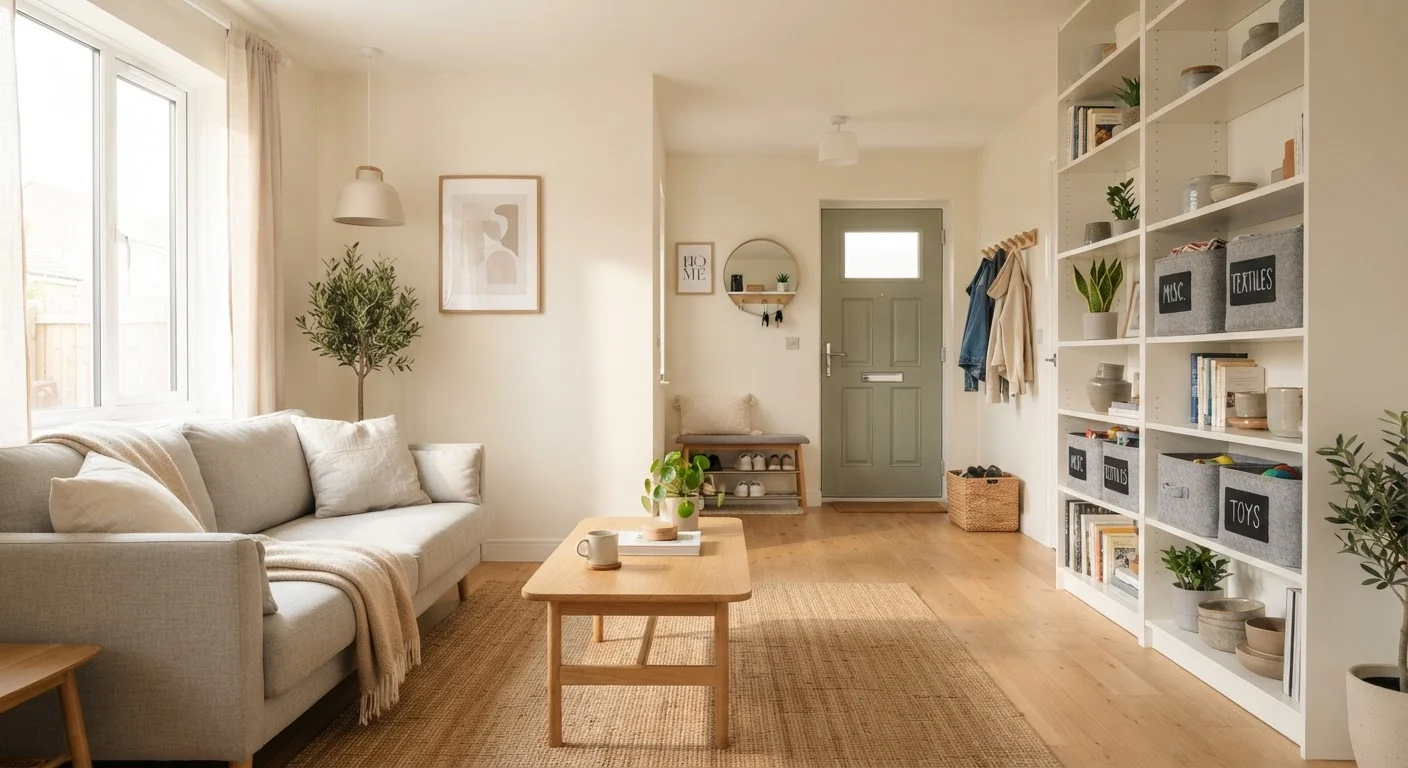
Start With a Plan, Not a Product
The most common mistake new homeowners make is buying storage bins before deciding what they're keeping. Before touching a single shelf, walk through your home and assess what you actually own - and what deserves space in your new life. See our foundational guide to home organization for a deeper look at where to begin.
Two main philosophies exist for tackling clutter: organizing room by room, or sorting everything by category across the whole house. Both work - your choice depends on how you think and how much time you can dedicate at once. Our article comparing these two approaches can help you decide.
Declutter Before You Organize
Storage solutions only work for things worth keeping. Before buying a single bin or shelf, sort every category into keep, donate, and discard. Reducing volume first makes every subsequent step faster and more effective. Aim to remove at least 20% of what you own before installing any new storage system.
Once you have a method, create a simple floor-plan sketch noting which rooms generate the most clutter. Start there. Quick wins in high-traffic spaces build momentum for harder areas.
Entryway and Mudroom
Your entryway sets the tone for the entire home. It's also where clutter accumulates fastest - shoes, bags, mail, and jackets all compete for space the moment you walk in.
- Hooks at eye level: Install a row of sturdy hooks for jackets, bags, and keys. Assign one hook per household member.
- Shoe storage: A bench with interior storage or a low shoe rack keeps footwear contained without blocking the path.
- Mail station: A wall-mounted slot or small tray prevents paper from migrating into the kitchen.
If your entry doubles as a mudroom, waterproof trays under wet items and labeled cubbies for each person make a significant difference. Even a small entryway benefits from vertical thinking - the space above a coat hook is often entirely wasted.
25%
Homeowners who cite clutter as a top stressor
According to surveys by professional organizing associations, roughly one in four homeowners identifies clutter as a significant source of daily stress.
40%
Of household items rarely or never used
Professional organizers commonly estimate that a large portion of what most households own is seldom or never accessed.
1 hour
Average time lost weekly searching for misplaced items
Research into household productivity suggests many adults spend meaningful time each week locating items that lack a designated home.
Kitchen and Pantry
Kitchens fail to stay organized when items don't have fixed homes. The fix isn't always more storage - it's smarter placement.
- Zone your cabinets: Group items by task: cooking tools near the stove, dishes near the dishwasher, snacks near the seating area.
- Pantry order: Place frequently used items at eye level. Use clear containers for dry goods so you can see quantities at a glance - and to prevent the same item from being bought twice.
- Drawer dividers: Utensil drawers become chaotic quickly. Inexpensive dividers tame the clutter immediately.
- Vertical shelf risers: Inside cabinets, risers double your usable shelf space for plates, cans, or spices.
Also consider under-sink organization - this area is chronically underused. Stackable pull-out bins handle cleaning supplies and make everything visible without digging.
Organize your kitchen based on how you actually cook, not how it looks on a shelf. Store the pan you use every morning at the front, not the one that photographs well.
Proximity to point of use is the single biggest factor in whether a kitchen system gets maintained - if it's inconvenient, it won't stick.
Before installing any closet organizer, live in your home for at least two weeks and note your actual habits. Systems built around real behavior last far longer than aspirational ones.
First-time homeowners often design storage around ideal routines rather than actual ones, leading to systems that are abandoned within months.
Bedrooms and Closets
A bedroom should feel restful. Clutter on surfaces and overflowing closets undermine that. Address both separately.
Closets
Start with a full edit: remove everything, then only return what you use. Hang clothes by category (tops, bottoms, outerwear) and within each category by color - this makes getting dressed faster and keeps the space tidy. Use the floor of the closet for shoe storage or bins, not an overflow pile.
Bedroom Surfaces
Nightstands and dressers attract objects that belong elsewhere. Limit nightstand items to sleep essentials only. Use a small tray to corral them - a defined boundary makes tidying a 30-second task.
If closet space is limited, consider the strategies designed for smaller homes, which translate well to tight closets in any size house.
Bathrooms
Bathrooms are small but store a surprising range of items. The goal is keeping frequently used products accessible while keeping clutter out of sight.
- Under-sink storage: Use tiered or pull-out organizers. Group by category: hair care, skincare, first aid.
- Drawer inserts: Adjustable inserts prevent small items from becoming a jumbled mess.
- Medicine cabinet audit: Check expiration dates regularly and remove anything no longer needed. A half-empty medicine cabinet is far easier to navigate.
- Shower and countertop: A mounted caddy or shower shelf keeps products off the tub edge. On the counter, limit permanent items to daily-use essentials only.
Small Bathrooms Need Extra Editing
In bathrooms with minimal cabinet space, editing your product collection is more impactful than adding more storage. Most households accumulate far more personal care products than they actively use. A periodic review - removing expired or unused items - can free up significant space without a single new organizer.
Living Areas and Home Office
Living rooms accumulate items from every household member, making them harder to keep organized without clear systems. Dedicate a basket or bin for remote controls, chargers, and other tech accessories. Media consoles with closed storage hide equipment without eliminating access.
For a home office - whether a dedicated room or a corner - the priority is eliminating paper. File active documents in labeled folders, scan what can be digitized, and shred what you no longer need. A tidy workspace also reduces mental friction when you sit down to work.
Bookshelves benefit from periodic editing too. Remove books you won't re-read and group what remains by subject or size. Decorative items should be intentional, not accumulated.
Garage, Attic, and Storage Spaces
These spaces often become repositories for everything that doesn't have a home elsewhere - which is precisely why they need the most structure.
- Garage zones: Divide into clear activity zones - automotive, lawn and garden, sports, tools. Wall-mounted pegboards and slatwall panels keep tools visible and off the floor.
- Labeled bins: Opaque bins need labels. Clear bins are easier but still benefit from labels for long-term consistency.
- Seasonal rotation: Store seasonal items (holiday decor, camping gear) in clearly labeled bins at the back or high on shelves, swapping them to accessible positions as needed.
- Attic basics: Lay down boards for a stable walking surface if needed before adding storage. Avoid storing temperature-sensitive items (photos, electronics, candles) in uninsulated attics.
Use our room-by-room organization checklist to make sure you haven't missed any area.
Safety First in Garages and Attics
When organizing garages and attics, store hazardous materials (paints, solvents, pesticides) in locked, ventilated cabinets away from children and heat sources. In attics, never store items directly on insulation batts, and check that flooring can support the weight of any planned storage. For structural questions or significant modifications, consult a qualified professional.
Building Habits That Last
Organization isn't a one-time project - it's a set of ongoing habits. Once your systems are in place, the work shifts to maintaining them. The two most effective habits are the one-in, one-out rule (when something new enters the home, something old leaves) and a brief daily reset (10 minutes before bed returning items to their designated spots).
Weekly and monthly resets - wiping surfaces, returning stray items, checking pantry stock - prevent the slow drift back to disorder. For a deeper look at what causes organized homes to unravel, see our guide on the habits that undermine organization, and for ongoing strategies, how to maintain an organized home long-term.
“A place for everything and everything in its place isn't just a saying - it's the operating principle behind every home that stays tidy without constant effort.”
— Professional Organizers in Canada, National association for home and professional organizing practitioners
A home that works for you reduces daily friction, lowers stress, and makes every space more enjoyable to live in - and that payoff is worth the effort it takes to build the foundation.