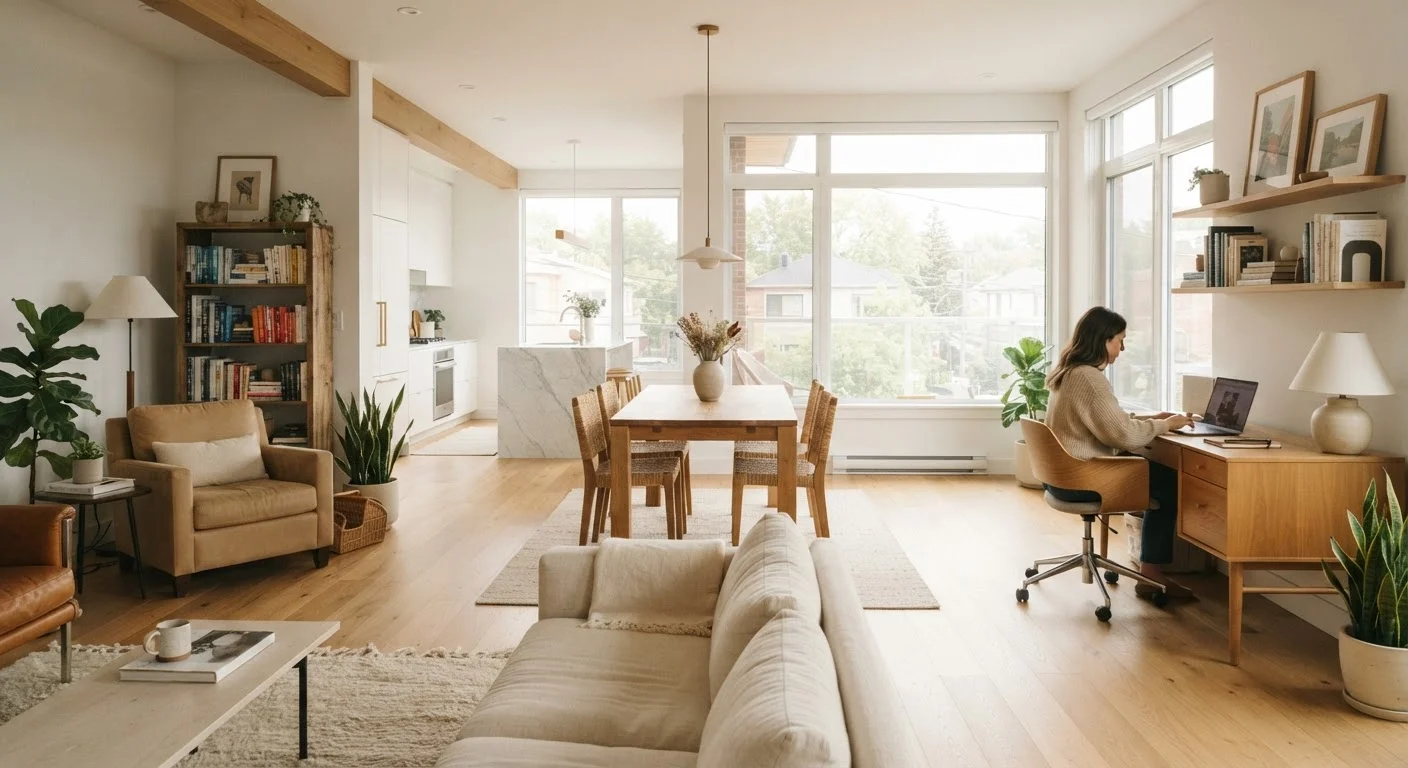
Why 'Tidy' Isn't the Same as 'Functional'
Many new homeowners start their organization journey chasing tidiness - putting things away, reducing visible clutter, making surfaces clear. That's a reasonable instinct, but tidiness alone doesn't make a home work well. A perfectly neat drawer full of items you can never find is still a friction point in your day.
Functional design asks a different question: not where should this go? but how does this home need to support the way I live? That shift in thinking is the foundation of zones, systems, and flow - the three concepts that professional organizers and interior designers use when setting up spaces that genuinely work.
If you're just starting out, our article Home Organization From Zero covers the foundational principles worth reading before diving deeper.
91%
Americans who say a disorganized home causes stress
According to a survey conducted by the National Association of Productivity and Organizing Professionals (NAPO), the vast majority of respondents linked home disorganization to elevated stress levels.
~30%
Of household items rarely or never used
Home organization research has consistently found that a significant proportion of what people store at home is seldom accessed, contributing to overcrowded zones and harder-to-maintain systems.
Zones: Designing Around Activities, Not Objects
A zone is a dedicated area of your home where a specific category of activity takes place - and where everything needed for that activity lives nearby. Instead of organizing by object type (all books together, all cables together), you organize by use.
Common household zones include:
- Entry zone: Keys, bags, shoes, outerwear - everything that transitions between inside and outside life
- Morning routine zone: Coffee, vitamins, breakfast items - grouped near the kitchen or wherever mornings actually happen
- Work or study zone: Computer, notebooks, chargers, reference materials - positioned away from high-traffic distraction
- Leisure zone: Books, remotes, blankets - near wherever your household relaxes
The goal of a zone isn't perfection - it's reducing the number of steps and decisions required to complete routine activities. If you need to visit four rooms to pack a school bag in the morning, that's a zone problem, not a willpower problem.
Flow: How Movement Shapes Function
Flow describes how easily and naturally you move through your home during daily routines. Poor flow usually isn't obvious - it shows up as subtle daily frustrations: constantly walking past the right spot without stopping, always setting things down in the wrong place, or feeling like your home works against you.
To assess your home's flow, mentally trace your most common daily paths:
- From the front door to where you unload bags and change shoes
- From the bedroom to where you start your morning
- From where food is prepared to where it's eaten
- From where children play to where supplies are stored
If any of those paths crosses back on itself unnecessarily, or requires passing through an area that creates interruption, the flow can be improved - often just by moving a zone closer to where the activity naturally begins.
Walk Your Home Like a Stranger
One useful technique for spotting flow problems: walk through your home as if you've never been there before, following the path a visitor would take. Notice which areas feel confusing, which surfaces attract clutter, and where your eye naturally lands. Fresh perspective often reveals friction points that familiarity has made invisible.
Systems: The Rules That Keep Zones Working
A zone tells you where. A system tells you how. Systems are the repeatable habits and rules that prevent zones from collapsing back into clutter over time. Without a system, even a beautifully designed zone will degrade within weeks.
Effective systems share a few common traits:
- They're easy to maintain - the default action (putting something away) should require less effort than the alternative (leaving it out)
- They have a defined home for every item - ambiguity is the enemy of systems; if something doesn't have a clear spot, it becomes clutter
- They account for resets - building in a short weekly reset prevents small drifts from becoming large problems
For a plain-language breakdown of the terms you'll encounter when building systems, see The Language of Organization. And once your zones and systems are in place, Maintaining an Organized Home covers the routines that keep everything working long-term.
Putting It Together: A Simple Starting Process
Designing for function doesn't require a renovation or a large budget. Start with observation, then build from there:
- Audit your friction points - for one week, notice where clutter accumulates, where you feel frustrated, and where daily routines feel slow or complicated
- Map your activities - list the 8-10 things you do most often at home. Each becomes a potential zone anchor
- Position zones near the action - locate each zone as close as possible to where that activity naturally starts, not where it seems logical on paper
- Define a system for each zone - decide what belongs there, what doesn't, and what the reset habit will be
- Test and adjust - live with the setup for two to four weeks before making permanent changes; what seems right in theory may need adjustment in practice
For room-by-room guidance, The Complete Guide to Organizing Every Room offers detailed strategies across the whole home. And if space is limited, Small Space, Big Clutter adapts these principles for compact living.
Your Zones Will Evolve - That's Normal
The zones that work for you today may not suit your life in two years. A home office zone becomes a nursery; a hobby corner shifts when interests change. Functional design isn't a one-time setup - it's an ongoing process of aligning your space with your current life. Expect to revisit and adjust, and treat that as a feature, not a failure.