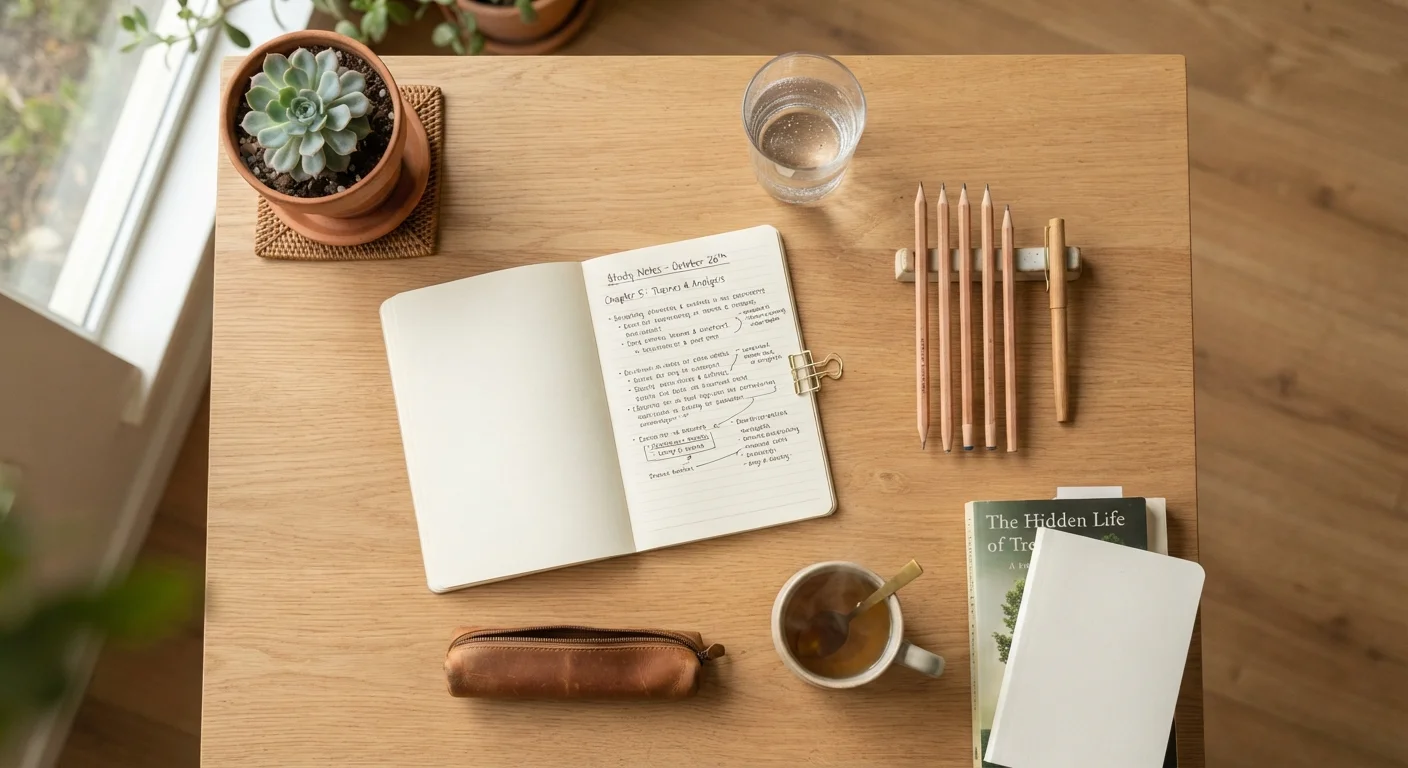
Why a Pre-Study Routine Matters
Most new learners sit down to study and immediately hit a wall - staring at a page without really absorbing anything. Often, the problem isn't effort or intelligence. It's preparation. Walking into a session without a clear environment, defined goal, or settled mindset means your brain spends its first 15 minutes just getting oriented.
A short pre-study checklist solves this. Think of it like a pilot's pre-flight check: not because the pilot doesn't know how to fly, but because a reliable routine prevents small oversights from becoming big problems. For new learners especially, building this habit early creates a foundation that carries forward into more complex study demands.
This checklist is designed to take no more than 10-20 minutes before your session begins. Use it every time - the consistency is what makes it work. If you're brand new to structured learning, our beginner's guide to study skills offers a broader look at the habits and techniques that make studying effective.
Environment Setup
Digital and Physical Distraction Control
Materials and Resources
Goal and Mindset Preparation
What You'll Need Before You Begin
You don't need expensive supplies to study well, but having the right basics within reach prevents unnecessary interruptions. Gather these before running through the checklist.
Notebook or lined paper
Used for handwritten note-taking, which supports memory encoding during active study.
Pens or pencils
Essential writing tools for annotations, diagrams, and practice exercises.
Timer (phone, clock, or dedicated app)
Keeps sessions time-bounded and helps you track focused work intervals.
Water bottle
Keeps you hydrated throughout the session without requiring you to leave your workspace.
Noise-blocking headphones
Reduces ambient distractions in noisy environments, helping you maintain concentration.
Highlighters or sticky notes
Useful for marking key passages or flagging material you need to revisit.
If you study online, you may also want to review the introduction to digital education for tips on setting up your learning environment specifically for virtual courses.
Avoid Studying in Bed or on a Sofa
Lying down or reclining while studying trains your brain to associate those positions with rest rather than focus. Over time, this makes it harder to concentrate in those spaces and can even disrupt sleep quality. Reserve your bed for sleep and keep study sessions in an upright, dedicated spot whenever possible.
Don't Skip the Goal-Setting Step
It's tempting to jump straight into reading, but sessions without a defined goal often run longer and produce less learning. Vague study time - flipping through pages without a target - can feel productive while actually doing little for retention. Even a rough goal written in one sentence will keep you anchored.
Common Mistakes That Derail New Learners
Even with the best intentions, a few predictable habits can quietly undermine a study session before it really begins. Multitasking with media - having a show on in the background, for instance - is one of the most documented obstacles to information retention. Research in cognitive psychology consistently shows that divided attention reduces the quality of encoding, meaning information is less likely to make it into long-term memory.
Another frequent issue is sitting down to study without a defined endpoint. Open-ended sessions often fade into browsing or distraction. Pairing a specific goal with a time boundary - such as "I will complete the first two sections of Chapter 4 in 45 minutes" - gives your brain a concrete target.
Finally, neglecting your physical state before studying is easy to overlook. Hunger, dehydration, and fatigue each compromise concentration. Treating your daily physical habits as part of your academic routine is worth taking seriously - the daily habit starter checklist covers how to build those basics from scratch.
Consistency Matters More Than Perfection
You won't check every item on this list every single time - and that's fine. The goal is not a perfect ritual but a reliable enough routine that your brain begins to associate these small steps with focused effort. Even completing half the checklist consistently will produce better results than an elaborate process you only follow occasionally. Start simple, and add steps as the habit solidifies.