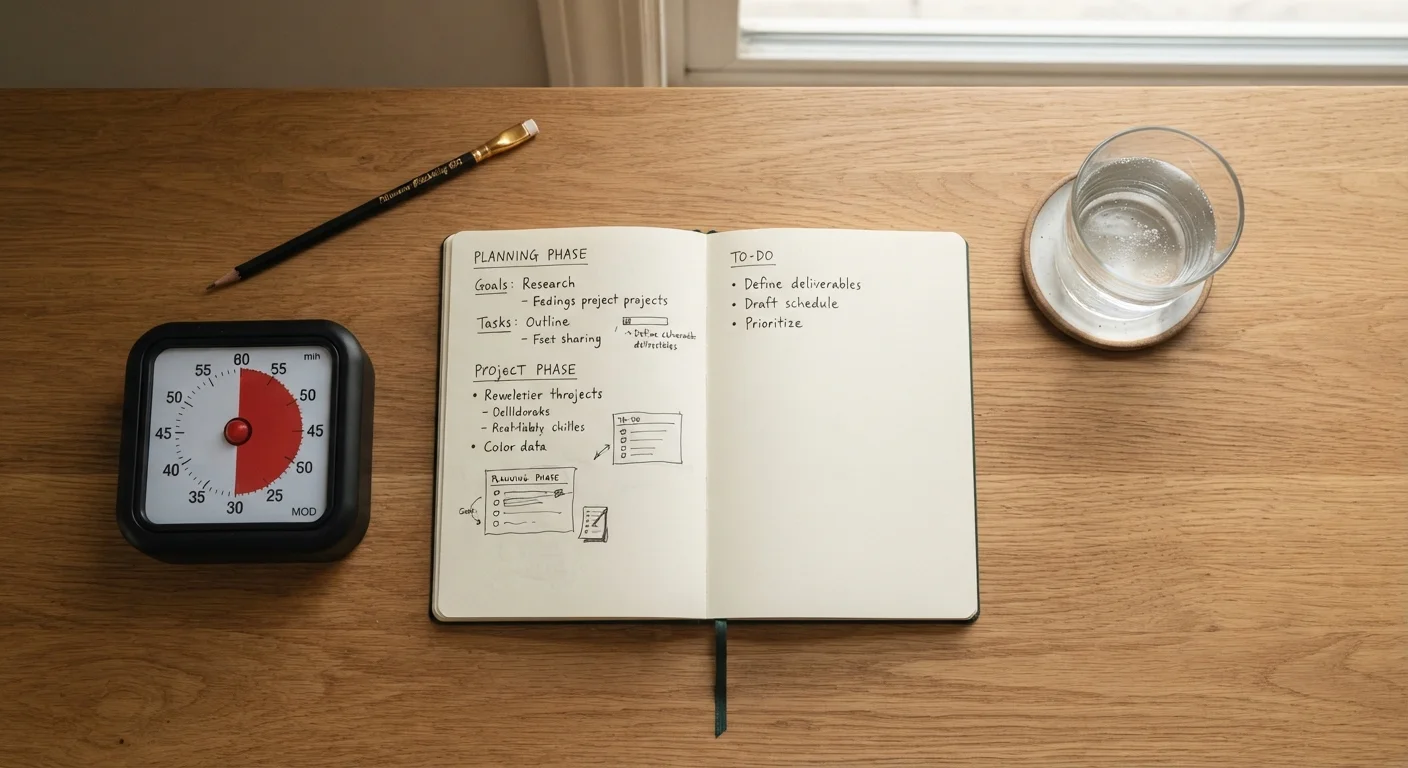
How the Pomodoro Technique Works Step by Step
The mechanics of the Pomodoro Technique are intentionally simple, which is part of why beginners find it accessible. Here is the basic cycle:
- Choose one specific task to focus on before you start the timer.
- Set a timer for 25 minutes and work on that task - and only that task - until it rings.
- Take a 5-minute break. Stand up, breathe, and genuinely stop studying.
- Repeat steps 1-3. After four Pomodoros, take a longer break of 15-30 minutes.
The interruption rule is central: if something distracts you during a Pomodoro - a text, a stray thought, an urge to check something - note it down briefly and return to it after the interval. This trains your attention to stay anchored to the task at hand.
For best results, pair each Pomodoro with a concrete goal rather than a vague intention. Our guide to writing specific study goals explains how to frame goals that actually direct your focus.
Write Your Task Before Starting the Timer
Before each Pomodoro, write down in one sentence exactly what you intend to do during that interval - for example, 'Summarize pages 40-55 of the textbook' rather than 'study biology.' This small habit prevents the common trap of busy-but-unfocused effort and gives you a clear benchmark for whether the Pomodoro was productive.
Why Structured Breaks Protect Your Concentration
One of the most common beginner mistakes is treating breaks as wasted time. In reality, planned breaks are part of what makes the Pomodoro Technique effective. Sustained mental effort without rest leads to cognitive fatigue - a state where your ability to retain and process new information diminishes, even if you feel like you're still studying productively.
Research in cognitive psychology consistently suggests that spaced rest periods support memory consolidation and help the brain maintain alertness over longer study sessions. This is why studying for three hours straight is rarely as effective as three well-structured hours with built-in recovery time.
If you've ever felt like your study sessions produced little real learning, this fatigue effect may be a contributing factor. Our article on why study sessions can feel productive but leave you forgetting everything explores this further.
Breaks Work Best When You Truly Step Away
A 5-minute break spent scrolling through your phone provides less mental recovery than a break spent standing, stretching, or simply looking away from your screen. High-stimulation activities keep the brain engaged rather than allowing it to rest. Even a brief walk around the room can help reset concentration before the next interval.
Fitting the Pomodoro Technique Into Your Study Routine
The Pomodoro Technique works best as part of a broader study routine rather than as a standalone fix. Before you begin a session, decide how many Pomodoros you plan to complete and what you want to accomplish in each one. This prevents aimless studying - sitting at your desk without a clear direction is a common trap for new learners.
If you're building your study habits from the ground up, our beginner's guide to building a study routine gives you a realistic framework for scheduling consistent sessions. For learners juggling work or family commitments, building a study routine that works around a full life addresses how to carve out study time without burnout.
The Pomodoro Technique also pairs naturally with other study methods. For example, using it alongside spaced repetition strategies can help you decide which material to review in each interval. Similarly, a structured note-taking method - such as those covered in our note-taking methods guide - gives each Pomodoro a clear output to aim for.