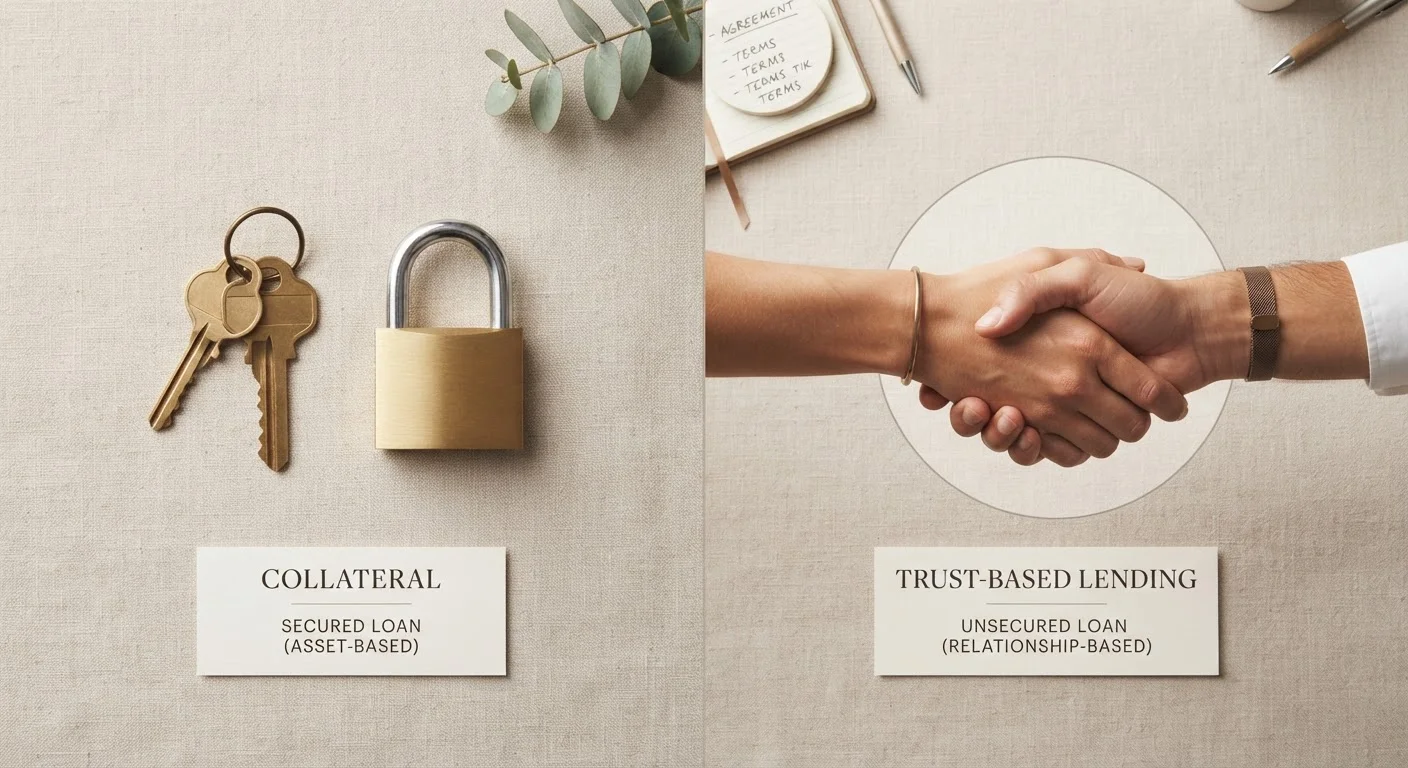
The Core Difference: Collateral
When a lender extends credit, it faces the risk that the borrower might not repay. The way that risk is managed is what separates secured from unsecured credit.
Secured credit is backed by collateral - an asset you agree the lender can claim if you default. A mortgage is secured by your home; an auto loan is secured by the vehicle. If you stop making payments, the lender has a legal right to repossess or foreclose on that asset to recover what it is owed.
Unsecured credit carries no such pledge. The lender evaluates your credit history, income, and other factors, then extends funds based on trust in your ability to repay. Credit cards, most personal loans, and student loans are typically unsecured. Before exploring either type, it helps to be familiar with the basic vocabulary - see our first-time borrower's glossary for plain-language definitions of terms you'll encounter.
| Criterion | Secured Credit | Unsecured Credit |
|---|---|---|
| Collateral required | Yes - asset pledged | No asset required |
| Typical interest rate | Generally lower | Generally higher |
| Loan amounts | Often larger | Typically smaller |
| Risk if you default | Asset repossession or foreclosure | Collections, credit damage, possible judgment |
| Common examples | Mortgage, auto loan, secured card | Credit card, personal loan, student loan |
| Credit score impact | Same fundamentals apply | Same fundamentals apply |
| Accessibility with poor credit | Often more accessible | Harder to qualify; higher rates |
What Changes Between the Two
Several borrowing conditions shift meaningfully depending on whether credit is secured or unsecured.
Interest Rates
Because a lender holding collateral has a recovery option if you default, it takes on less risk - and typically charges a lower interest rate. Unsecured lenders price that additional risk into a higher rate. This is one reason mortgage rates are generally lower than personal loan rates.
Loan Amounts and Terms
Secured loans often allow larger borrowing amounts and longer repayment periods, because the collateral provides the lender with confidence. Unsecured credit limits are generally more modest and terms shorter, though this varies widely by lender and borrower profile.
Consequences of Non-Payment
This is the most consequential difference. With a secured loan, default can trigger repossession or foreclosure - the loss of your car, home, or other pledged asset - on top of damage to your credit. With unsecured debt, the lender cannot immediately seize property, but it can pursue collection actions, report the default to credit bureaus, and potentially seek a court judgment. Neither outcome is without serious consequence.
~68%
Share of US consumer debt that is secured
The Federal Reserve's consumer credit data consistently shows mortgage debt dominates the US borrowing landscape, illustrating how common secured credit is.
35%
Weight of payment history in FICO scoring
According to FICO, payment history is the single largest factor in your credit score - applying equally to secured and unsecured accounts.
Approval Criteria
Secured credit can be more accessible to borrowers with limited or imperfect credit histories, because the collateral reduces lender risk. Unsecured credit approval leans more heavily on your credit score and income, which is why a stronger credit profile typically unlocks better unsecured terms. Understanding how credit utilisation affects your score is especially relevant here.
What Stays the Same
Despite their structural differences, secured and unsecured credit share important characteristics every borrower should understand.
- Both are reported to credit bureaus. Payment history, balances, and account age feed into your credit report regardless of whether the debt is secured or unsecured. On-time payments build your score; missed ones damage it.
- Both accrue interest on unpaid balances. The rate may differ, but the mechanics of interest compounding apply equally. Carrying a balance costs money over time on both types.
- Both create a legal repayment obligation. Signing a credit agreement - secured or unsecured - is a binding commitment. The type of collateral involved changes the lender's remedies, not the borrower's underlying duty to repay.
- Both can lead to serious debt if mismanaged. The asset-loss risk of secured debt is visible, but unsecured debt can spiral just as harmfully through high interest rates. For strategies on staying in control, see our guide on keeping debt manageable over the long term.
A Note on Secured Credit Cards
A secured credit card works differently from a secured loan. You deposit a sum of money - say, $200-$500 - which typically becomes your credit limit. The deposit protects the issuer, not a physical asset like a home. These cards are commonly used to build or rebuild credit and function like regular credit cards for day-to-day purchases. The deposit is usually refunded when the account is closed or upgraded in good standing.
When comparing specific borrowing products - such as a personal loan versus a credit card - the secured/unsecured distinction is just one layer. Our personal loans vs. credit cards comparison breaks down the broader differences between those two tools.
This article is for general informational and educational purposes only and does not constitute personalised financial or legal advice. Consult a qualified financial professional for guidance specific to your circumstances.