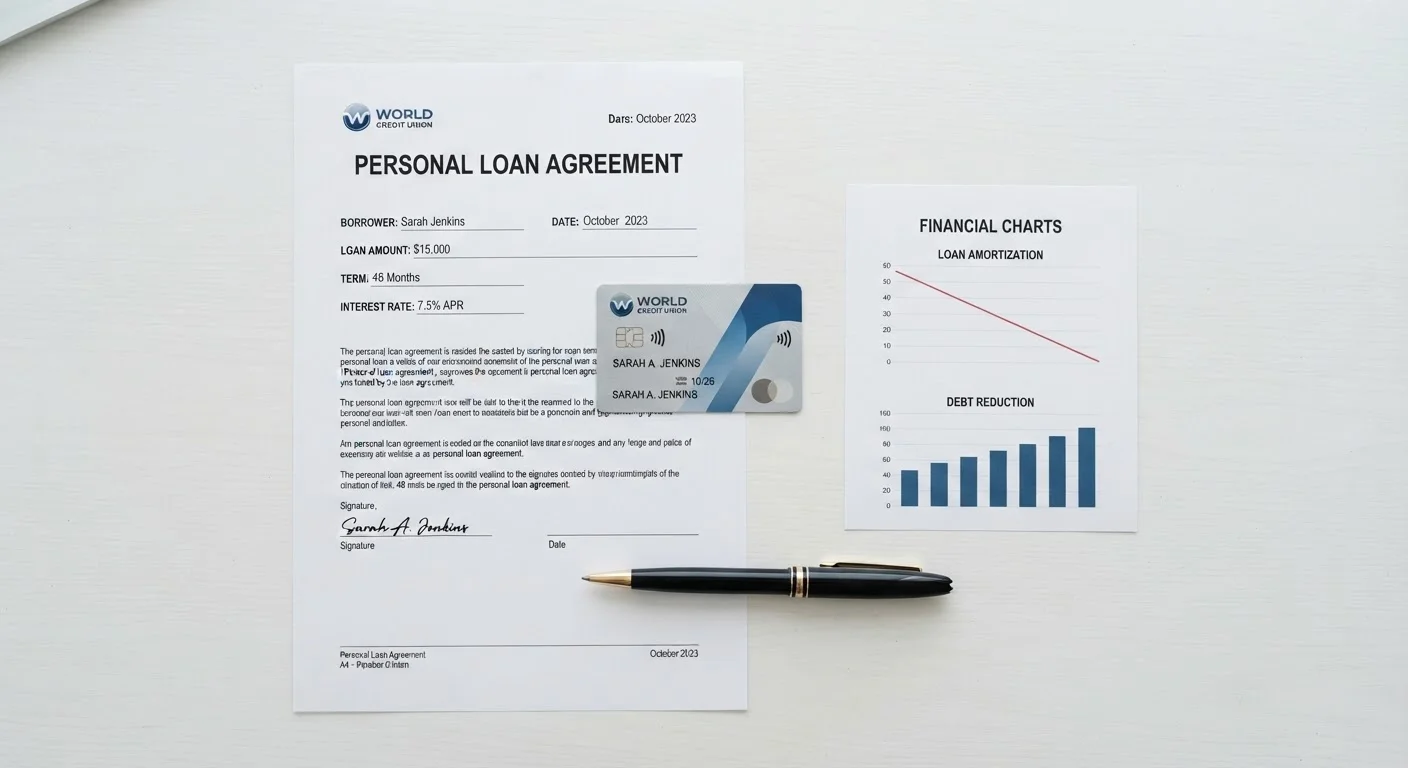
How Each Borrowing Tool Actually Works
Before comparing the two, it helps to understand the basic mechanics of each. If terms like APR or revolving credit are unfamiliar, our glossary for first-time borrowers explains them in plain language.
Personal Loans
A personal loan is an installment loan - you receive a fixed lump sum upfront, then repay it in equal monthly payments over a defined period, typically one to seven years. Most personal loans carry a fixed APR, which means your interest rate and monthly payment stay the same for the life of the loan. This makes them straightforward to budget around.
Credit Cards
A credit card is a revolving line of credit. You have a credit limit, and you can borrow up to that limit, repay some or all of it, and borrow again - repeatedly. Interest is only charged on balances you carry past your monthly due date. If you pay the full statement balance each month, you typically pay no interest at all. However, if you only make minimum payments, interest compounds quickly and the true cost of what you borrowed rises substantially.
| Criterion | Personal Loan | Credit Card |
|---|---|---|
| Structure | Installment - fixed lump sum | Revolving - reusable credit line |
| Typical APR range | Generally lower | Generally higher |
| Repayment term | Fixed (1-7 years) | Flexible (minimum payment required) |
| Monthly payment | Fixed and predictable | Varies with balance |
| Access to funds | One-time disbursement | Ongoing, up to credit limit |
| Interest-free option | Not typically available | Yes, if paid in full monthly |
| Best loan size | Larger amounts ($1,000+) | Smaller or everyday amounts |
| Affects credit utilization | No (installment debt) | Yes (revolving debt) |
Interest Rates and the Real Cost of Borrowing
Interest rate differences between these two tools are among the most important factors to understand. According to Federal Reserve consumer credit data, average credit card interest rates have consistently run significantly higher than average personal loan rates. This gap matters enormously when you carry a balance over several months.
20%+
Average credit card APR (approximate)
Federal Reserve consumer credit data has shown average credit card interest rates consistently exceeding 20% in recent reporting periods.
~11-12%
Average personal loan APR (approximate)
Federal Reserve data on consumer installment loans suggests average personal loan rates have typically run well below average credit card rates.
30%
Recommended max credit utilization ratio
Consumer financial guidance from sources including the CFPB commonly cites keeping revolving credit utilization below 30% as a healthy target for credit scores.
For example: borrowing $5,000 on a credit card at a high APR and making minimum payments could cost you thousands of dollars more in interest than taking out a personal loan for the same amount at a lower fixed rate. The longer you take to repay, the larger that gap becomes.
That said, borrowers with strong credit histories may qualify for lower credit card APRs or promotional 0% introductory rates on purchases or balance transfers. These offers can make credit cards cost-effective - but only if you repay the balance before the promotional period ends and the standard rate kicks in.
For a practical look at managing what you borrow once you have it, see our overview of debt repayment strategies.
How Each Option Affects Your Credit Score
Both personal loans and credit cards appear on your credit report and influence your credit score - but in different ways.
Credit Utilization
Credit cards directly affect your credit utilization ratio - the percentage of your available revolving credit that you're using. Keeping utilization below 30% is a widely cited guideline for maintaining a healthy score. A personal loan does not factor into utilization in the same way because it is an installment debt rather than revolving credit.
Hard Inquiries and New Accounts
Applying for either product typically triggers a hard inquiry on your credit report, which can cause a small, temporary dip in your score. Opening a new account also lowers your average account age, another scoring factor.
Payment History
For both products, on-time payment is the single most important factor. Missing payments on either a personal loan or a credit card can cause significant credit score damage and result in fees or penalty rates.
Secured vs. Unsecured: A Quick Note
Most personal loans and credit cards are unsecured, meaning no collateral is required. However, some personal loans are secured against an asset, which can affect both your interest rate and the risk you take on. Our article on secured vs. unsecured credit explains what this distinction means in practice.
Before taking on any new debt, our pre-borrowing checklist walks you through the key questions to ask yourself first.
Choosing Based on Your Situation
Neither tool is universally better - the right choice depends on what you're borrowing for and how you plan to repay it. Here are the most useful questions to ask:
- Is this a one-time, defined expense or ongoing, variable spending? A fixed expense like a car repair or debt consolidation aligns well with a personal loan's lump-sum structure. Variable or recurring spending suits a credit card's flexibility.
- How long will you need to carry the balance? If you can repay within a billing cycle or two, a credit card may cost little or nothing in interest. For repayment timelines measured in months or years, a personal loan's lower rate is usually the better deal.
- Can you commit to a fixed monthly payment? A personal loan's structured schedule removes guesswork from your monthly budget. See our budgeting basics hub for help building a budget around fixed obligations.
- Do you need the ability to reborrow? If you anticipate needing funds again after repaying, revolving credit means you won't need to reapply.
If you're financing a vehicle specifically, the decision tree looks somewhat different - our comparison of dealer finance vs. bank loans covers that scenario in detail.
This article is for general informational and educational purposes only. It does not constitute personalised financial, legal, or tax advice. Consult a qualified financial professional before making borrowing decisions based on your specific circumstances.