How Dealer Finance Works
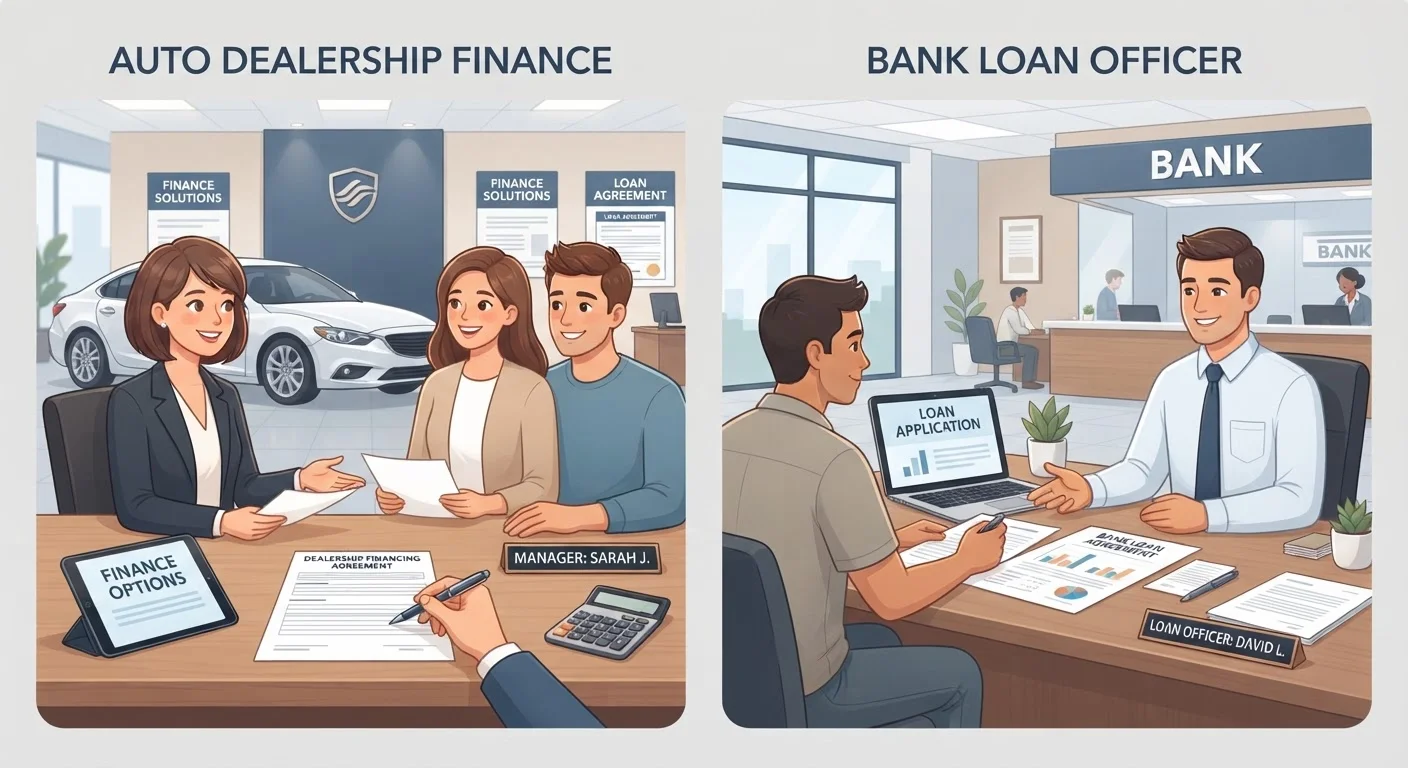
When you arrange finance at a dealership, the dealer acts as a middleman. You apply for credit through the dealer's finance department, which then submits your application to one or more lenders - often including the car manufacturer's own financial arm. If approved, the lender pays the dealer for the vehicle, and you repay the lender in monthly instalments over an agreed term.
Dealer finance typically comes in two main structures. Hire Purchase (HP) means you pay a deposit, make fixed monthly payments, and own the car outright at the end of the term. Personal Contract Purchase (PCP) involves lower monthly payments but leaves a large final "balloon" payment if you want to keep the car. Our Car Finance Jargon Decoded guide explains both structures in plain English.
One key point: under most dealer finance agreements, you do not legally own the vehicle until all payments - including any final lump sum - are completed. The lender technically owns it during the repayment period.
| Criterion | Dealer Finance | Bank Loan |
|---|---|---|
| Where arranged | At the dealership | Directly with a bank or credit union |
| Vehicle ownership during repayment | Lender owns the car until final payment | You own the car from day one |
| Where you can buy | Only at that dealership | Any seller - dealer, private, auction |
| Negotiating position | Price and finance often discussed together | Can negotiate price as a cash buyer |
| Mileage/condition restrictions | Common on PCP products | None - you own the vehicle |
| Promotional rates | Sometimes available via manufacturer | Set by the lending institution |
How a Bank Loan Works
A bank loan (or credit union loan) for a car is a straightforward personal or secured loan arranged directly with a financial institution, independently of any dealership. You apply, get approved for a specific amount, and the funds are either paid directly to you or to the seller. You then own the vehicle outright from day one - there's no lender holding title over the car.
You can apply before you've chosen a car, which means arriving at a dealership with pre-approved funds acts much like cash. This can strengthen your negotiating position on the vehicle price itself. It also means you're free to buy from a private seller, an auction, or any dealership - not just one that offers its own finance products. See our guide on private sale vs. dealership buying for how that distinction plays out in practice.
Because you own the car outright, there are no mileage restrictions or end-of-contract condition fees - common features of some dealer finance products like PCP.
Check Whether the Loan Is Secured or Unsecured
Some bank car loans are "secured" against the vehicle, meaning the lender can repossess the car if you miss payments - similar in that respect to dealer finance. Others are unsecured personal loans, where the car is not used as collateral but interest rates may be higher. Always confirm which type you're applying for and understand the implications before signing.
Comparing the Key Differences
The right choice depends on your priorities. Rate, flexibility, and how you want to own (or not own) the vehicle during the repayment period are the main variables to weigh.
APR
The single most important number to compare
Annual Percentage Rate reflects the true yearly cost of borrowing, including fees - comparing APR across both options is the most reliable way to judge value.
0%
Promotional dealer rates can reach this low
Manufacturer-backed finance promotions occasionally offer 0% APR deals, though these typically require a strong credit history and a specific deposit amount.
Before signing anything with either route, read the full agreement carefully. Our walkthrough on reading a loan agreement for the first time explains the terms you're most likely to encounter. For a broader look at how secured borrowing differs from unsecured, see Secured vs. Unsecured Credit.
This article is for general informational and educational purposes only and does not constitute financial advice. Lending products and eligibility criteria vary. Consult a qualified financial adviser before making borrowing decisions.