How the Three Categories Actually Work
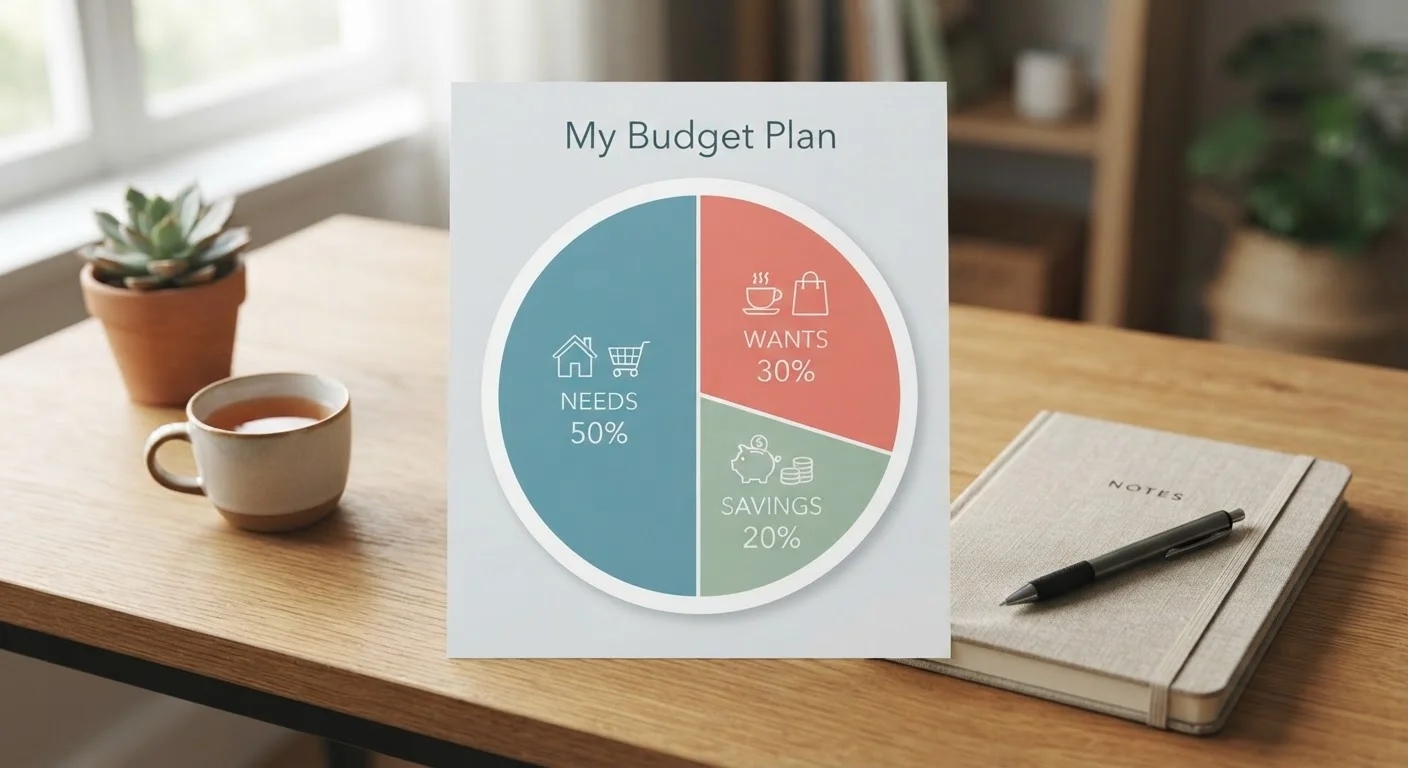
The rule's power is its simplicity. Rather than tracking every coffee or streaming subscription separately, you group all spending into just three buckets. Here is what belongs in each one:
- Needs (50%): Rent or mortgage, utilities, groceries, minimum loan payments, health insurance, and basic transportation. These are non-negotiable expenses that keep your life functioning.
- Wants (30%): Dining out, gym memberships, travel, hobbies, and subscription services. These improve quality of life but could be reduced in a pinch.
- Savings and debt repayment (20%): Emergency fund contributions, retirement account deposits, and any extra payments above the minimum on loans or credit cards.
For example, if your take-home pay is $3,000 per month, the targets would be $1,500 for needs, $900 for wants, and $600 for savings. The math is straightforward - the challenge is making your real expenses fit those buckets.
To see how these categories fit into a full monthly plan, the monthly budget setup checklist walks through each step in detail.
~37%
Average share of income spent on housing by U.S. renters
According to U.S. Census Bureau data, many renters already exceed the 50/30/20 rule's needs threshold on housing costs alone.
57%
Americans living paycheck to paycheck
A widely cited figure from multiple consumer surveys suggests a majority of U.S. adults have little financial buffer, making any structured savings target a meaningful step forward.
3-6 months
Recommended emergency fund coverage
The Consumer Financial Protection Bureau (CFPB) and most financial guidance recommends holding three to six months of essential expenses in an accessible savings account.
Where the Rule Genuinely Helps Beginners
The biggest barrier for new budgeters is not math - it is decision fatigue. When you have to decide where every dollar goes across dozens of categories, most people quit within a week. The 50/30/20 rule sidesteps that by reducing the decision to three questions: Did I stay under my needs limit? Did I stay under my wants limit? Did I save at least 20%?
That clarity makes the rule genuinely useful as a first budget. It gives you a benchmark to measure against, which is more valuable than having no benchmark at all. If you discover your needs are running at 65% of income, that is actionable information - you now know rent or transportation is the problem worth solving.
Set Up Automatic Savings First
One of the most effective ways to hit the 20% savings target is to automate it. Many bank accounts allow you to schedule an automatic transfer to savings on payday. When savings leave your account before you can spend them, the decision is already made - and you adapt your spending to what remains.
The rule also normalizes saving as a fixed line item rather than "whatever is left over." Research from behavioral economics consistently shows that people who treat savings as an automatic commitment - rather than an afterthought - save more over time. The 20% target reinforces that habit from day one.
If you have never built a budget before, start with the step-by-step first budget guide before applying the 50/30/20 framework - it will help you list your income and expenses accurately first.
The Honest Limitations You Should Know
The 50/30/20 rule was designed for a median American income and a relatively average cost of living. It can strain under real-world conditions:
The Rule Assumes a Stable, Predictable Income
The 50/30/20 framework works most cleanly when you receive the same amount each pay period. If your income varies - due to hourly fluctuations, commission, tips, or freelance work - consider basing your budget on your lowest expected monthly income rather than an average. That way, any surplus becomes an automatic savings bonus rather than a spending temptation.
- High housing costs: In many U.S. cities, rent alone can consume 35-45% of take-home pay for a moderate earner, leaving almost nothing for other needs before the budget is already broken.
- Student loan burden: Large monthly loan payments count as a need (at minimum payment) or savings goal (extra payments), which can compress both buckets significantly.
- Variable income: Freelancers and gig workers often cannot predict monthly take-home pay, making fixed percentage targets harder to apply consistently.
- Very low income: When income barely covers housing and food, a 20% savings target may simply not be achievable in the short term - and that is not a personal failure.
For a deeper look at the rule's origins and when it suits different situations, see the full explainer on the 50/30/20 framework. And if tight finances are a persistent reality, budgeting on a low income covers adjusted principles that hold up under real constraints.
How to Adapt It So It Actually Works for You
If the standard split does not fit your life, adjust the ratios rather than abandoning the concept entirely. The underlying principle - intentionally directing money toward priorities - matters far more than hitting 50, 30, and 20 exactly.
Common adaptations include:
- 60/20/20: If unavoidable needs run higher, shift 10 percentage points from wants.
- 50/20/30: If you are carrying high-interest debt, redirect some of the wants budget toward accelerated repayment.
- Start with 5% savings: If 20% is out of reach right now, begin with whatever you can - even $25 a month builds the habit and the account balance.
The common budgeting myths article addresses a related misconception: that budgeting only works if you follow a system perfectly. Partial progress is still real progress. A modified 50/30/20 plan you actually use will consistently outperform a theoretically perfect plan you abandon after two weeks.
This article is for general informational and educational purposes only and does not constitute personalized financial advice. Consider consulting a qualified financial professional for guidance tailored to your specific circumstances.