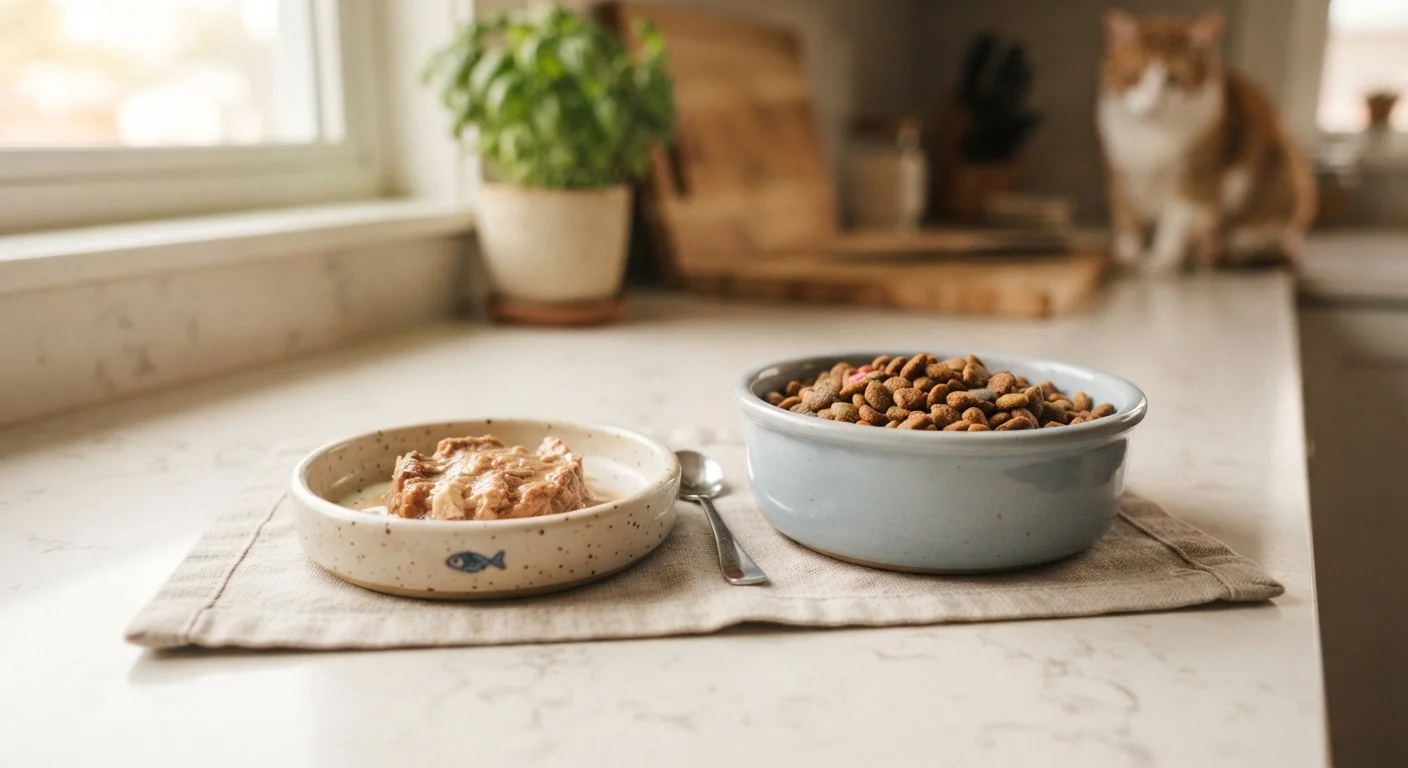
What Cats Actually Need From Their Food
Cats are obligate carnivores - meaning their bodies are built to run almost entirely on animal protein. Unlike dogs or humans, cats cannot synthesize certain nutrients on their own, including taurine (an amino acid essential for heart and eye health) and arachidonic acid (a fatty acid found in animal tissue). They also have a limited ability to process plant-based carbohydrates efficiently.
This means the foundation of any cat's diet must be high-quality animal protein. Whether that protein comes packaged in a pouch of wet food or a bag of kibble matters less than whether the food itself is complete and balanced - a phrase regulated by the AAFCO, the body that sets nutritional standards for pet food in the US. Look for this language on any label before buying.
For a broader picture of what healthy feline care looks like from day one, see our comprehensive guide for new cat owners.
Wet Food vs. Dry Food: A Side-by-Side Look
The most practical difference between wet and dry food comes down to moisture content. Wet food typically contains 70-80% water; dry kibble contains around 10%. That gap has real consequences for your cat's health.
| Criterion | Wet Cat Food | Dry Cat Food (Kibble) |
|---|---|---|
| Moisture content | ~70-80% | ~10% |
| Supports hydration | Yes - significantly | Only if cat drinks enough water |
| Protein content (dry matter) | High | Varies; often lower proportionally |
| Calorie density per serving | Lower - larger volume | Higher - smaller volume |
| Shelf life after opening | 1-2 days refrigerated | Weeks to months when sealed |
| Cost per day (general) | Higher | Lower |
| Palatability for picky cats | Often higher | Variable |
| Good for free-feeding | No - spoils quickly | Yes - stays fresh at room temp |
Cats evolved as desert animals and have a naturally low thirst drive - they're biologically inclined to get most of their water from prey. Wet food mimics this more closely than kibble does. A cat eating only dry food needs to drink significantly more water to stay adequately hydrated, and many simply don't.
On the other hand, dry kibble offers genuine practical advantages: it doesn't spoil at room temperature within hours, it's easy to leave out for cats who prefer grazing, and it tends to cost less per calorie. Some dental health claims have been made for kibble, though the evidence that dry food meaningfully reduces tartar is limited - regular veterinary dental check-ups matter far more.
A Note on Cat Food Labels
The phrase "complete and balanced" on a label means the food meets AAFCO's minimum nutritional profiles for a stated life stage - such as "kitten," "adult," or "all life stages." Foods labeled only as a "treat" or "complementary" do not meet these standards and should not make up the bulk of your cat's diet. Always match the life stage on the label to your cat's current age.
Can You Feed Both? How a Mixed Routine Works
Yes - and many veterinarians consider a mixed routine a sensible middle ground. A common approach is to offer a portion of wet food at one or two set mealtimes per day, with a measured amount of dry kibble available separately. This captures the hydration benefits of wet food while keeping feeding manageable and affordable.
The key word above is measured. Free-feeding unlimited kibble is one of the most common drivers of feline weight gain. If you leave dry food out all day, track the total daily amount carefully. Our article on feeding routines that support a healthy cat weight walks through how to structure meals and portion sizes so your cat stays in a healthy range.
When mixing formats, calculate calories across both foods - don't simply add a full portion of wet food on top of an existing full kibble allowance. Your veterinarian can help you work out the right total caloric target based on your cat's age, weight, and activity level.
This article is for general informational purposes only and is not a substitute for professional veterinary advice. Always consult a licensed veterinarian for guidance specific to your cat's health and dietary needs.