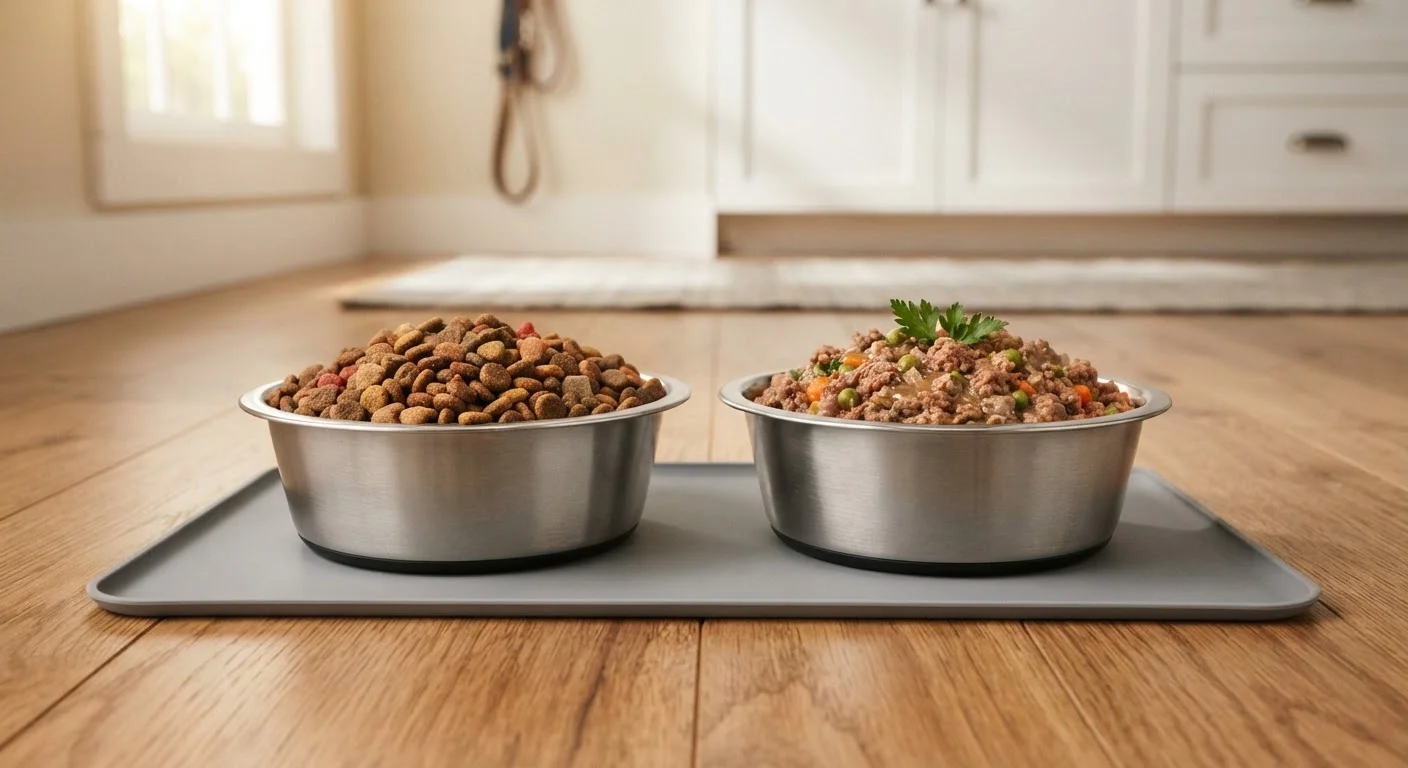
What Each Format Actually Is
Dry kibble is made by cooking and extruding (pressing through a mold) a mixture of ingredients - typically proteins, grains or grain-free starches, fats, vitamins, and minerals - into small, firm pieces. The finished product contains roughly 8-12% moisture.
Wet food, sold in cans or pouches, uses the same broad ingredient categories but is processed differently and contains 70-80% water. That high moisture content changes both the texture and the calorie density: you generally need to feed a larger volume of wet food to match the calories in a serving of kibble.
For a broader look at how food format fits into your dog's overall routine, see our daily care essentials guide.
| Criterion | Dry Kibble | Wet Food |
|---|---|---|
| Moisture content | ~8-12% | ~70-80% |
| Cost per serving | Generally lower | Generally higher |
| Shelf life (unopened) | Months, no refrigeration | Months, no refrigeration |
| After opening | Weeks in airtight container | 1-3 days refrigerated |
| Dental benefit | Mild plaque reduction via chewing | Minimal |
| Palatability | Moderate | Higher aroma and appeal |
| Ease of eating | Requires chewing | Soft, easy to eat |
| Calorie density | High per volume | Lower per volume |
Where Dry Kibble Has the Edge
Cost and convenience. Kibble is almost always cheaper per calorie than wet food, and a bag can sit in a cool, dry pantry for months. Once opened, a bag stays fresh for several weeks when stored in an airtight container - no refrigeration needed.
Dental benefit. Chewing hard kibble pieces creates a mild scraping action on teeth that can reduce plaque accumulation over time. This is a modest benefit, not a replacement for brushing or professional dental cleanings, but it is an advantage wet food does not share.
Portion control. Because kibble is calorie-dense, measuring cups give you consistent, predictable portions. This makes it easier to track how much your dog is eating and to adjust for weight management.
~75-80%
Moisture content in wet dog food
Compared to roughly 8-12% in dry kibble, making wet food a meaningful source of dietary water for dogs.
3-4×
Volume needed to match kibble calories
Because wet food is much less calorie-dense, owners typically feed significantly larger volumes to meet the same energy requirements.
Where Wet Food Has the Edge
Hydration. Many dogs drink less water than veterinary guidelines suggest is ideal. Wet food's high moisture content (roughly 75-80%) helps offset this, which is particularly relevant for dogs with a history of urinary tract issues or kidney concerns. Always discuss specific health conditions with your veterinarian.
Palatability. Wet food tends to smell and taste more appealing to dogs, which can be a real advantage if your dog is a reluctant eater or has lost appetite due to illness, stress, or age-related changes in smell and taste.
Ease of eating. Senior dogs, small breeds with tiny mouths, or dogs recovering from oral surgery often find wet food far easier to manage. The soft texture removes the chewing barrier entirely.
Our guide on how much and how often to feed a dog covers portion sizing for both formats in more detail.
A Note on Mixing Formats
Combining dry and wet food in the same bowl is generally safe for healthy dogs, but it does complicate portion calculations. If you mix formats, count the calories contributed by each type separately to avoid unintentional overfeeding. Your veterinarian or a board-certified veterinary nutritionist can help you work out the right balance for your specific dog.
Making a Decision (or Mixing Both)
There is no single right answer. A healthy adult dog doing well on kibble does not need to switch. A senior dog with dental pain who ignores the bowl may do much better on wet food. Many owners - and veterinarians - are comfortable with a combination: dry kibble as the daily base, with a small amount of wet food stirred in for palatability or during recovery periods.
If you are unsure which approach suits your dog's age, size, or health status, your veterinarian is the right person to ask. Nutritional needs shift across a dog's life, and what works for a one-year-old Labrador may not be appropriate for a ten-year-old Chihuahua.
This article is for general informational purposes only and does not constitute veterinary or nutritional advice. Always consult a licensed veterinarian for guidance specific to your dog's health and dietary needs.