Which Documents to Carry on Every International Trip
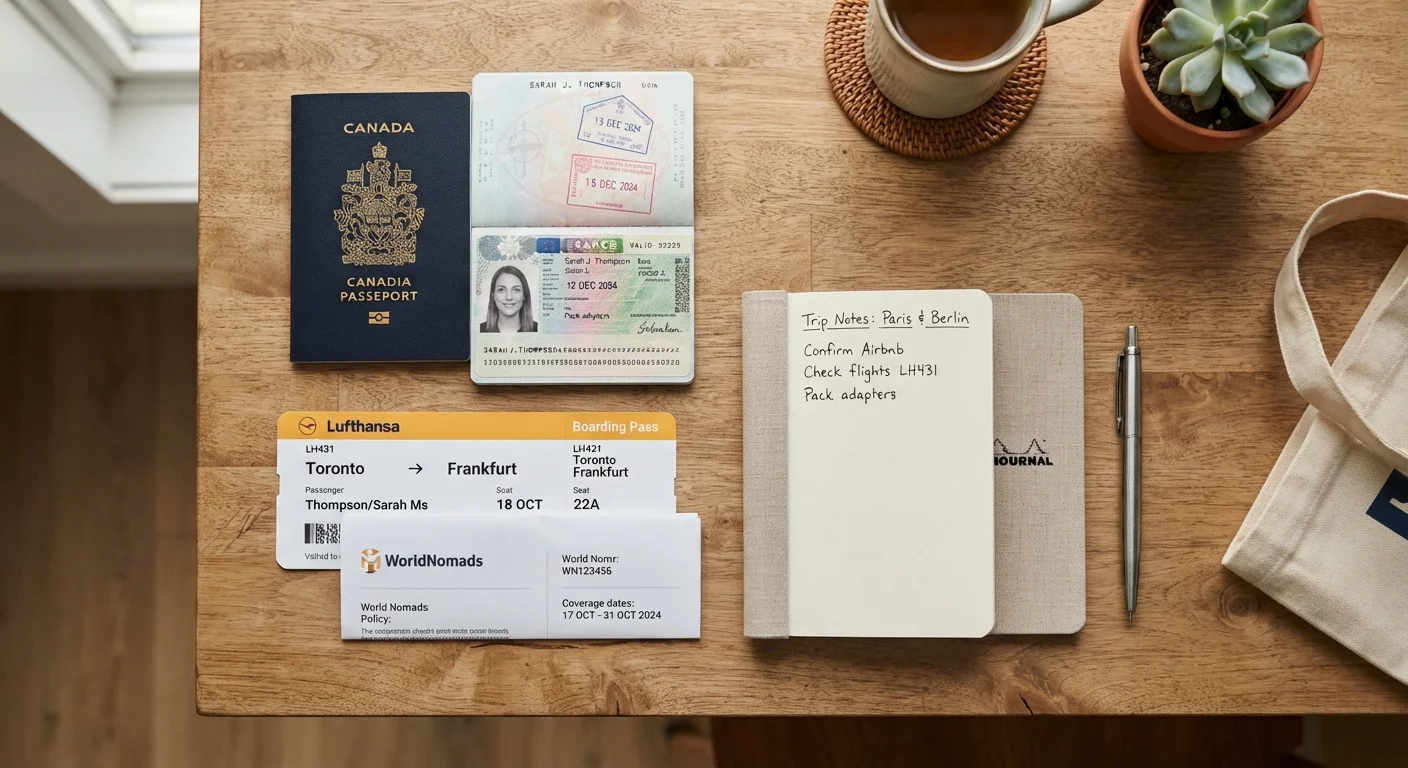
Before packing a single item of clothing, confirm you have the right paperwork. Missing or expired documents can result in being turned away at check-in or denied entry at a border - neither is recoverable quickly. The following are the documents most travelers need for international trips.
Core documents to carry in your bag
- Passport: Must be valid for at least six months beyond your travel dates in most countries. Check the expiry date well in advance.
- Visa or entry permit: Required for many destinations; some are obtained on arrival, others must be arranged weeks ahead. Always verify with the destination country's official immigration authority before travel.
- Return or onward ticket: Immigration officers at many borders require proof you plan to leave. A printed or digital booking confirmation generally suffices.
- Travel insurance documents: Keep your policy number and the insurer's emergency contact number accessible - not buried in luggage.
- Accommodation confirmation: Hotels or host contacts for at least your first night; some border officials request an address.
- Driving licence: If you plan to rent a vehicle, carry your home licence and research whether an International Driving Permit is required at your destination.
For a full pre-departure checklist that covers documents alongside money and packing, see our complete pre-departure guide.
How to Back Up Your Documents Before You Leave
Carrying originals is necessary. Carrying only originals is a risk. A layered backup strategy means a lost wallet doesn't become a lost trip.
Emergency travel document
A temporary passport or travel certificate issued by an embassy or consulate to replace a lost or stolen passport. It is typically valid only for the journey home.
Visa on arrival
An entry permit issued at the destination border or airport rather than applied for in advance. Eligibility depends on your nationality and the destination country's rules.
International Driving Permit (IDP)
An official translation of your home driving licence recognized in many countries. It is not a standalone licence and must be carried alongside your original licence.
Consulate
A government office representing your home country in a foreign city. Consulates handle citizen services such as emergency passports and can assist travelers in distress.
Encrypted cloud storage
An internet-based file storage service that protects data with encryption, meaning files can only be read by someone with your login credentials.
The three-copy rule
Experienced travelers commonly follow a simple principle: keep one original on your person, one physical copy stored separately (such as in checked luggage or a hotel safe), and one digital copy accessible from anywhere. Here's how to apply it:
- Physical photocopies: Photocopy the photo page of your passport, your visa, your insurance card, and any other critical document. Store these copies in a different bag from the originals.
- Email a scan to yourself: Scan or photograph each document and email the images to an address you can access from any device. This creates a retrievable record that doesn't depend on cloud storage apps.
- Encrypted cloud storage: Upload scans to a secure, password-protected cloud service. If you use a shared or public device abroad, log out completely after viewing.
- Emergency contact at home: Leave a copy of your passport and itinerary with a trusted person at home who can read details to you or a consulate over the phone.
For a deeper look at document backup habits, passport copies and cloud backup strategies covers exactly what experienced travelers do before departure.
Store Sensitive Files Securely
When uploading passport scans to email or cloud storage, use a strong, unique password and enable two-factor authentication on that account. Avoid accessing sensitive documents on public Wi-Fi without a VPN. Log out of any shared device immediately after viewing your files.
What to Do If Your Documents Are Lost or Stolen Abroad
Losing travel documents abroad is stressful, but it is a problem with a clear resolution path. Acting quickly and methodically matters more than panicking.
Immediate steps
- File a police report: Visit the nearest police station and request a written report. Most embassies require this before issuing an emergency travel document.
- Contact your country's embassy or consulate: They can issue an emergency passport or travel document to get you home. Locate the nearest one before you travel - don't wait until you need it. Our embassy and emergency contacts guide explains how to find the right number fast.
- Notify your travel insurer: Many travel insurance policies cover costs associated with replacing travel documents. Call the emergency line on your policy card as soon as possible.
- Contact your bank: If your debit or credit card was also taken, freeze it remotely via your bank's app or phone line.
Having digital backups dramatically speeds up this process - consular staff can confirm your identity and details much faster when you can provide a scanned passport image. This is also why the safety habits in staying safe while travelling emphasize separating valuables across bags.
~1 in 10
Travelers who lose a document abroad
Industry estimates suggest document loss or theft affects a significant minority of international travelers each year, underscoring the value of backups.
6 months
Minimum passport validity most countries require
Many destinations will deny boarding or entry if your passport expires within six months of your travel date - check before you book.
This article provides general travel information only. Entry requirements, visa rules, and border conditions change frequently. Always verify document requirements with official government sources and your destination country's immigration authority before travel.