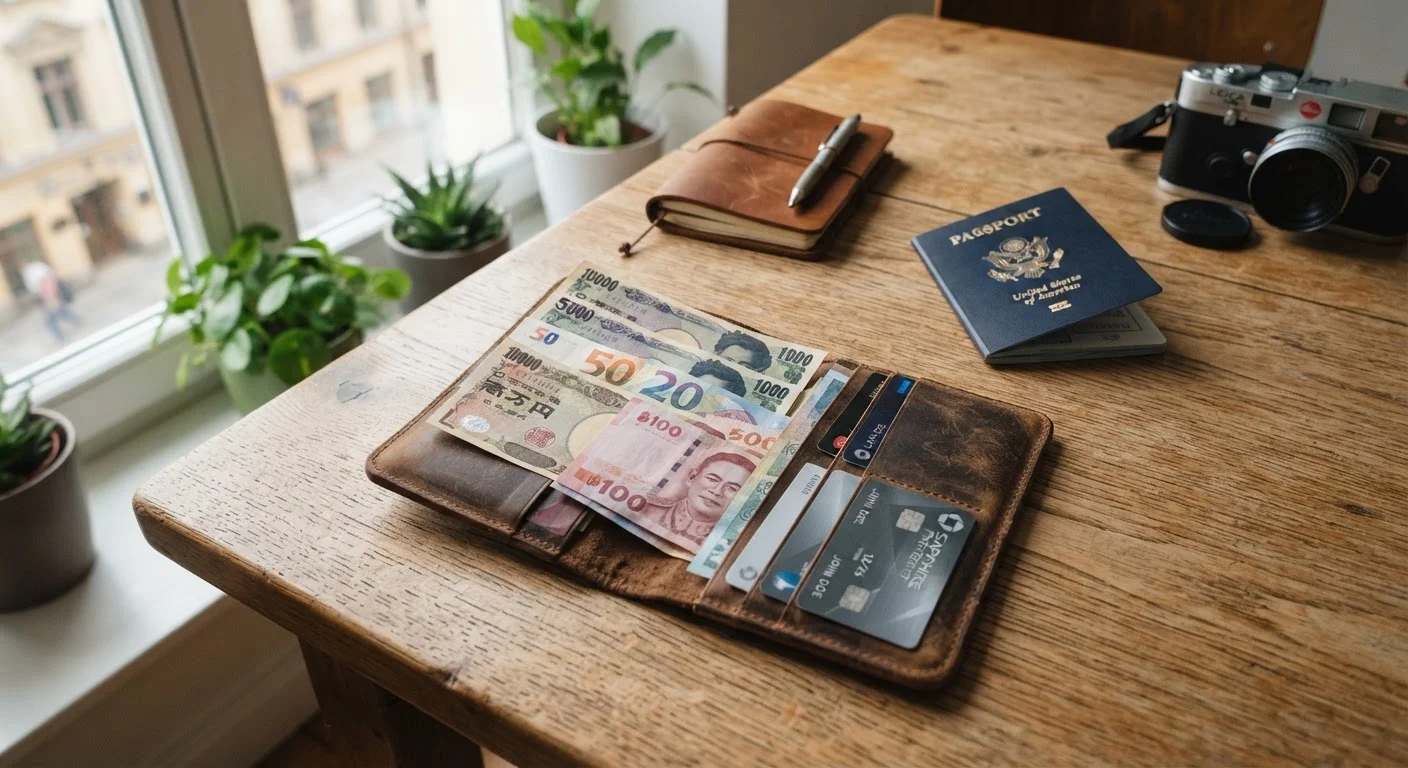
Understanding Exchange Rates
An exchange rate is simply how much of one currency you get in return for another. Rates fluctuate constantly based on global financial markets, so the rate you see today may differ by the time you travel.
The mid-market rate (also called the interbank rate) is the midpoint between buying and selling prices on currency markets. It is the fairest reference point and the rate you will see on financial websites. Currency exchangers always offer you slightly less than this - that difference is their profit margin. The wider the gap, the worse the deal for you.
Before exchanging any money, look up the current mid-market rate using a neutral financial reference tool. This gives you a benchmark so you can immediately spot whether a quote is reasonable or inflated.
Exchange rate
The price at which one currency can be converted into another. It determines how many units of foreign currency you receive for each unit of your home currency.
Mid-market rate
The midpoint between the buying and selling prices of a currency on international markets. Often used as the fairest benchmark when comparing exchange offers.
Foreign transaction fee
A charge added by some banks or card issuers when you make a purchase in a foreign currency, usually calculated as a percentage of the transaction.
Dynamic currency conversion
When a card terminal or ATM abroad offers to charge you in your home currency instead of local currency. The conversion rate is typically unfavorable compared to your bank's rate.
ATM withdrawal fee
A charge applied when you withdraw cash from an ATM, which may come from your home bank, the foreign ATM operator, or both.
Where to Exchange Currency
Not all exchange options are equal. Here is a plain breakdown of the most common:
- Airport kiosks: Convenient but almost always offer poor rates and high fees. Use them only for a small emergency float if needed.
- Local ATMs at your destination: Generally offer rates close to the mid-market rate. Use ATMs attached to established banks rather than independent machines, which often charge higher fees.
- Your home bank before you leave: Many banks can order foreign currency. Rates vary - check in advance. Some banks offer better deals for account holders.
- Currency exchange bureaus in cities: Quality varies widely. Compare the displayed rate against your mid-market benchmark and ask directly about any additional fees before handing over money.
Compare Before You Exchange
Always look up the current mid-market rate before handing over any money. Even a quick check using a neutral financial reference site takes seconds and immediately shows you whether the offered rate is fair. Small percentage differences compound quickly on larger sums.
Avoid exchanging money at hotels, which routinely offer among the worst rates available.
Using Cards Abroad
Payment cards - whether debit or credit - are a practical and relatively secure way to spend abroad. Before you travel, take three key steps:
- Notify your bank. Tell them the countries you are visiting and your travel dates. Without this, your bank may flag overseas transactions as fraud and freeze your card.
- Check your fees. Find out whether your card charges a foreign transaction fee (typically 1-3% per purchase) and what ATM withdrawal fees apply internationally.
- Know your PIN. Many international ATMs and card terminals require a four-digit PIN. If you use a card primarily for contactless payments at home and are unsure of your PIN, contact your bank before you leave.
When a merchant or ATM offers dynamic currency conversion - the option to pay in your home currency rather than local currency - always decline. The conversion rate applied is typically far less favorable than what your bank would apply.
For a deeper look at the safety trade-offs between cash and cards, see our guide on carrying cash versus using cards.
How Much Cash to Carry
The right amount depends on your destination. Some countries and regions are largely card-friendly; others rely heavily on cash for everyday transactions including markets, local transport, and smaller restaurants. Research your specific destination before you go.
As a general rule, carry enough cash to cover one to two days of typical spending rather than withdrawing a large sum at once. This limits your exposure if cash is lost or stolen. Plan to replenish at a bank-affiliated ATM as needed.
A useful starting checklist:
- A modest amount of local currency for arrival day expenses (transport, food, tips)
- One or two payment cards from different networks if possible, kept separately
- Your bank's international contact number stored somewhere other than your wallet
For broader budgeting strategies that pair well with travel planning, see budgeting basics for general guidance on tracking and managing spending.
Keeping Your Money Safe While Travelling
Sound financial habits abroad overlap directly with personal safety habits. A few consistent practices reduce your exposure significantly:
- Split your resources - carry some cash and a card in your day bag, and leave a backup card and emergency cash secured separately, such as in a hotel safe.
- Use ATMs during daylight hours in well-trafficked, visible locations. Cover the keypad when entering your PIN.
- Be discreet when handling cash in public. Count money before leaving a bank or ATM, not on the street.
- Keep a digital or physical note of your card issuer's international helpline number, separate from the card itself.
If your wallet or cards are lost or stolen, contact your bank immediately to freeze the card. Many issuers offer 24-hour international helplines. For guidance on what to do when other things go wrong abroad, see our guide to emergency contacts and embassies.
Managing your money abroad also connects to your broader travel preparation - from keeping documents secure to staying aware of your surroundings. See practical safety habits for first-time travellers for more on building a confident travel mindset.
Don't Carry Everything in One Place
Keeping all your cash and cards together in one wallet or bag means a single theft or loss wipes out everything. Separate your backup card and a small emergency cash reserve from your everyday wallet - ideally in your accommodation's safe or a concealed travel pouch.
This article provides general informational guidance about managing money while travelling and does not constitute personalised financial or legal advice. Exchange rates, card fees, and local payment conditions vary and change over time - verify current details with your bank and consult official or professional sources for decisions about your own finances.