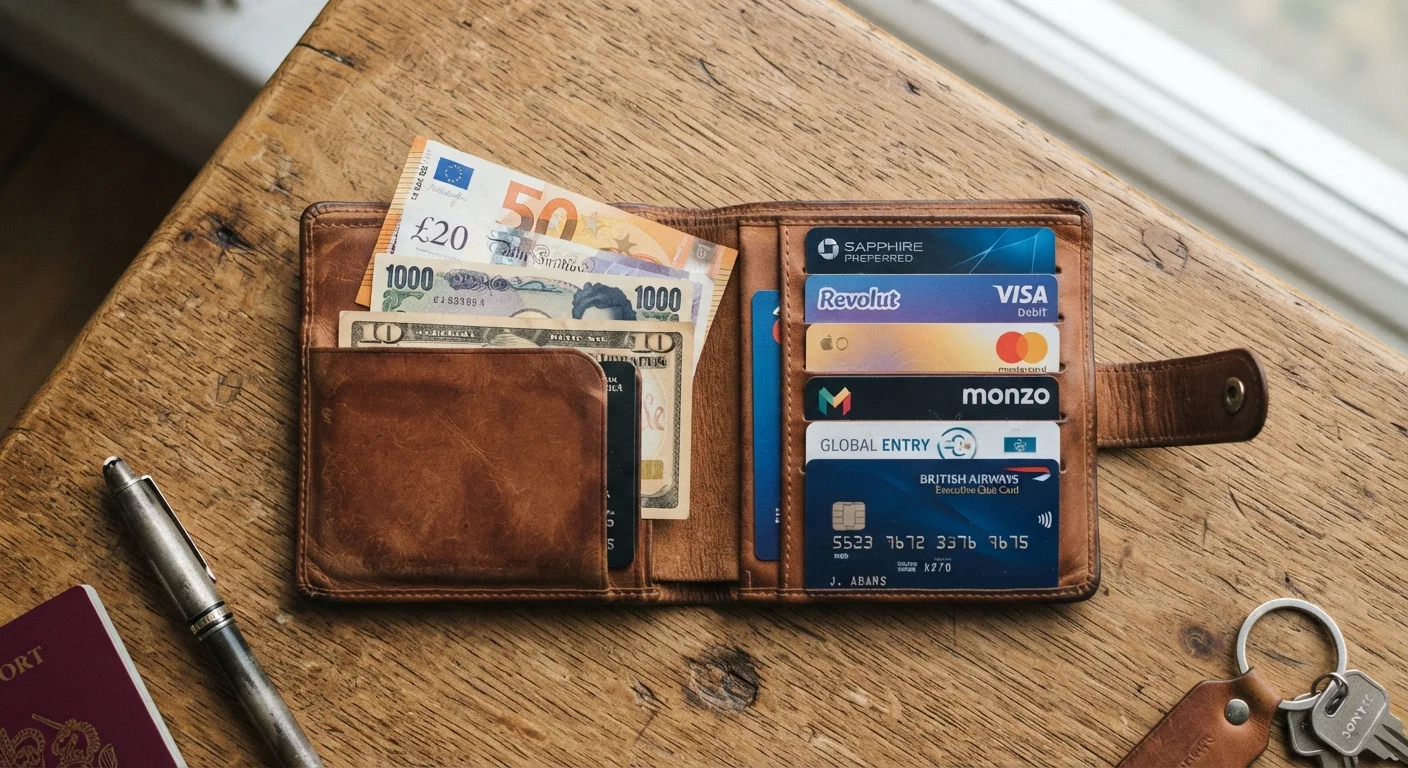
Why This Decision Matters More Than It Seems
When you're packing for your first international trip, choosing between cash and cards probably feels like a minor detail. In practice, it's one of the decisions that most directly affects how you handle a financial emergency abroad - whether that's a lost wallet, a blocked card, or a vendor who only accepts one form of payment.
There's no universally correct answer, and the right mix depends on your destination, your itinerary, and your own comfort level. What matters is understanding the trade-offs so you can make an informed choice before you leave home. See our guide to managing money abroad for a broader look at currency and exchange rate basics.
Card Protections Vary by Issuer and Card Type
Credit cards generally offer stronger fraud protections than debit cards under U.S. federal law, but specific terms differ by issuer. Before you travel, review your cardholder agreement or contact your bank directly to understand exactly what liability limits apply to your account. Protections and regulations can also change, so verify current terms rather than relying solely on general guidance.
The Case for Carrying Cash
Cash has practical advantages that cards simply cannot replicate in certain situations.
Accepted where cards are not
Many vendors - especially in rural areas, markets, and smaller towns - only accept cash. Having local currency on hand prevents the frustration of being unable to complete a transaction.
No technology dependency
Cash works without internet connectivity, card terminals, or functioning payment networks. It's a reliable backup when digital systems fail.
Easier to budget and control spending
Physical cash creates a tangible sense of what you're spending. Some travelers find it easier to stick to a daily budget when they can see exactly how much remains.
Fraud protection limits out-of-pocket loss
Most U.S. credit cards cap your liability for unauthorized charges at zero dollars if you report fraud promptly, meaning a compromised card doesn't have to cost you anything.
Transaction records simplify dispute resolution
Card statements provide a clear record of every purchase, making it straightforward to identify and dispute fraudulent charges with your issuer.
No risk of physical theft of funds
A stolen card number can be disputed and reversed; the card itself can be cancelled and reissued remotely, often within days, without permanent financial loss.
Small local markets, rural transport, and street vendors frequently operate on a cash-only basis, so having some on hand prevents frustrating situations where you simply cannot pay. Cash also works when card networks go down, your card gets blocked, or you're in an area with poor connectivity.
That said, cash comes with a ceiling on its upside as a safety tool: once it's gone, it's gone. Unlike a card, there is no dispute process, no fraud team to call, and no possibility of recovering stolen notes.
The Case for Using Payment Cards
Payment cards - particularly credit cards - carry protections that cash fundamentally lacks.
Most credit cards in the U.S. are covered by federal regulations that cap your liability for unauthorized charges, often at zero dollars if you report fraud promptly. Debit cards offer somewhat weaker protections under federal law, but still provide far more recourse than lost cash.
Cards also create a transaction record, making it easier to identify fraudulent activity quickly. For security-conscious travelers, this paper trail is genuinely valuable. Pairing responsible card use with good digital habits - covered in our digital safety on the road guide - strengthens your overall protection.
$0
Maximum liability for credit card fraud (if reported promptly)
Under the Fair Credit Billing Act, U.S. cardholders are generally not held liable for unauthorized credit card charges when fraud is reported promptly to the issuer.
$50
Maximum debit card liability if reported within 2 business days
The Electronic Fund Transfer Act limits debit card holder liability to $50 if unauthorized use is reported within two business days of discovering the loss.
Real Risks to Know Before You Travel
Both payment methods carry risks that are easy to underestimate when you're planning from home.
Cash is unrecoverable if lost or stolen
Unlike a card transaction, there is no dispute process for missing cash. If your wallet is pickpocketed, that money is gone with no avenue for recovery.
Carrying large amounts increases risk
The more cash you carry, the more you stand to lose in a single incident. This creates pressure to find ATMs frequently, which itself introduces risk.
ATM skimming can compromise card data
Criminals attach skimming devices to ATMs to capture card numbers and PINs. Street-facing and isolated machines carry higher risk than in-branch ATMs.
Cards can be blocked unexpectedly
Banks sometimes flag foreign transactions as suspicious and automatically block your card, which can leave you without access to funds until you contact your issuer.
Foreign transaction fees can add up
Some cards charge a percentage fee on every purchase made in a foreign currency. Over a week-long trip, these charges can represent a meaningful added cost.
With cards, ATM skimming - where a device is attached to a machine to steal your card data - is a documented risk in many destinations. Using ATMs inside bank branches during business hours, rather than street-facing machines, reduces your exposure. Always shield your PIN entry.
With cash, the risk is simpler but absolute: physical theft or loss. Pickpocketing is common in crowded tourist areas worldwide, and a stolen wallet means an immediate, unrecoverable loss. Keeping cash in a front pocket or a hidden money belt - rather than a back pocket or an open bag - is a straightforward mitigation. Our practical safety habits guide covers situational awareness strategies that complement good money habits.
Building a Practical Blended Strategy
Most experienced travelers don't choose exclusively between cash and cards - they use both deliberately.
A workable starting point for most trips: carry enough local cash for one to two days of small expenses (transport, coffee, tips), and use your card for hotels, restaurants, and larger purchases where fraud protection applies. Keep your card and main cash in separate places so that losing one doesn't leave you stranded.
Before you depart, notify your bank and card issuer of your travel dates and destinations. This simple step prevents your card from being automatically blocked when foreign charges appear. Also confirm whether your card charges foreign transaction fees, since those costs add up quickly.
For solo travelers, these considerations carry extra weight - there's no travel companion to borrow cash from in a pinch. Our article on solo vs. group travel safety explores how your travel setup affects financial risk alongside other safety factors.
This article is for general informational purposes only and does not constitute financial or legal advice. Card protections and regulations vary by issuer and may change; verify the specific terms of your accounts with your card provider before traveling.