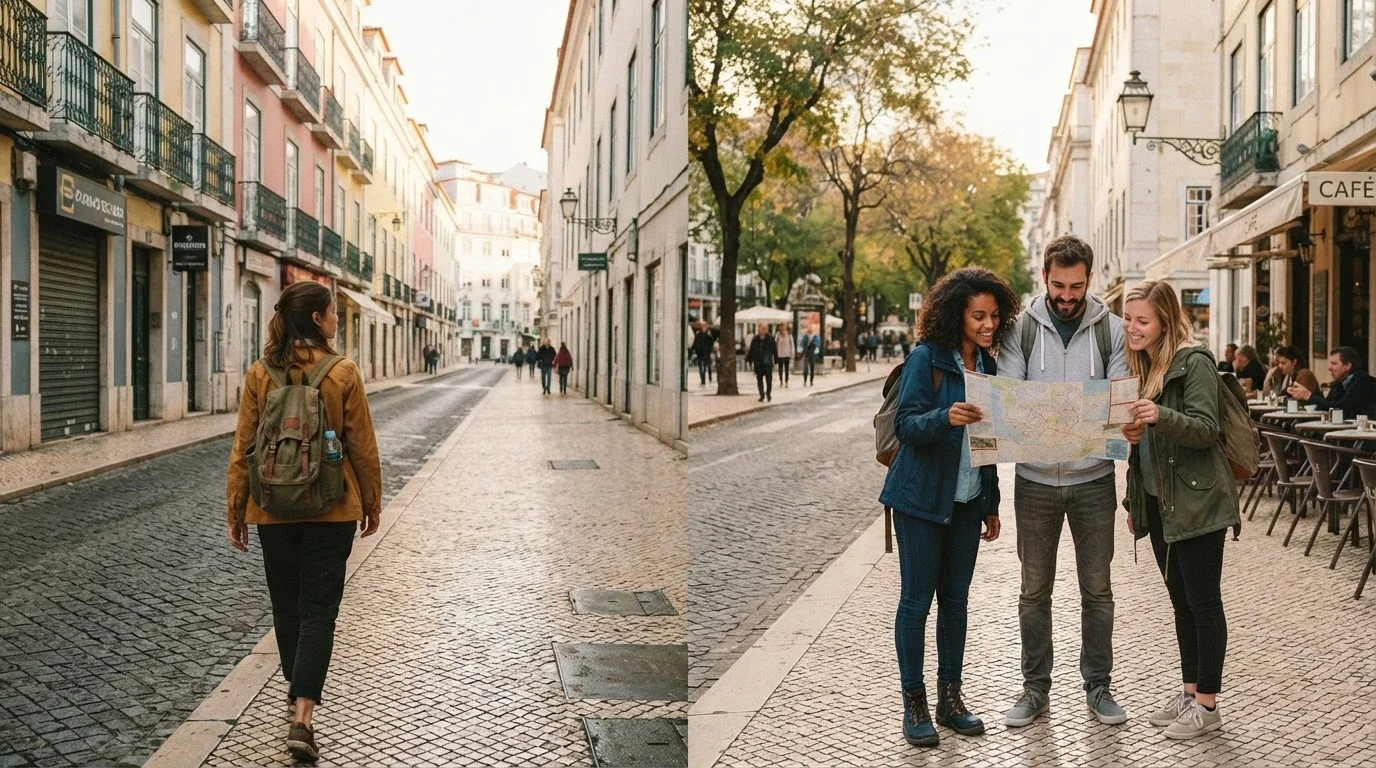
Why Safety Looks Different Depending on Who You Travel With
When people debate solo travel versus group travel, safety is usually one of the first topics to come up - and often the most misunderstood. The assumption that one style is automatically safer than the other overlooks the fact that safety depends far more on preparation and awareness than on headcount. That said, the two approaches genuinely do create different risk profiles, and understanding those differences helps you make smarter choices before your trip.
As common travel myths suggest, solo travel is frequently labeled as dangerous without much nuance. The reality is more layered. Both styles carry real trade-offs, and neither is a guarantee of safety or trouble.
| Criterion | Solo Travel | Group Travel |
|---|---|---|
| Responsibility for decisions | Rests entirely with you | Shared among the group |
| Visibility and deterrence | Lower - easier to target | Higher - groups attract less opportunistic risk |
| Response in an emergency | Must self-manage or find help | Others can assist immediately |
| Situational awareness | Tends to be higher by necessity | Can lapse due to diffusion of responsibility |
| Itinerary control | Complete flexibility | Subject to group consensus |
| Support if unwell | Must seek help independently | Companions can assist and advocate |
| Planning burden | Falls entirely on you | Divided among travelers |
The Specific Safety Dynamics of Solo Travel
When you travel alone, you are the sole point of contact for every decision - from choosing where to walk after dark to deciding whether a situation feels off. That self-reliance is both the appeal and the challenge. There is no one to consult, no one to watch your bag while you use the restroom, and no built-in second opinion if something doesn't feel right.
The practical implications are significant. Solo travelers need to be especially deliberate about:
- Sharing their itinerary with someone at home, including accommodation addresses and check-in schedules.
- Staying visible - telling hotel staff where they're going, staying in well-trafficked areas, and avoiding displaying expensive gear unnecessarily.
- Managing their own health - knowing what to do and who to contact if they become ill abroad. The health risks easy to overlook before international trips become especially consequential when there's no travel companion to help.
Solo travelers also tend to be more alert by necessity. That heightened awareness is genuinely protective - but it does require sustained energy, particularly on longer trips.
~17%
Solo travelers among all international tourists
Industry surveys from major travel associations consistently estimate solo travelers represent a significant and growing share of total international leisure travel.
1 in 3
Travelers who report losing or misplacing documents
Travel insurance claim data and traveler surveys suggest document loss or theft is among the most common incidents reported, affecting solo and group travelers alike.
The Specific Safety Dynamics of Group Travel
Traveling with others offers some obvious safety advantages: there are more eyes and ears in unfamiliar environments, someone to assist in a medical situation, and a natural deterrent effect that can reduce opportunistic risks. Groups can also pool knowledge - if one person speaks the local language or has visited before, the whole group benefits.
However, group travel introduces its own safety blind spots. The most common one is diffusion of responsibility - the assumption that someone else is paying attention when, in fact, no one is. Groups can also move more slowly, attract more attention, and create social pressure to go along with decisions that an individual might otherwise avoid.
If you're considering a more structured arrangement, comparing organised tours with independent travel can help you think through where group dynamics work in your favor and where they don't.
Key safety habits for group travelers include:
- Designating a point person who holds emergency contacts and group documents.
- Establishing a check-in protocol so the group always knows who is where.
- Agreeing on a meeting point in case the group gets separated.
Safety Habits That Apply to Both Styles
Whether you travel alone or with others, a core set of habits underpins safe travel in any context. Securing your documents, knowing your destination's local emergency numbers, keeping a copy of your passport separate from the original, and understanding how to access medical care are all relevant regardless of group size.
Practical safety habits worth building cover the baseline behaviors that serve every traveler well. Layering those onto your specific travel style - solo or group - is what transforms general awareness into a plan that actually fits your trip.
One area that often gets overlooked in both contexts is financial safety. How you carry and access money carries its own set of risks. Weighing cash versus card safety is worth working through as part of your broader preparation, whichever travel style you choose.
Neither Style Is Inherently Safer
Safety outcomes in travel are shaped primarily by preparation, awareness, and destination context - not by whether you travel alone or with others. A well-prepared solo traveler in a low-risk destination may face fewer incidents than an inattentive group in a more complex environment. Use your travel style as a starting point for planning, not as a substitute for it. For comprehensive baseline guidance, see Travel Safety From the Ground Up.
This article provides general travel safety information for educational purposes. Conditions, risks, and regulations vary by destination. Always verify current travel advisories and entry requirements with official government and provider sources before traveling.