What Each Travel Style Actually Means
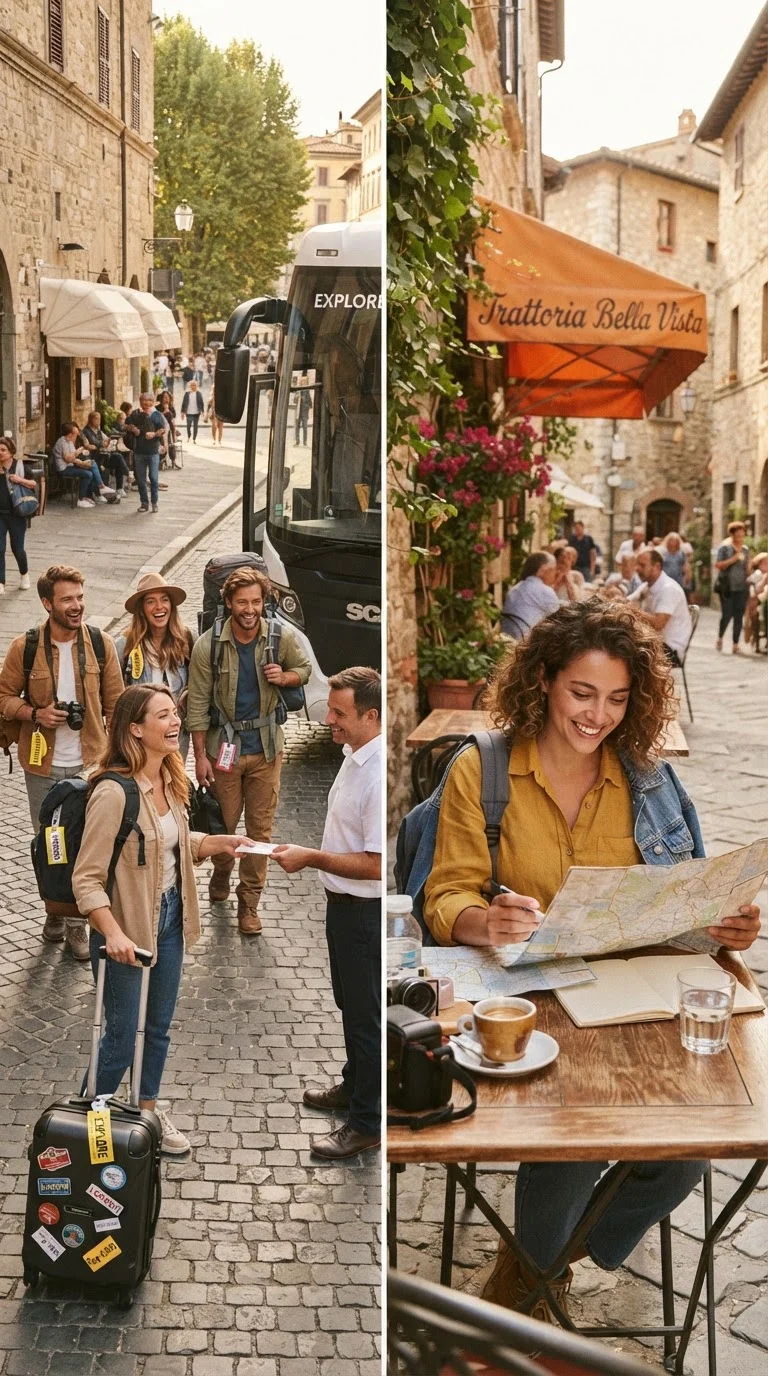
An organised tour is a pre-packaged travel experience run by an operator or guide company. Your transport between destinations, accommodation, and a core set of activities are arranged in advance. You travel with a group - sometimes as few as six people, sometimes as many as fifty - and a guide manages the day-to-day schedule.
Independent travel means you plan and book everything yourself: flights, accommodation, local transit, activities, and meals. You decide when to leave, where to stay, and how long to spend anywhere. Some independent travelers plan every hour in advance; others book only the first night and figure the rest out as they go.
Both styles can include any destination, any budget range, and any trip length. The core difference is who holds the decision-making power - and who absorbs the stress when things go sideways. If you're starting from scratch, our complete first-timer's roadmap walks through the broader planning process for either approach.
How They Compare: Key Criteria
Understanding the practical differences helps you match the style to your situation rather than just your personality. Consider these dimensions before committing.
| Criterion | Organised Tour | Independent Travel |
|---|---|---|
| Logistics ownership | Operator handles all bookings | You book everything yourself |
| Flexibility | Fixed schedule, limited deviation | Full control, change anytime |
| Upfront cost clarity | Single package price, clear total | Costs spread across many bookings |
| Social experience | Built-in group dynamic | Self-created social opportunities |
| Research required | Minimal - vetting the operator | Substantial - every element separately |
| Best destination fit | Complex or infrastructure-light regions | Visitor-friendly, well-signposted destinations |
| Pace of travel | Set by the itinerary | Set by you each day |
Costs in organised tours are visible upfront, but that all-inclusive price can mask less flexibility. With independent travel, your realistic travel budget needs to account for hidden costs - airport transfers, entrance fees, and meals that tours often bundle in.
When an Organised Tour Makes More Sense
Tours work well in specific situations that have little to do with personality type. Consider a guided trip if:
- Your destination has limited English signage, complex visa-on-arrival logistics, or minimal tourist infrastructure.
- You're traveling to a region where safety awareness and local knowledge genuinely matter - and you haven't built that knowledge yet. Our travel safety hub covers the key risks first-timers commonly overlook.
- You have a short trip window and can't afford to lose time troubleshooting transport or accommodation problems.
- You're traveling solo and want built-in companionship without relying on hostel common rooms.
Tours vary significantly in size, pace, and focus - a small-group cultural tour feels nothing like a large coach itinerary. Spend time reading the detailed day-by-day program, not just the headline inclusions, before you decide.
Hybrid Options Are Worth Considering
You don't have to choose one style for an entire trip. Many first-timers book a short guided experience for the most complex leg of their journey - say, a three-day desert camp - and travel independently the rest of the time. This lets you ease into self-directed travel while keeping a safety net where the stakes feel highest.
When Independent Travel Is the Better Fit
Independent travel rewards preparation. It suits you when:
- You're visiting a destination with reliable public transit, good English-language tourist infrastructure, and straightforward entry requirements.
- You want to build a flexible travel itinerary that can shift based on weather, energy, or a recommendation from a local.
- Your priorities are unusual - you're interested in a niche cuisine scene, specific hiking trails, or local markets that no packaged tour visits.
- You're comfortable doing research and can handle rebooking or rerouting calmly if a flight changes or accommodation falls through.
First-timers often underestimate how much research independent travel requires. Choosing the right destination is the single most important variable - a well-trodden, visitor-friendly destination makes independent travel far more manageable for newcomers.
72%
First-time international travelers who experience itinerary disruption
A commonly cited travel industry estimate suggests the majority of new international travelers encounter at least one significant logistical disruption on their first trip.
2-4 weeks
Typical research time for a self-planned first international trip
Travel planning surveys generally find independent first-timers spend several weeks researching before booking, versus a few hours vetting a tour operator.
Safety Considerations for Each Style
Neither style is inherently safer, but they carry different types of risk. On an organised tour, you're less likely to end up lost or in an unfamiliar area alone - but you're also relying on the operator's judgment and reputation. Research the company's safety record and read the fine print on what happens if a segment is cancelled.
Independent travelers face more exposure to logistical mishaps - missed connections, accommodation that doesn't match its listing, or navigating a city after dark without a clear plan. These risks are manageable with preparation. Our article on solo vs. group travel safety breaks down the distinct trade-offs in more detail.
Regardless of which style you choose, certain basics apply: travel insurance, copies of key documents, and awareness of your destination's entry and health requirements. Always verify visa, vaccination, and border rules with official government and provider sources before you travel - these change and no article can substitute for up-to-date official guidance.