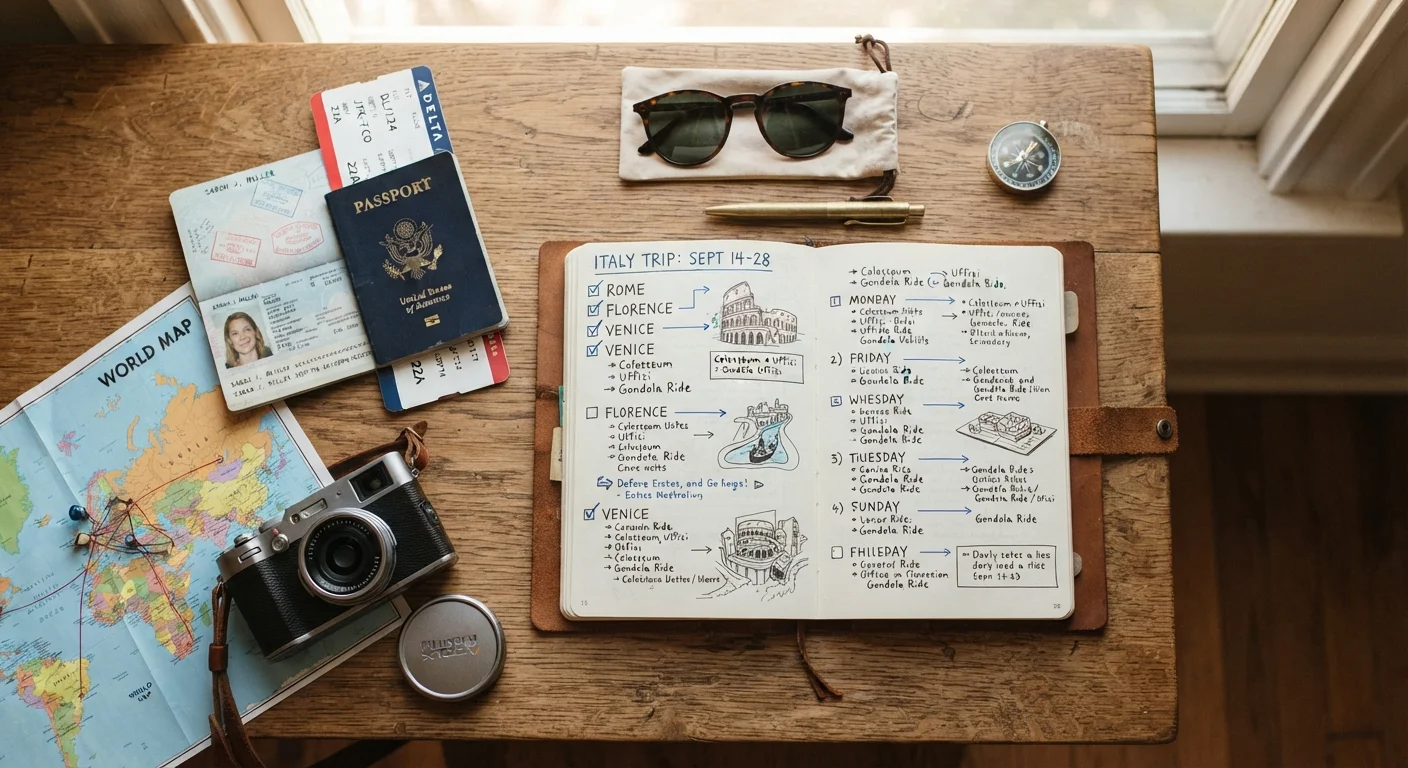
Start With the Big Picture
Before you open a single booking site, take a step back and ask yourself three questions: Where do I genuinely want to go? How long can I realistically be away? And who, if anyone, is coming with me? Answering these first shapes every decision that follows.
If you're still unsure about a destination, our guide on choosing your first travel destination walks you through the factors - travel time, seasonality, and visa complexity - that matter most for first-timers. For a debut trip, shorter flights and destinations with straightforward entry requirements reduce stress considerably.
Once you have a rough destination in mind, set a target travel window. Shoulder seasons (the weeks just before or after peak tourist periods) often mean manageable crowds and more comfortable conditions - though always verify this for your specific destination, since seasons vary widely by region.
Choose your first destination based on logistical simplicity, not just excitement. A shorter flight, a widely spoken language, and a well-developed tourist infrastructure will dramatically reduce first-trip stress.
First-time travelers often underestimate how much cognitive load unfamiliar logistics add. Reducing friction early builds the confidence to tackle more complex trips later.
Book accommodations with free cancellation for your first trip, even if it costs a little more. Plans change more often than first-timers expect, and the flexibility is worth the small premium.
Rigid, non-refundable bookings are a significant source of financial loss when inexperienced travelers need to adjust dates or destinations.
Sort Your Budget Early
A clear budget prevents the most common first-timer mistake: booking flights impulsively, then discovering accommodation costs more than expected. List every anticipated expense category: flights, accommodation, ground transport, food, activities, travel insurance, and a contingency reserve of around 10-15% for surprises.
10-15%
Recommended contingency buffer in any travel budget
A standard recommendation from travel finance guides to absorb unexpected costs like medical expenses, delays, or price increases.
2-3 months
Suggested planning lead time for first-time international trips
Widely recommended by travel advisors to allow adequate time for document processing, research, and considered booking decisions.
Research typical daily costs for your destination using travel forums, government tourism sites, and published cost-of-living indexes. These are estimates, not guarantees - prices fluctuate with season, exchange rates, and local events. Set a daily spending target and track it as you plan.
Note: This article provides general travel planning information. It is not financial advice. Consult a qualified financial professional for guidance specific to your own financial situation.
Handle Documents and Entry Requirements
This step carries the highest stakes, so tackle it early. Start with your passport: confirm it is valid and check whether your destination requires at least six months of validity beyond your return date - many countries do.
Always Verify Entry Requirements Officially
Visa rules, health documentation requirements, and border conditions can change at any time. Do not rely on travel blogs or social media posts for this information. Check your government's official foreign travel advisory website and the destination country's embassy or consulate directly before you book - and again shortly before you depart.
Next, research visa requirements. Requirements vary by your citizenship and destination and can change with little notice. Always verify current rules through your government's official foreign travel advisory and the destination country's embassy or consulate website - never rely solely on third-party travel blogs for this information.
If your trip involves health requirements - vaccinations or health documentation - check official health authority guidance and consult a travel medicine professional well in advance, as some vaccines require multiple doses over several weeks. See the travel safety hub for a broader overview of staying protected on the road.
Book Transportation and Accommodation
With budget set and documents in hand, you're ready to book. For flights, flexibility on travel dates - even by a day or two - can affect the options available to you. Compare itineraries across multiple travel search tools, but always confirm final details directly with the airline before purchasing.
For accommodation, consider your priorities: proximity to public transport, private versus shared rooms, cancellation flexibility, and verified guest reviews. Cancellable bookings cost slightly more but provide peace of mind if plans shift - a real consideration for first-timers who may need to adjust.
Prioritize Cancellable Bookings Early On
When booking accommodation and some transport for the first time, opt for reservations with free or low-cost cancellation where possible. This protects you if visa processing is delayed, travel dates shift, or your plans simply change. Lock in non-refundable rates only once everything else is confirmed.
For ground transport at your destination, research whether public transit, car rental, or rideshare apps are practical. Each option has trade-offs around cost, convenience, and local driving regulations. Our packing and prep hub includes additional logistical guidance for before you leave home.
Build a Flexible Itinerary
An itinerary is a plan, not a contract. A good first-timer's itinerary lists must-see priorities, a rough day-by-day structure, and deliberate gaps for rest, wandering, or unexpected discoveries. Overscheduling is the single most common planning error - it turns a trip into a checklist and leaves no room for the moments that make travel memorable.
For each day, identify one anchor activity - a museum, a day trip, a neighbourhood walk - and let the rest breathe. Research opening hours, admission requirements, and any advance booking needed for popular attractions, since many high-demand sites now require timed entry.
Safety planning belongs in your itinerary too. Note the local emergency number, the address of your country's nearest embassy or consulate, and the location of the nearest hospital to your accommodation. Our guide on travel safety for first-timers covers these habits in depth.
Pack Smart and Prepare to Leave
Packing well is a skill, and it begins with a list. Write down every category - clothing, toiletries, electronics, medications, travel documents - before touching a bag. Then edit ruthlessly: most first-timers over-pack significantly, making transit exhausting.
In the final days before departure, run through a structured pre-departure checklist. Confirm bookings, check your passport and visa documents, notify your bank of travel dates, arrange travel insurance if you haven't already, and set up a way to access funds without excessive foreign transaction fees. Our pre-departure checklist covers every item worth confirming before you leave.
For a thorough introduction to packing strategy and last-minute preparation, see the first-time traveller's complete packing guide. Getting this stage right means you board your flight feeling organised - not frantic.
Travel Insurance Is Worth Understanding
Travel insurance can cover trip cancellations, medical emergencies abroad, lost luggage, and other unexpected events. Policies vary widely in what they include and exclude, so read the terms carefully. For health-related coverage specifically, consult a professional to ensure the policy meets your needs - particularly if you have pre-existing conditions.