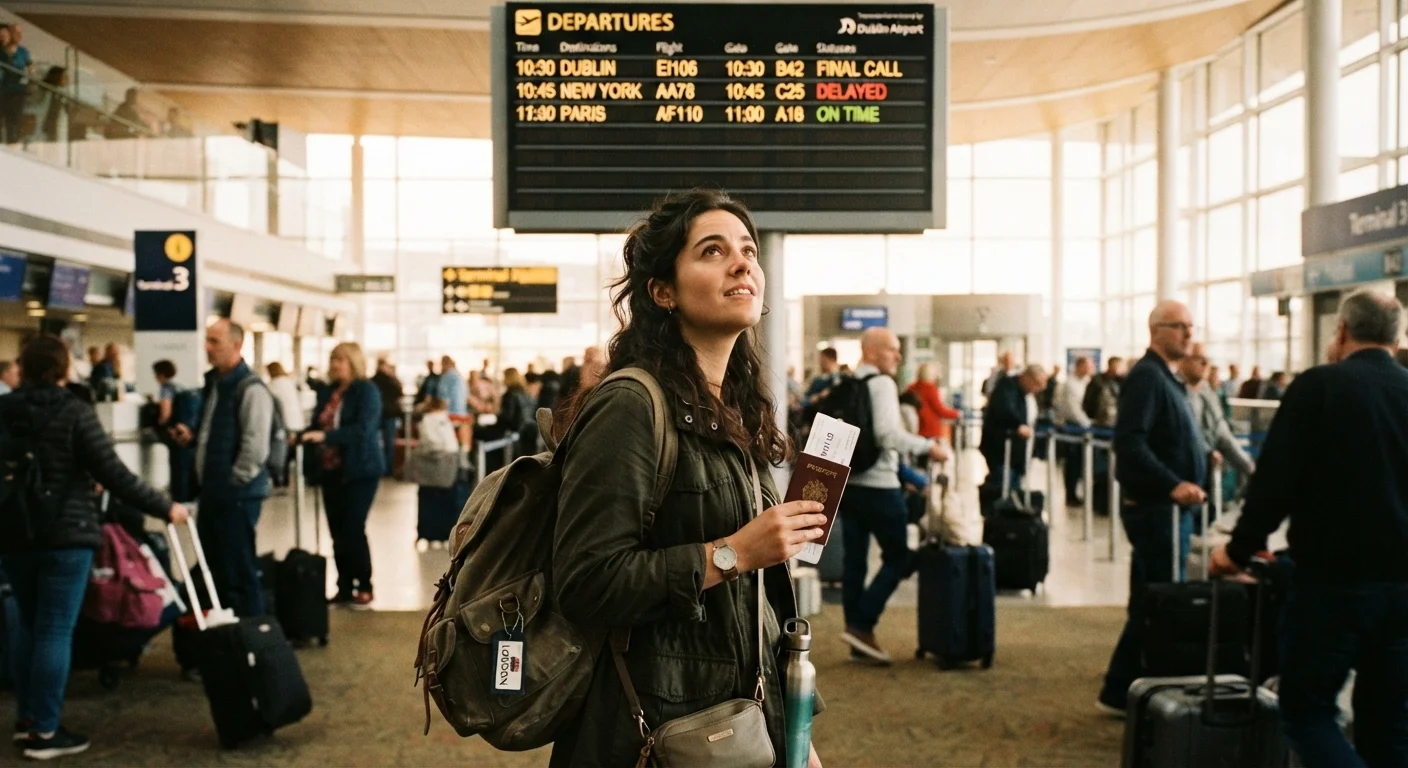
Why Travel Myths Hold Beginners Back
For many first-time travelers, the biggest obstacle isn't the cost of flights or the complexity of visas - it's a set of firmly held assumptions about how travel works. These beliefs circulate in casual conversation, on social media, and even among well-meaning friends and family. Some are rooted in outdated experiences; others are simply misread statistics. All of them can quietly convince a nervous beginner to postpone a trip indefinitely.
This article names the most common ones and replaces them with a clearer picture. Understanding what's actually true - and what's simply assumed - is the first step toward planning with confidence.
Myth
You need months of detailed planning before you can travel anywhere.
Fact
Most short trips can be planned meaningfully in one to two focused weekends.
The idea that travel requires exhaustive preparation discourages beginners from starting at all. In reality, the core logistics for a short trip - transport, accommodation, and a general sense of what you want to do - can be sorted in a few hours of focused research. Over-planning can actually work against you by leaving no room for flexibility, which experienced travelers often cite as one of the greatest pleasures of a trip.
Longer trips and complex itineraries do benefit from more lead time, but the principle holds: start simple, and build your planning skills gradually.
Myth
Solo travel is inherently unsafe, especially for people traveling alone for the first time.
Fact
Solo travel carries specific risks, but it is not categorically more dangerous than group travel when approached with basic awareness.
Solo travelers do need to be more deliberate about certain habits - sharing itineraries with someone at home, staying alert in unfamiliar areas, and avoiding situations where they're visibly isolated. But these are learnable habits, not reasons to avoid solo travel altogether. Many destinations are well-suited to solo visitors and have established infrastructure for it.
Group travel has its own safety trade-offs, including the tendency to lower individual vigilance when surrounded by others. Neither format is universally safer - what matters most is informed preparation. See core safety habits for first-time travelers for a practical starting point.
Myth
If you don't speak the local language, you won't be able to manage on your own.
Fact
English is widely spoken in tourism contexts globally, and translation tools have made language gaps far more manageable than they were a decade ago.
Language differences are real, and learning a few basic phrases in the local language is always respectful and worthwhile. However, the fear that not being fluent makes travel unmanageable is not accurate. In airports, major transit hubs, hotels, and tourist areas, English is commonly used. Offline translation apps can assist in situations where it isn't.
Genuine communication barriers are most likely in deeply rural areas or at very local businesses - situations that a first-timer can easily plan around while still having a rich experience.
Myth
Travel is only affordable if you're young, single, and have a lot of free time.
Fact
Travel can be scaled to a wide range of budgets, schedules, and life stages with realistic research and flexible expectations.
The image of travel as a luxury reserved for a specific demographic persists, but it doesn't hold up to scrutiny. Shorter trips, off-peak timing, and destinations with lower costs of living can bring travel within reach of many budgets. People travel in couples, as families, in retirement, and on tight timescales - often quite successfully.
The more useful question isn't "Can I afford to travel?" but "What kind of trip fits my current budget and schedule?" Starting with that framing produces more useful answers than comparing yourself to an idealized travel image.
Myth
Most popular travel destinations are dangerous for tourists.
Fact
Many frequently visited destinations have lower crime rates against tourists than popular perception suggests, though risks vary and always warrant proper research.
Sensational news coverage and social media posts create a distorted picture of destination safety. Individual incidents get wide attention; millions of uneventful visits do not. This doesn't mean risk is zero - it varies meaningfully by location, neighborhood, time of day, and traveler behavior - but it does mean that blanket assumptions about destination danger are often inaccurate.
Reliable sources for safety assessment include official government travel advisories and foreign ministry guidance, not headlines or anecdotal social media posts. Developing the habit of checking these before a trip is a far better approach than assuming the worst.
What These Corrections Mean for Your Planning
Recognizing a myth is useful, but it's only worthwhile if it changes how you prepare. Here's what the corrected picture actually means in practice:
- Start with a narrow scope. A three-night trip to a nearby city you've never explored counts as travel. You don't need to begin with a multi-country itinerary.
- Use official sources for safety information. Before assuming a destination is dangerous, check your government's current travel advisory - the picture is often more nuanced than headlines suggest. Separating real risk from perceived risk is a skill worth developing early.
- Research scam patterns, not just crime statistics. Most travel problems faced by beginners involve opportunistic scams rather than violent crime. Understanding how travel scams are structured is a practical way to stay protected.
- If you're considering traveling alone, read the full trade-off picture. Solo travel and group travel each carry distinct safety considerations - neither is automatically safer.
Don't Skip Official Safety Checks
Before traveling internationally, always consult your own government's official travel advisory for your destination. These advisories are regularly updated and provide nuanced, region-specific guidance that general assumptions cannot replace. Entry requirements, local laws, and safety conditions can change - verify them close to your departure date through official sources, not third-party summaries.
Finally, health preparation is one area where assumptions can cause real problems. Many first-timers skip pre-trip health checks because they feel healthy. Health risks that are easy to overlook before an international trip include altitude, food safety, and jet lag - all manageable with awareness. For personal health decisions, always consult a qualified healthcare professional before traveling.
Building good habits from your first trip makes every subsequent one easier. Practical safety habits worth building covers the fundamentals that apply regardless of where you go.