Why This Happens to Almost Every First-Timer
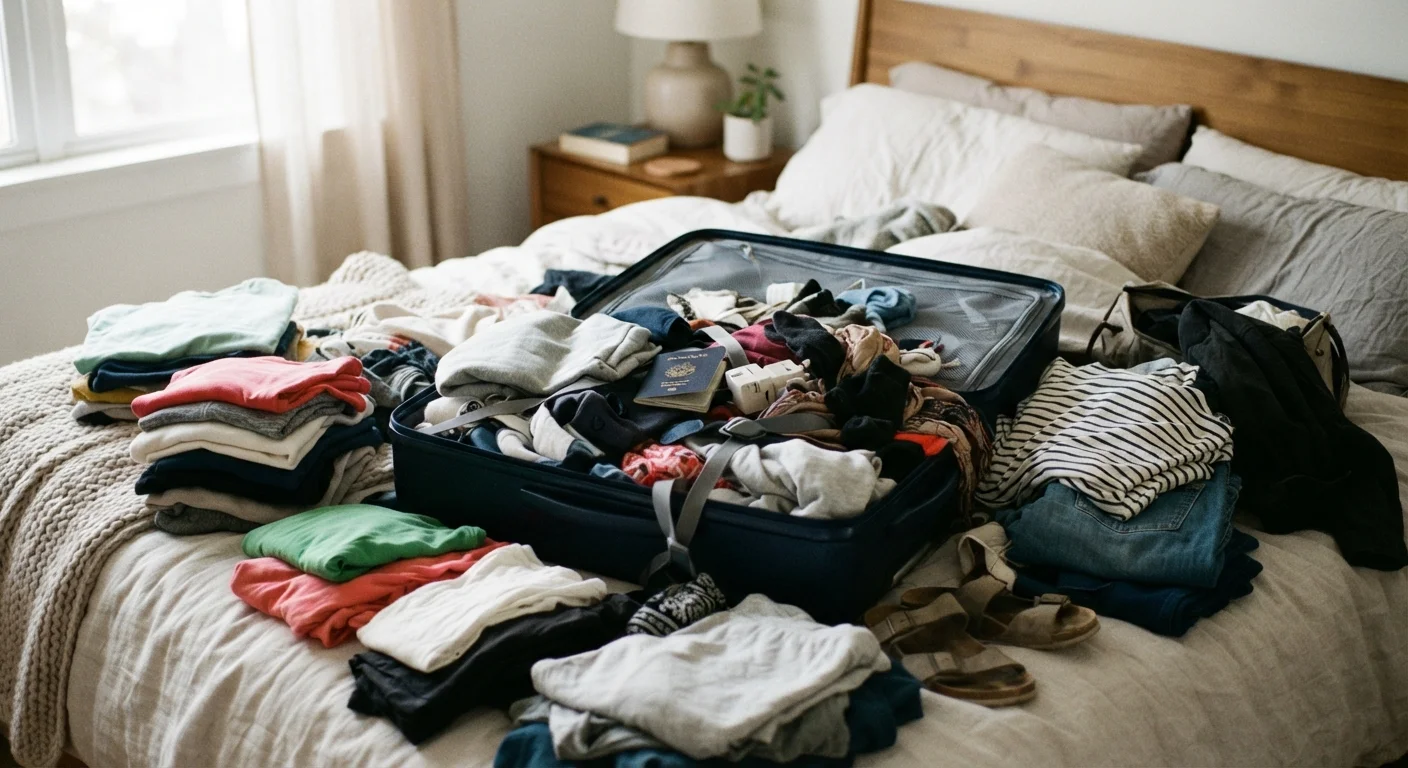
Overpacking is so common among first-time travellers that experienced packers almost universally look back and laugh at their first bag. It's not a sign of poor judgment - it's a predictable response to uncertainty. When you've never taken a trip before, you have no reliable mental model of what you'll actually need, so your brain defaults to "bring everything, just in case."
The result is a bag that's too heavy to carry comfortably, potentially subject to airline fees, and full of items that come home untouched. Understanding why this happens is the first step to breaking the pattern. For a broader look at the thinking habits behind it, this guide on overpacking mindsets covers the psychology in depth.
Packing for every possible scenario instead of your actual itinerary.
Why it happens: First-timers don't yet have a mental model of how trips actually unfold, so they imagine edge cases - sudden cold snaps, formal dinners, emergency outfit changes - that rarely materialize.
Treating "I might need it" as a good enough reason to pack something.
Why it happens: Uncertainty about an unfamiliar destination triggers a safety-seeking response. Including more items feels like preparation, when it's actually just anxiety management.
Packing a full wardrobe without accounting for laundry on the road.
Why it happens: At home, doing laundry once a week feels normal. It doesn't occur to most first-timers that hotels, hostels, and laundromats are widely available - and that re-wearing or washing clothes while travelling is completely standard practice.
Leaving packing until the night before and panic-adding items.
Why it happens: Without a structured process, last-minute packing becomes emotional rather than logical. Fatigue and anxiety cause people to throw in extras "just in case" rather than think critically.
Choosing an oversized bag and then feeling obliged to fill it.
Why it happens: Many first-timers borrow or buy the largest bag they can find, reasoning that more space means more flexibility. In practice, empty space in a bag gets filled - a phenomenon sometimes called "Parkinson's Law of Luggage."
Building a Smarter Packing Approach
Once you understand the patterns above, you can replace them with a more deliberate process. The goal isn't to pack as little as humanly possible - it's to pack only what you'll genuinely use, and nothing that will just weigh you down.
Bag Weight Has Real Consequences
Many airlines impose strict weight limits on both checked and carry-on luggage, and fees for overweight bags can add up quickly. Beyond cost, carrying a heavy bag through airports, up hotel stairs, and across cobblestones is physically exhausting - and can dampen your entire trip. Weigh your bag before you leave home, not at the check-in counter.
Start by checking your destination's weather forecast for the actual dates of your trip, not the general season. Then list each day's planned activities and identify the clothing and gear each genuinely requires. Cross-reference items: if one pair of walking shoes works for both sightseeing and a casual dinner, you don't need two pairs.
The complete guide to packing and pre-trip preparation walks through this process step by step, from choosing the right luggage to your final checks. And if you want to develop habits that stick beyond your first trip, smart packing habits experienced travellers use are worth reading before you start. For everything packing-related in one place, explore the Packing & Prep hub.
~50%
Items packed but never used on a typical trip
Travel industry surveys consistently find that roughly half of what travellers pack goes unused - a figure that's especially high for first-timers.
7 kg
Typical carry-on weight limit on budget airlines
Many low-cost carriers set carry-on limits as low as 7-10 kg; exceeding these limits can result in gate fees that cost more than the bag's contents are worth.