Why This Decision Matters for New Owners
Owning a car for the first time means taking on responsibility for something complex, expensive, and safety-critical. The good news is that you don't need to be a mechanic to stay on top of your vehicle's health. Many routine checks are straightforward, require no special tools, and take only a few minutes. But some jobs - even ones that look simple on a video tutorial - carry real risks if done incorrectly.
Getting this balance right matters on two levels. Financially, unnecessary garage visits add up; but so do small problems ignored too long. On the safety side, a DIY mistake on the wrong system can put you, your passengers, and other road users at risk. Learning where the boundaries are is one of the most practical skills a new owner can develop. If you're still in the buying process, understanding what a professional inspection covers is equally valuable - see our guide on getting a pre-purchase inspection for a useful foundation.
What You Can Safely Check and Do at Home
The following tasks are widely considered appropriate for beginners, provided you follow your vehicle's owner manual and take basic safety precautions (engine off, handbrake on, car on level ground):
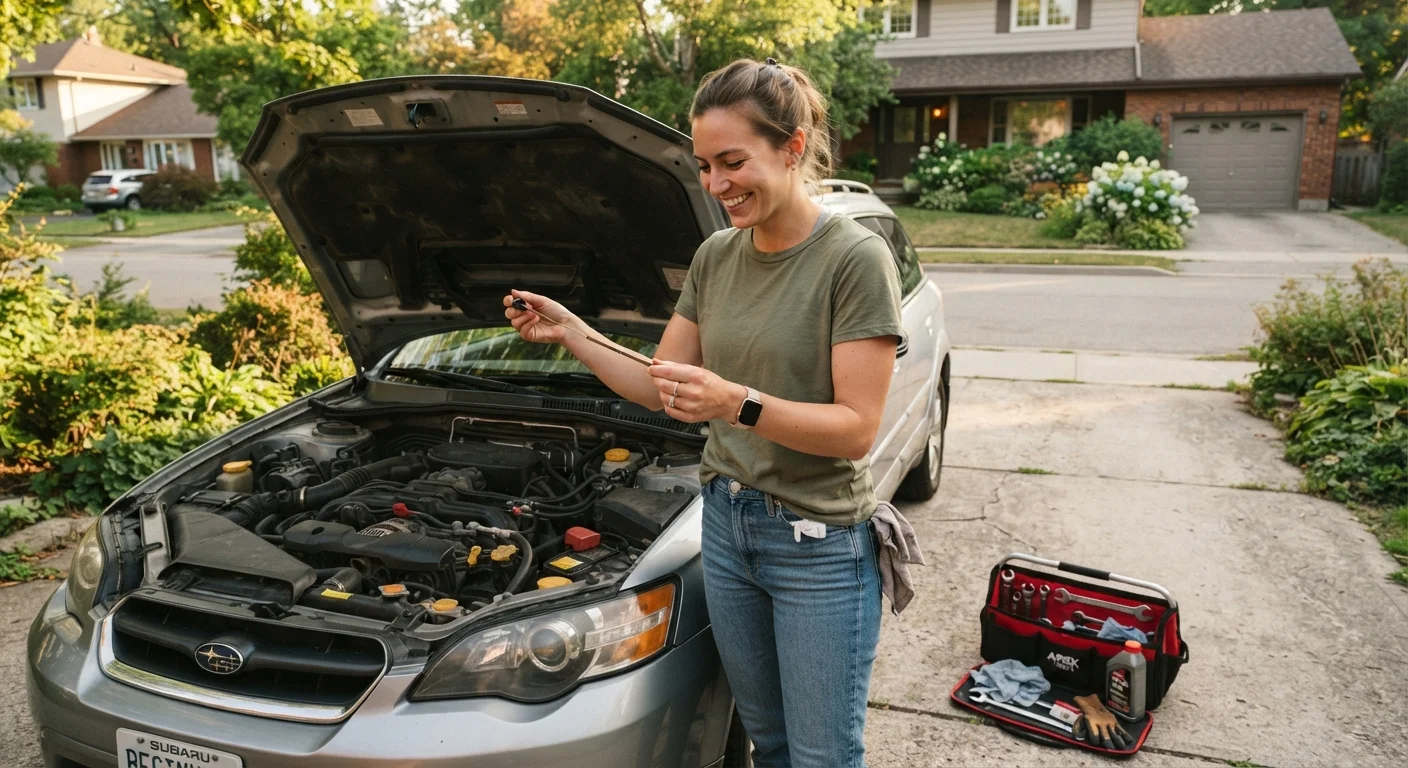
- Engine oil level: Use the dipstick to check the level and condition. Oil that is very dark or gritty suggests it's due for a change.
- Coolant level: Check the reservoir (never open the radiator cap on a hot engine). Top up only with the correct coolant type listed in your manual.
- Windshield washer fluid: Safe to refill yourself with the correct solution for your climate.
- Tire pressure: Use an inexpensive gauge and compare to the recommended PSI (pounds per square inch) found on the door jamb sticker - not the tire sidewall.
- Tire tread depth: Insert a quarter into the tread groove. If you can see the top of the coin's head, the tread is low.
- Exterior lights: Walk around the car periodically with a friend to confirm all bulbs - headlights, brake lights, indicators - are working.
- Wiper blades: If they streak or skip, most wiper blades clip off and on easily and replacements are widely available.
Keep a Simple Vehicle Maintenance Log
After each check or service, jot down the date, mileage, and what you observed or had done. Even a notes app on your phone works. This makes it easier to spot when something is due, and gives a mechanic helpful background when you bring the car in. A clear history can also be valuable if you ever sell the vehicle.
Keeping a simple log of these checks - dates and any observations - helps you spot patterns and gives a mechanic useful context at your next service. Our related article on buying your first car covers other early ownership habits worth building.
When You Should Always Go to a Garage
Some systems are too safety-critical, too complex, or too easy to damage further without the right diagnostic equipment. As a rule of thumb, book a garage visit for any of the following:
- Brake inspection or replacement: Squealing, grinding, a soft pedal, or pulling to one side are warning signs that need professional assessment. Our article on brake wear signs explains what to listen and feel for.
- Warning lights: A check engine light, ABS light, or airbag warning light requires diagnostic software to read properly. Guessing at the cause can make things worse.
- Steering or suspension issues: Vibrations, pulling, or unusual noises from the front end are not DIY territory.
- Fuel system work: Any task involving fuel lines, injectors, or the fuel pump carries fire risk and should be left to a qualified mechanic.
- Airbag or electrical systems: Modern vehicles have interconnected electronics that can cause serious injury or vehicle damage if disturbed incorrectly.
- Timing belts and chains: These are precision-critical components whose failure can destroy an engine.
Don't Let Tutorial Videos Oversimplify Risks
Online videos can make complex repairs look straightforward, but they often skip safety steps or assume a level of mechanical familiarity that beginners don't yet have. Working under an improperly supported vehicle, for instance, is one of the most common causes of serious DIY injury. Always verify that a task is genuinely within your current skill level before starting - and when in doubt, visit a qualified mechanic.
Even experienced DIYers can underestimate how tightly modern vehicle systems are integrated. If a repair requires lifting the car on a jack stand without a proper lift, or working near the fuel or electrical system, professional help is the safer and often more cost-effective choice in the long run.
Comparing the Two Approaches
Understanding how DIY checks and garage visits differ across key factors helps you make informed decisions rather than guessing.
| DIY Checks | Garage Visit | |
|---|---|---|
| Cost | Low or no cost | Service fee applies |
| Skills required | Basic; follows owner manual | Trade-qualified mechanic |
| Tools needed | Dipstick, gauge, visual inspection | Diagnostic equipment, lifts, specialist tools |
| Safety risk if done wrong | Low for fluid/visual checks | Professional accountability and insurance |
| Best for | Monitoring and early detection | Repair, diagnosis, safety-critical work |
| Frequency | Monthly or before long trips | Per manufacturer service schedule |
Cost and convenience favor DIY for routine monitoring, but the skill and safety columns shift the calculus quickly once you move past visual and fluid checks. There's no shame in defaulting to a garage visit when you're uncertain - mechanics exist precisely because vehicle systems are complex.
Building a Maintenance Rhythm That Works
The most effective approach combines both options deliberately. At home, check your oil, tire pressure, lights, and fluid levels roughly once a month - or before any long drive. At the garage, follow the service intervals specified in your owner's manual, typically every 5,000 to 10,000 miles depending on the vehicle and oil type, or at least once a year for a general inspection.
If something feels, sounds, or smells different - a new rattle, a burning smell, spongy brakes, or a pull to one side - treat it as a prompt to book a garage visit rather than wait for the next scheduled service. Catching a minor issue early almost always costs less than addressing it after it has developed further.
New owners who understand their limits - and stick to them - end up being better car owners overall. The goal isn't to do everything yourself; it's to stay engaged and informed so that nothing slips through unnoticed.