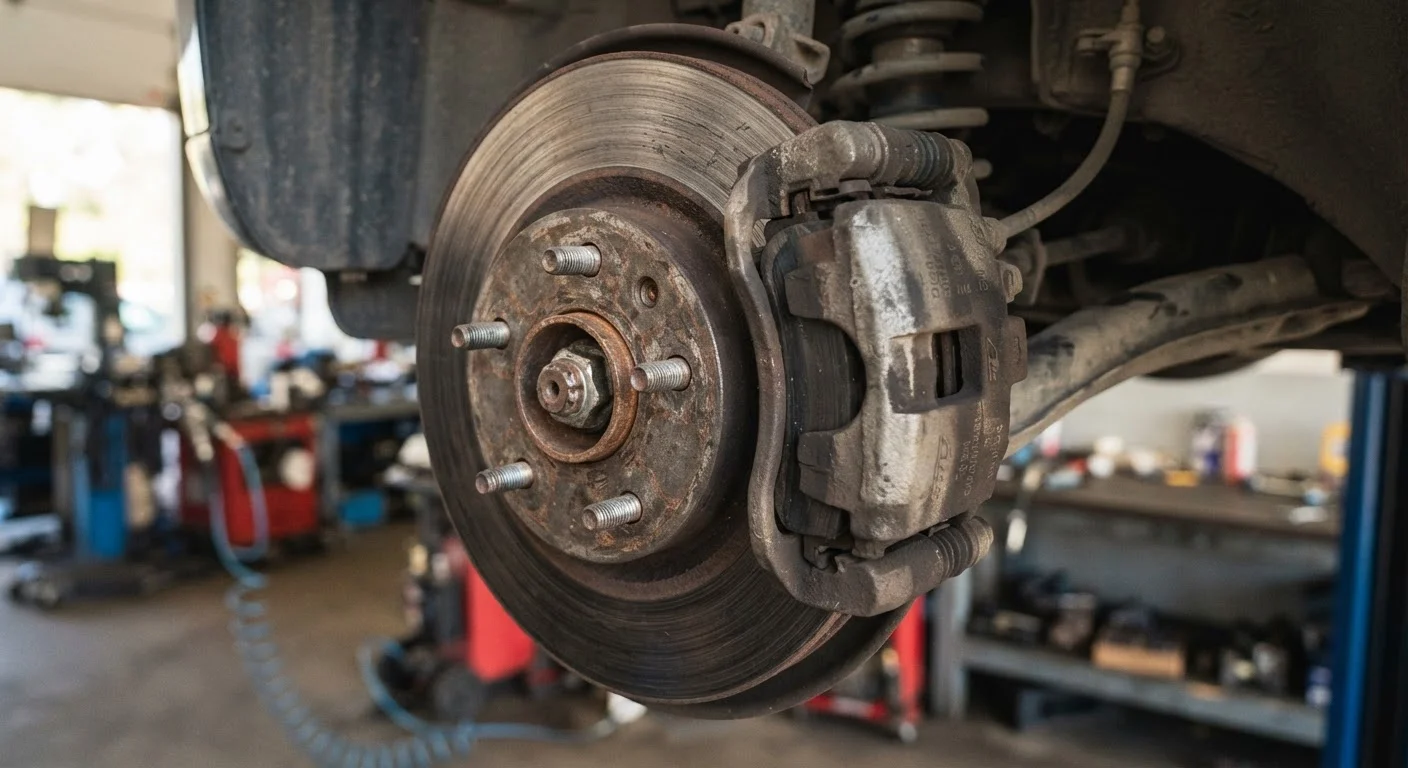
Why Brakes Wear Down - and Why That's Normal
Every time your car slows to a stop, the brake pads - blocks of friction material clamped against a spinning metal rotor - absorb kinetic energy as heat. That process is intentional and unavoidable: it is literally how disc brakes work. Over thousands of stops, the friction material gradually thins until it can no longer do its job effectively.
What varies is how quickly wear happens. Stop-and-go city driving wears pads faster than highway cruising. Carrying heavy loads or towing increases braking force required, accelerating wear further. And as covered in our article on habits that quietly shorten a car's lifespan, aggressive braking is one of the clearest ways drivers unintentionally pile up repair costs. Understanding that wear is normal - but its rate is partly within your control - is the first step toward confident maintenance.
Listen During Your Daily Drive
Make it a habit to pay attention to any new sounds or sensations when braking - especially after your car has sat overnight or after wet weather. Catching a squeal early, before it progresses to grinding, is the difference between a straightforward pad replacement and a more involved rotor repair.
The Four Main Warning Signs of Brake Wear
Braking systems are engineered to communicate. Here are the four symptoms that most reliably signal it is time for an inspection:
- High-pitched squealing. Most brake pads include a small metal tab called a wear indicator. Once the pad wears to a certain thickness, this tab contacts the rotor and emits a deliberate squeal. Think of it as a built-in alarm. If you hear a persistent squeal when braking - one that does not disappear after the first few stops of a damp morning - arrange an inspection promptly.
- Grinding or growling noise. If squealing goes unaddressed, the pad material eventually depletes entirely and metal contacts metal. The resulting grinding sound means rotor damage is likely already occurring, which significantly increases repair complexity and cost.
- The car pulls to one side when braking. Uneven pad wear - or a sticking caliper - can cause more braking force on one side than the other, pulling the vehicle left or right. This also affects handling and warrants prompt professional attention.
- A soft, spongy, or low brake pedal. If the pedal travels further than usual before resistance is felt, or feels mushy underfoot, this often points to air in the brake lines or low brake fluid - both of which reduce braking effectiveness and require immediate inspection by a mechanic.
Morning Squeaks vs. Persistent Squealing
A brief squeak during the first one or two stops of the day - particularly after rain or overnight condensation - is common and generally harmless. It is caused by light surface rust burning off the rotor. Persistent squealing that continues throughout your journey is a different matter entirely and is the wear indicator doing its job.
If your dashboard brake warning light illuminates, treat it with the same urgency as any of the above symptoms. See our guide to what dashboard warning lights are really telling you for context on how to interpret these alerts.
25,000-65,000 mi
Typical brake pad lifespan range
Variation is driven largely by driving style, vehicle weight, and road conditions, according to general automotive service guidance.
2mm
Common minimum pad thickness before replacement
Many vehicle manufacturers and brake specialists consider 2mm the minimum safe pad thickness, though always consult your owner's manual.
~20%
Increase in stopping distance with worn pads
Significantly degraded brake pads can meaningfully extend stopping distances, according to general road safety and vehicle dynamics research.
What You Can Check Yourself - and What You Cannot
As a vehicle owner, there are useful visual checks you can perform without any tools. Looking through the wheel spokes at the brake pad pressed against the rotor gives a rough sense of remaining thickness. Many mechanics suggest that if the pad looks thinner than a standard pencil eraser, an inspection is overdue.
However, accurately measuring pad thickness and rotor condition requires removing the wheel and using measurement tools. Rotors can be within legal thickness limits yet still warped or grooved from heat damage - something that is impossible to detect by sight alone. Our article on DIY checks versus garage visits offers a practical breakdown of which maintenance tasks are genuinely safe to handle at home and which require professional equipment.
The sensible approach: do your visual check, listen carefully for the warning signs described above, and trust a qualified mechanic to do the actual measurement. Brake work is not an area to test the limits of self-sufficiency - the stakes are simply too high.
How Driving Habits Affect How Long Your Brakes Last
Brake pad lifespan varies widely - commonly cited ranges run from roughly 25,000 to 65,000 miles - but those figures depend heavily on how a vehicle is driven. Smooth, progressive braking, as described in our piece on smooth braking technique, generates far less heat per stop than stabbing the pedal. Less heat means slower material degradation.
Similarly, anticipating traffic flow so you coast to a deceleration rather than braking sharply at the last moment extends pad life considerably. These are habits any driver can develop with practice, and they make a measurable difference over the life of a vehicle.
Brakes do not exist in isolation either. Well-inflated tires in good condition contribute to shorter stopping distances, reducing the load on your brakes at every stop. It is worth reviewing how tire pressure affects braking safety as part of an overall approach to vehicle readiness. Including a brake inspection in your seasonal maintenance routine - as outlined in our seasonal car maintenance guide - is one of the simplest ways to stay ahead of wear before it becomes a problem.