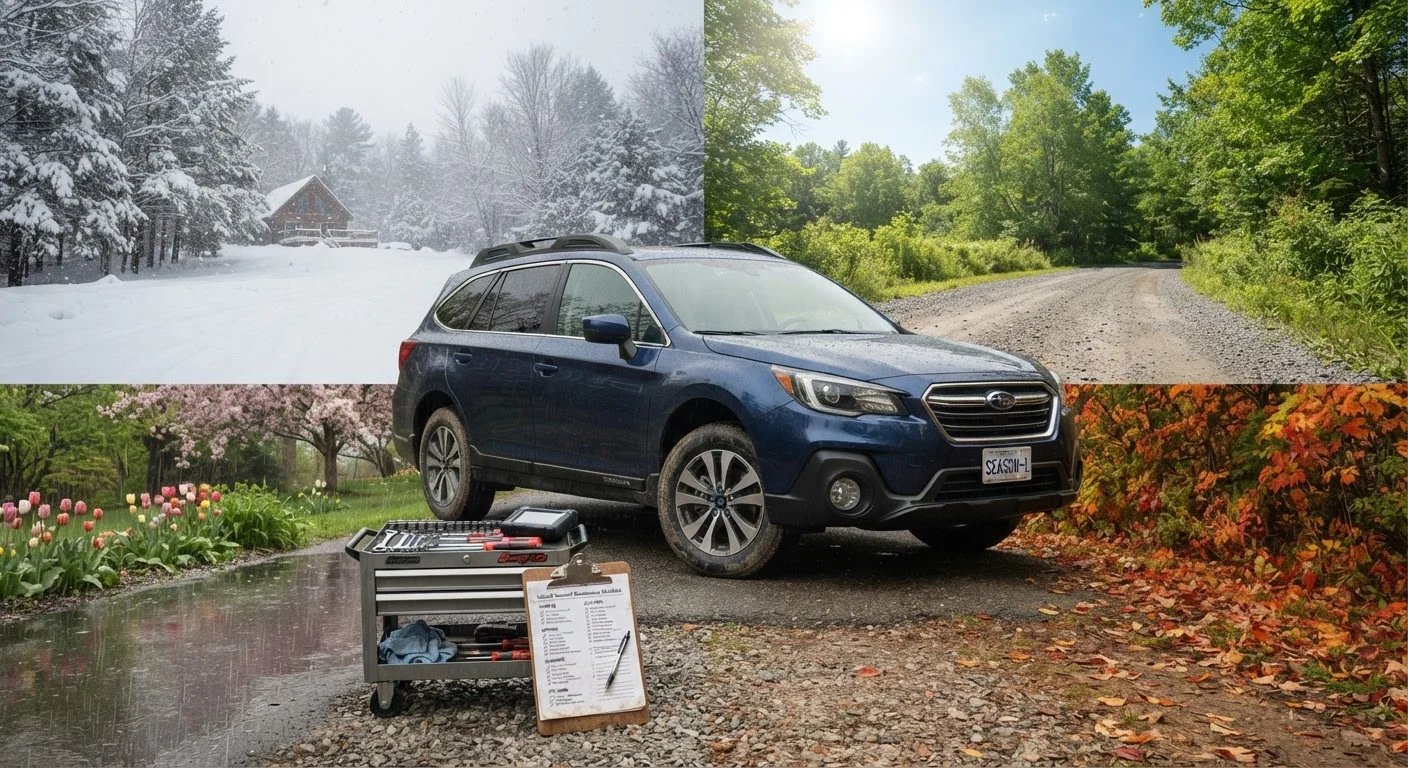
Why Seasonal Maintenance Matters
Temperature swings, road salt, summer heat, and autumn rain all affect how your car performs and how safe it is to drive. Ignoring these shifts doesn't just risk a breakdown - it shortens the life of components that are expensive to replace.
This checklist walks you through the checks that matter most as each season arrives. Most items are straightforward visual or functional inspections. Where a task requires tools, expertise, or safety caution, we flag it clearly so you know when to call a professional.
If you're new to vehicle ownership, pair this guide with a sensible maintenance schedule so seasonal checks fit into a broader upkeep routine. And if you've heard that some of these tasks are unnecessary, it's worth reading up on common maintenance myths before skipping anything.
Don't Skip Checks Because the Car Seems Fine
Many seasonal problems - a weakening battery, low coolant, or tires approaching minimum tread depth - show no obvious symptoms until they cause a failure. The purpose of this checklist is to catch issues before they strand you. A car that drove fine all summer may still need attention before winter arrives.
Tools You'll Need
You don't need a full mechanic's workshop to run through these checks. The items below cover the vast majority of what this checklist requires.
Tire pressure gauge
Allows you to check each tire's inflation level accurately against the specification in your owner's manual.
Flashlight or work light
Helps you inspect dark areas such as under the hood, beneath the car, and around wheel arches.
Microfiber cloths and gloves
Useful for checking fluid levels and wiping dipsticks cleanly to get an accurate reading.
Owner's manual
Provides the correct fluid specifications, tire pressures, and service intervals for your specific vehicle.
Tread depth gauge
Measures tire tread depth more accurately than the coin method, helping you decide when replacement is needed.
Emergency kit (jumper cables, blanket, torch)
Not a maintenance tool, but verifying its contents is part of your seasonal preparation.
The Season-by-Season Checklist
Work through each group as the relevant season approaches - ideally a week or two before conditions change, so you have time to book a mechanic if something needs attention.
Spring Checks
Summer Checks
Fall Checks
Winter Checks
Brake and Steering Issues Are Not DIY Territory
If any check reveals brake noise, a spongy pedal, uneven braking, or changes in steering feel, stop driving the vehicle until a qualified mechanic has inspected it. These are safety-critical systems, and driving with a known fault puts you and others at serious risk. Do not attempt to diagnose or repair them without professional training and equipment.
Understanding how weather affects your car's handling is just as important as maintaining the vehicle itself. See our guide on handling different weather conditions to build both skills together.
When to Call a Mechanic
This checklist is designed around what a careful non-expert can safely inspect. However, some findings should always be handed to a qualified mechanic:
- Brake wear or noise - grinding, squealing, or a soft pedal are never DIY fixes.
- Fluid leaks - puddles under the car, especially coloured ones, need professional diagnosis.
- Battery testing beyond a visual check - load-testing a battery safely requires a proper tester.
- Suspension or steering changes - pulling to one side, unusual vibration, or clunking sounds warrant a professional inspection.
Developing the habit of noticing small changes early is one of the most effective ways to avoid large repair bills. Our article on habits that quietly shorten a car's lifespan covers what to watch for day-to-day.
For a broader overview of service types and how they relate to your maintenance rhythm, see full-service vs. interim service.
This article is for general informational purposes only. Always consult a qualified mechanic before performing or deferring any vehicle maintenance task, particularly those involving safety-critical systems such as brakes, steering, or tires.