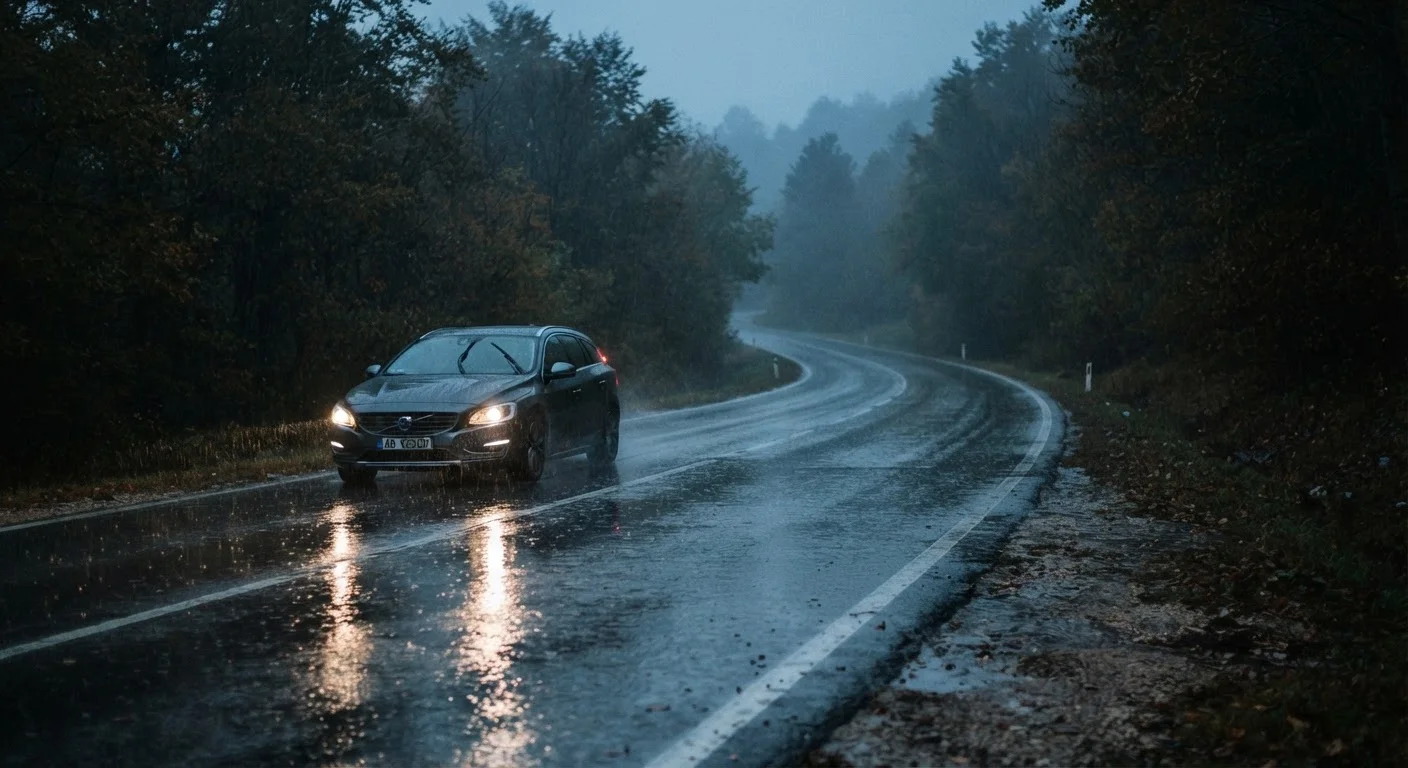
Why Weather Conditions Catch New Drivers Off Guard
Most new drivers learn in reasonably calm conditions - dry roads, decent visibility, moderate temperatures. But real-world driving means encountering rain, fog, ice, and glaring sun, often without much warning. Understanding how each condition changes what your car can do - and what you can see - is one of the most practical skills you can develop early.
Weather doesn't just affect visibility. It changes how long your car takes to stop, how much grip your tyres have, and how much mental focus you need. The good news is that the core response to nearly every adverse condition follows the same logic: slow down, increase your following distance, and use your lights and wipers appropriately.
Before any drive in uncertain weather, it's worth running through a quick vehicle check. Our pre-drive safety checklist covers what to verify before you turn the key, including wipers, lights, and tyre condition. And for a deeper look at how stopping distances are affected by speed and surface, see our guide on stopping distances at common speeds.
Rain and Wet Roads
Rain is the most common adverse condition new drivers face, and it's deceptively dangerous. Water reduces tyre grip, extends stopping distances, and can create aquaplaning - where a film of water lifts your tyres off the road surface so steering and braking become temporarily ineffective.
When it rains, the Highway Code (and general safe-driving guidance across the US) recommends doubling your following distance from the standard two-second gap. Switch on dipped headlights so other drivers can see you, and use your wipers at a speed that keeps your windscreen clear without smearing. Ease off the accelerator smoothly rather than braking hard - see our guide to smooth braking for the technique. If you feel the steering go light - a sign of aquaplaning - ease off the gas gently and hold the wheel straight until grip returns.
Doubling your following distance in rain gives your tyres the time they need to stop safely.
Fog and Low Visibility
Fog is one of the most hazardous conditions for any driver because it removes the visual cues you rely on - road markings, other vehicles, junctions ahead. In thick fog, visibility can drop to just a few car lengths.
Always use dipped headlights in fog, not full beam - full beam reflects off fog and reduces visibility further. Use your rear fog light when visibility drops below roughly 100 meters (about 330 feet), and switch it off when conditions improve, as it can mask your brake lights. Reduce your speed significantly and rely on the white line at the road's edge as a guide. Don't tailgate the vehicle in front, even if following their lights feels reassuring - if they brake suddenly, you'll have no margin. If fog becomes so thick that driving feels genuinely unsafe, find a safe place to pull completely off the road and wait.
Full beam in fog makes things worse - dipped headlights are always the right choice.
Ice and Snow
Ice and snow transform a familiar road into something dramatically different. Braking distances on ice can be up to ten times longer than on a dry surface - a fact that surprises most new drivers. Black ice is particularly treacherous because it's transparent and looks like a wet patch of road.
In icy or snowy conditions, move off in the highest gear your car will allow without stalling (typically second gear in a manual) to reduce wheelspin. Accelerate, brake, and steer all as gently as possible - abrupt inputs are the primary cause of skids. If the rear of your car starts to slide, steer smoothly into the skid (in the direction the back is moving) and ease off the accelerator. Keep moving on hills where possible, as stopping on a slope and restarting on ice is extremely difficult. If conditions are severe, strongly consider delaying your journey.
On ice, braking distances can be up to ten times longer than on a dry road.
Bright Sunshine and Sun Glare
It may seem counterintuitive, but bright sunshine - particularly at low angles during sunrise and sunset - is a genuine hazard. Direct sun glare can blind you completely for seconds at a time, enough to miss a pedestrian, traffic signal, or hazard ahead.
Keep a pair of polarised sunglasses in your car at all times and use your sun visor in combination with them. Reduce your speed when driving directly into strong sun, because your reaction time is compromised when you can barely see. Be especially cautious at junctions and crossings, where you may fail to spot pedestrians or cyclists against a bright background. Glare is often worse after rain, when low sun reflects sharply off wet road surfaces - so a clearing shower can briefly be more hazardous than the rain itself.
Sun glare at low angles can be as blinding as driving into a spotlight - slow down and use eyewear.
Strong Winds
Wind is easy to underestimate, especially on open stretches, bridges, and motorways where there's little shelter. A sudden gust can push a car several feet across a lane, which at speed can be frightening and dangerous.
Keep a firm two-handed grip on the wheel in windy conditions. Be prepared for sudden buffeting when passing gaps in hedgerows, emerging from underpasses, or overtaking large vehicles like trucks and buses - which act as windbreaks until you pass them. If you're driving a high-sided vehicle, a van, or towing a trailer, wind effects are significantly amplified. Reduce your speed on exposed roads and stay alert for other drivers being pushed into your lane. For first-timers on motorways in high winds, our motorway driving guide covers how to manage lane positioning at speed.
Passing a large truck in crosswinds exposes you to a sudden gust the moment you clear their shelter.
Building Confidence One Condition at a Time
No driver becomes comfortable in bad weather overnight. The key is progressive exposure - starting with light rain before you ever find yourself in a downpour, or driving on a frosty car park before you tackle an icy road. Each experience adds to your instincts.
Build Adverse-Weather Experience Gradually
If you have access to an empty car park or quiet road, practise braking and gentle steering on a wet surface to feel how your car responds differently. This kind of low-stakes practice builds muscle memory that kicks in automatically when you need it most. Consider asking an experienced driver to accompany you the first few times you drive in heavy rain or fog.
Keeping your vehicle in good seasonal shape underpins everything covered here. Our seasonal car maintenance guide outlines what to check as conditions shift throughout the year. And if you're also building confidence in other challenging environments, our guides on night driving and motorway driving for the first time cover the techniques that matter most.
Every driver - no matter how experienced - encounters conditions that feel beyond their comfort zone. Recognising that and responding with extra caution rather than bravado is itself a mark of skill.