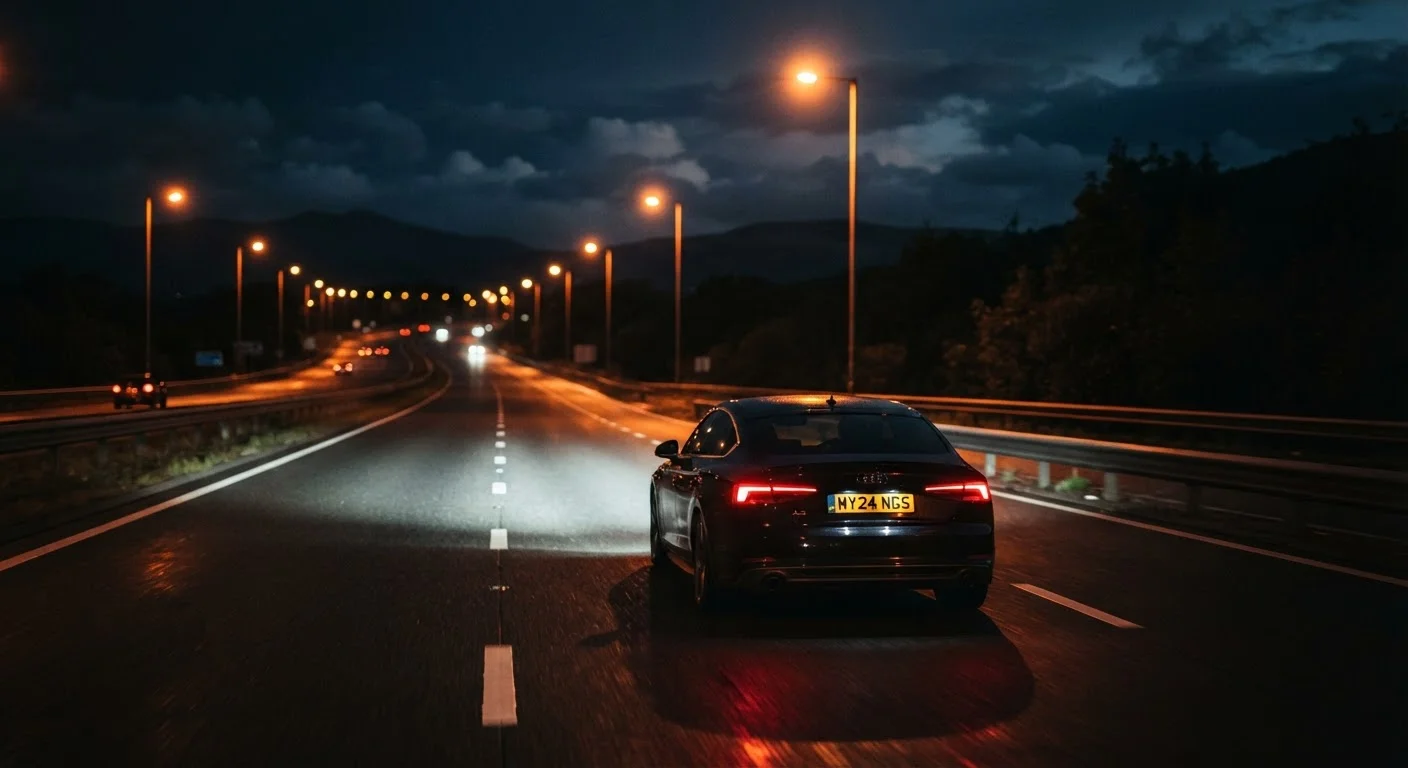
Why Night Driving Feels Different
Driving after dark isn't simply daytime driving with the lights on. Several core conditions shift in ways that directly affect your safety and decision-making. Understanding those changes is the first step to managing them confidently.
The most significant factor is reduced visibility. Even with headlights on full beam, your effective sight distance is far shorter than during daylight. Standard low-beam headlights typically illuminate roughly 160-200 feet ahead - at 60 mph, that's less than two seconds of stopping distance. High-beam headlights extend that range but must be dimmed for oncoming traffic.
Depth perception and peripheral vision also deteriorate in low light, making it harder to judge gaps, curves, and the speed of other vehicles. If you're still building your foundational skills, our guide on your first week behind the wheel is a helpful starting point before tackling night driving regularly.
Best Practices for Safer Night Driving
The following practices address the specific challenges darkness introduces. Apply them consistently, and night driving becomes a manageable - not daunting - part of your skills toolkit.
Reduce your speed to match your actual sight distance, not the posted limit alone.
At night, you may be unable to stop in time for hazards that appear at the edge of your headlight range. Slowing down gives you the reaction time daylight normally provides. This is sometimes called 'overdriving your headlights' - a common and dangerous mistake.
Increase your following distance to at least four seconds behind the vehicle ahead.
The standard two-second following distance assumes good visibility and dry roads. At night, your ability to read the road ahead is limited, and you rely partly on the brake lights of the car in front as your only early warning. A longer gap compensates for that reduced information.
Look toward the right edge of the road when facing oncoming headlights.
Staring directly at bright oncoming headlights causes temporary night blindness that can last several seconds after the vehicle passes. Shifting your gaze to the road edge lets you track your lane without losing vision.
Use your high beams actively on unlit roads - and dim them promptly for oncoming traffic.
Many drivers underuse high beams out of habit or uncertainty, significantly limiting their sight distance. High beams can nearly double your visible range on dark roads, but leaving them on blinds other drivers and is illegal in most states.
Recognize the early signs of fatigue and stop driving before impairment becomes severe.
Drowsy driving is most common late at night and shares measurable impairment characteristics with alcohol intoxication. Yawning frequently, drifting lanes, or missing exits are warnings - not signals to push through. Pulling over, taking a short break, or switching drivers are the only safe responses.
Night driving also intersects with other demanding conditions. If you're navigating fog, rain, or ice after dark, the adjustments compound. Our article on handling challenging weather conditions covers how to layer these techniques together.
Quick Actions You Can Take Before Your Next Night Drive
Preparation before you even start the engine makes a measurable difference. These are immediate steps - not long-term projects - that reduce risk tonight.
Headlight Condition Matters More Than You Think
Yellowed or cloudy headlight lenses can reduce light output by up to 80%, according to general automotive guidance. If your headlights appear dim or yellowish from the outside, the lenses may need cleaning or restoration - a relatively low-cost fix. Keeping headlights in good shape is also part of regular seasonal vehicle upkeep. Our seasonal car maintenance guide includes a lighting check as part of its inspection checklist.
Rural roads after dark bring their own set of hazards: fewer streetlights, wandering wildlife, and tighter curves. Our comparison of urban traffic versus rural roads explains how to adjust your approach in each environment, which applies doubly at night.