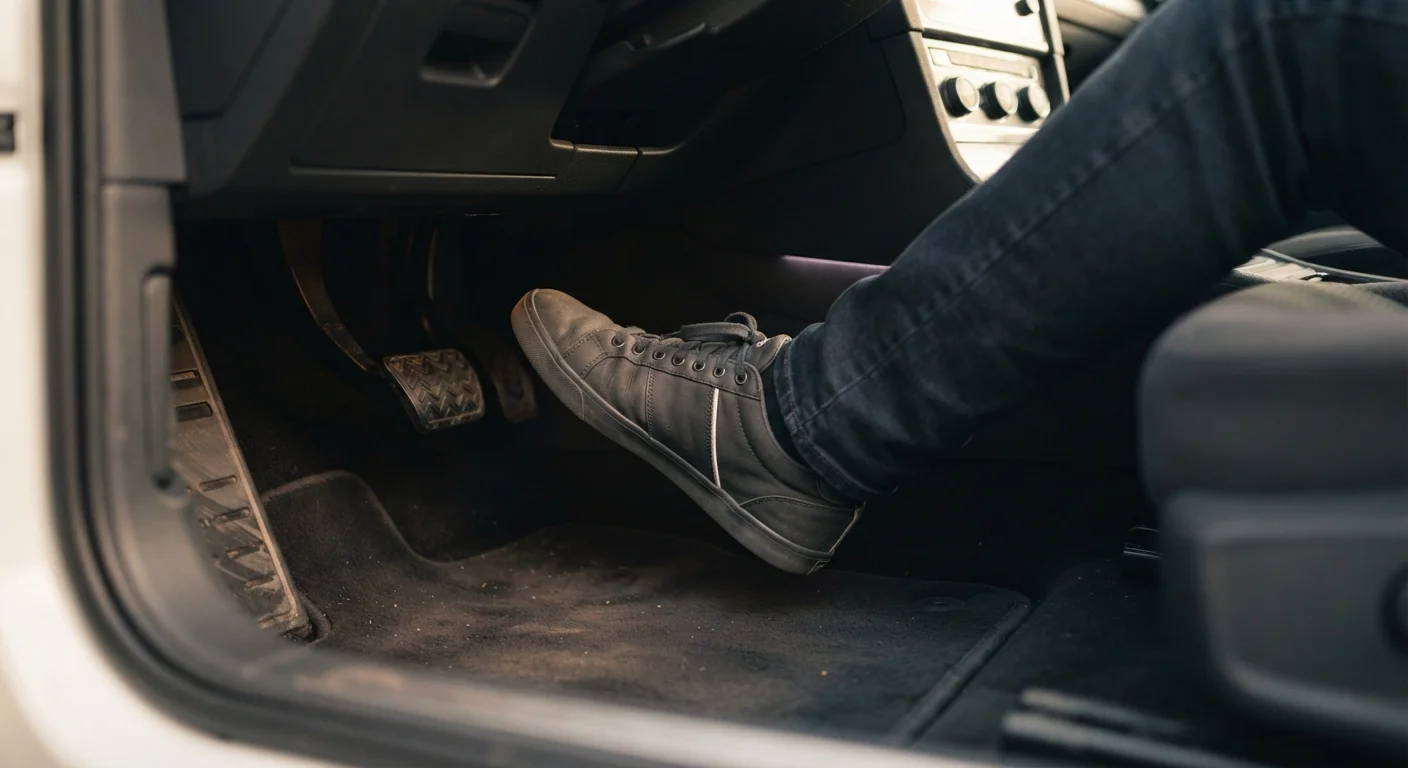
Why Braking Technique Matters More Than You Think
Braking is the skill most new drivers underestimate. Getting into a car for the first time, the instinct is to focus on steering, signaling, and not stalling - yet how you slow down has an outsized effect on safety, passenger comfort, vehicle wear, and your ability to handle emergencies. Stomping the brake pedal is the automotive equivalent of grabbing a handrail in a panic: it may feel decisive, but it often makes things worse.
When you apply the brake hard and suddenly, several things happen at once. Weight slams forward onto the front wheels, reducing rear-tire grip. Passengers pitch forward, and anything unsecured in the cabin becomes a projectile. If the surface is even slightly slippery, tires can lock and the car begins to slide rather than stop. Understanding these physical realities is the first step to developing a safer, smoother technique.
For a deeper look at how speed interacts with stopping distance, see our guide on speed limits and stopping distances - many new drivers are genuinely surprised by how far a car travels before it comes to rest.
2×+
Stopping distance increase in wet conditions
According to the UK Highway Code, stopping distances in wet conditions can be at least double those on dry roads at the same speed.
~75%
Of braking force absorbed by front brakes
Weight transfers forward under braking, meaning front brake components typically bear the majority of the load and wear faster with harsh braking habits.
Common Braking Mistakes and How to Correct Them
Most harsh braking incidents trace back to a small set of repeated errors. Recognizing them in your own driving is the first step toward eliminating them. Each mistake below includes the reason it happens and a practical correction you can apply immediately.
Waiting until the last moment to brake, then pressing the pedal hard.
Why it happens: New drivers focus heavily on the car ahead rather than the road further out, which compresses reaction time and forces reactive, late braking.
Applying uneven, jerky pressure that causes passengers to lurch forward.
Why it happens: Drivers often squeeze the pedal quickly at first, then ease off and squeeze again, creating a pumping effect that feels controlled but actually produces erratic deceleration.
Braking while turning through a corner or bend.
Why it happens: Drivers misjudge corner entry speed and try to correct mid-corner, unaware that braking while steering shifts weight abruptly and can cause understeer or oversteer.
Riding the brake pedal lightly for long periods instead of covering it.
Why it happens: Some new drivers rest their foot on the pedal as a comfort habit, believing light contact is harmless. In reality, even slight pressure activates brake lights and generates heat in the pads and rotors.
Following too closely and relying on reaction braking to avoid collisions.
Why it happens: Tailgating often develops unintentionally when traffic speeds up and drivers unconsciously close the gap to keep pace, leaving no buffer for an emergency stop.
ABS Does Not Shorten Stopping Distance
Anti-lock braking systems (ABS) prevent wheel lockup during emergency stops, helping you maintain steering control - but they do not necessarily make your car stop shorter than smooth, progressive braking would. Relying on ABS as a safety net is not a substitute for leaving adequate following distance and scanning the road ahead. Always assume stopping will take longer than you expect.
If you notice your brake pedal feels soft, pulls to one side, or your vehicle takes longer to stop than usual, have a qualified mechanic inspect the system promptly. Our article on reading brake wear signs explains what symptoms to watch for between services.
Building the Habit of Smooth, Anticipatory Braking
Good braking is really a product of good observation. The earlier you spot a hazard, traffic signal, or junction, the more time you have to slow down gently. Experienced drivers rarely need to brake hard precisely because they are reading the road far ahead and modulating speed continuously rather than reacting at the last second.
Wet and Icy Roads Change Everything
On wet or icy surfaces, harsh braking can cause wheels to lock up and the car to skid even in vehicles without ABS. Stopping distances can more than double in wet conditions and increase tenfold on ice compared to dry roads. In poor weather, increase your following distance significantly and begin braking earlier than feels necessary. See our guide on handling weather conditions as a new driver for surface-specific advice.
Practice deliberate braking on every journey, even familiar routes. Choose a stop sign or traffic light ahead, decide when to lift off the accelerator, and see how little brake pressure you need to arrive at a comfortable speed. Over several weeks, this progressive approach becomes the default, replacing the stomp-and-hope reflex that most beginners start with.
As your confidence grows and you begin driving on faster roads, these habits become even more critical. Our introduction to motorway driving for the first time covers how to manage safe following distances and braking at higher speeds - a natural next step once smooth urban braking feels automatic.